
citiesabc, first_page
Africa's Youth Are the World's Next Economic Engine, But Only If Global Leaders Invest Now
Africa, Youth Economy, G20, Renewable Energy, Urban Development, Startup Ecosystem, Global Investment, Youth Employment
06 Apr 2026

When the Youth 20 (Y20) Summit — the official youth engagement group of the G20 — convened in Johannesburg in August 2025, it marked a first: Africa hosting this global youth forum on its own soil. The symbolism was hard to miss. But what happened inside the summit rooms mattered far more than the location. Young delegates under 30, representing G20 nations, came not to request a seat at the table but to demand one and to back that demand with data, policy blueprints, and a clear-eyed understanding of what's at stake if the world continues to look past them.
The stakes, it turns out, are enormous. For cities, for economies, for the climate, and for global stability.
The Demographic Reality No Policymaker Can Afford to Ignore

Africa is the youngest continent on earth by a wide margin. More than 60% of its population is under 25, and that share is growing. By 2030, one in three young people on the planet will be African. By 2035, more young Africans will enter the workforce each year than in every other region of the world combined. By 2050, Africa's population is projected to grow from 1.55 billion in 2025 to 2.5 billion, when one in every four people on earth will be African.
This is not a distant projection — it is an unfolding urban reality. African cities are among the fastest-growing on earth. Lagos, Nairobi, Kinshasa, Dar es Salaam, and Addis Ababa are all absorbing millions of young people every year, straining infrastructure while simultaneously generating extraordinary concentrations of talent, creativity, and entrepreneurial energy. The question for city planners, investors, and policymakers is a simple one: will those young people find opportunity, or frustration?
Between 2025 and 2050, the continent is set to undergo one of the fastest expansions of the working-age population in world history. By 2050, Africa's working-age population is expected to nearly double — from 883 million today to 1.6 billion — representing roughly a quarter of the entire global workforce. With China, Japan, South Korea, and most of Europe all facing sharp declines in young workers, Africa's demographic trajectory has implications that reach well beyond the continent itself.
A Jobs Crisis Hidden Inside an Opportunity

The math is stark. According to the African Development Bank, between 10 and 12 million young Africans enter the labor market each year, yet only about 3 million formal jobs are created on the continent annually. Of the continent's nearly 420 million young people aged 15 to 35, a significant share are either unemployed or stuck in precarious, informal work — a situation that has already translated into social unrest in places like Kenya, where youth-led protests in 2024 reflected the deep frustration of a generation that feels economically locked out.
When asked where governments should increase spending to support youth, Africans surveyed in Afrobarometer's 2024/2025 data prioritize job creation at 48%, followed by education at 16% and job training at 14%. The signal from citizens is clear even if the policy response has been slow.
Over 53 million young Africans are currently out of work or education, while the wealthiest 10% control nearly 56% of total income — extreme disparities that are destabilizing communities and narrowing the pathway to inclusive growth.
And yet, the same generation bearing the weight of this crisis is also building the solutions to it.
Africa's Startup Ecosystem: From Promise to Performance
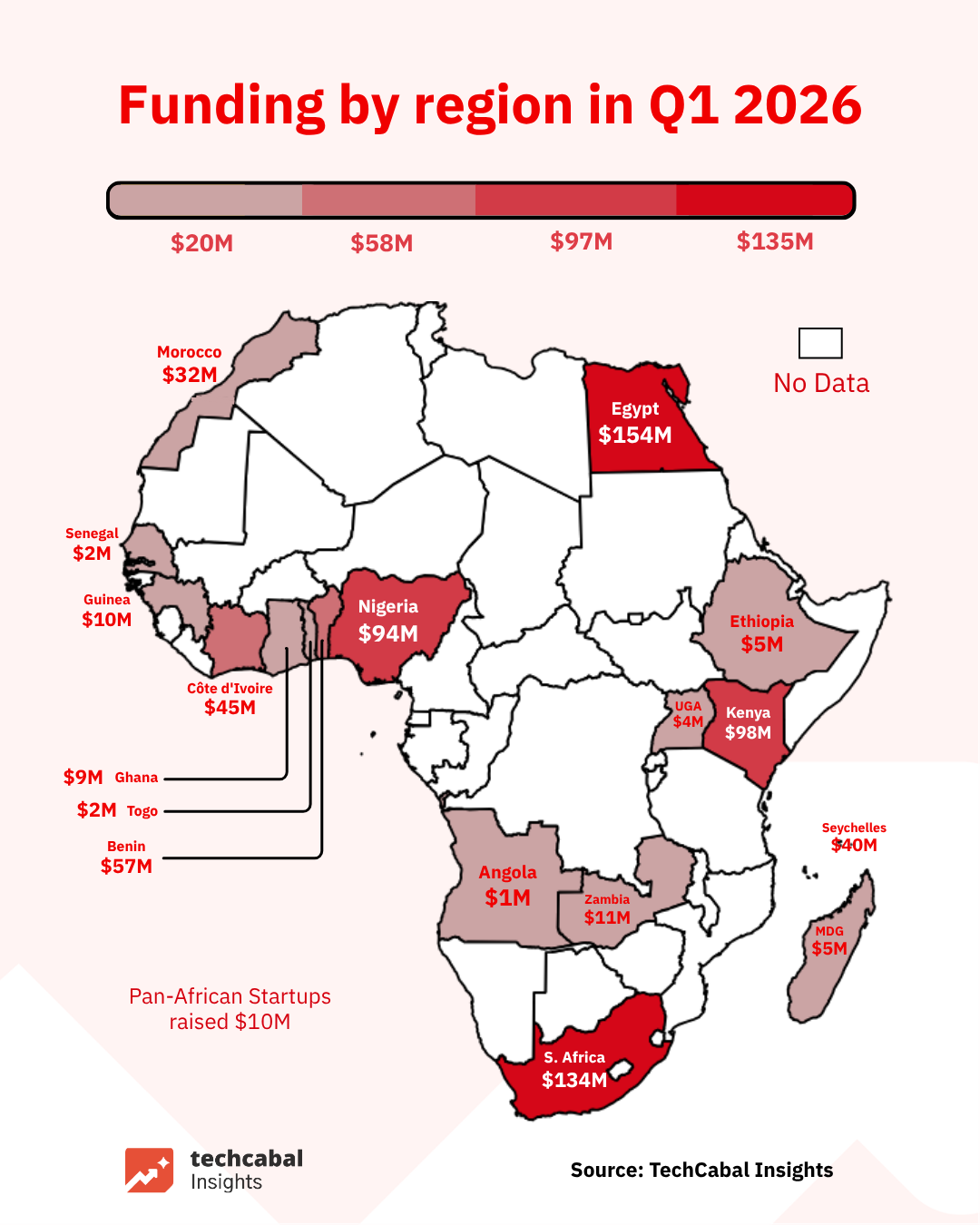
One of the most striking developments of recent years is the maturation of Africa's startup and innovation landscape, driven overwhelmingly by young founders solving real problems in energy, finance, healthcare, and logistics.
African startups raised $3.5 billion in venture funding in 2025, marking a 36% rebound from 2024 and reflecting renewed investor confidence across the continent. More significantly, the nature of what's being funded has shifted. In a dramatic reversal of long-standing trends, clean energy overtook fintech as Africa's top-funded sector by Q3 2025, accounting for 53% of total investment and reaching $519.5 million.
This shift matters for cities. Urban energy poverty remains one of the most acute constraints on African economic life. Young entrepreneurs are directly tackling it. Sun King announced one of the most ambitious plans of 2025: the deployment of 50 million solar kits across Africa between 2026 and 2030, representing $5.6 billion in solar equipment and expanding clean energy access to 200 million people — adding 3.8 gigawatts of solar capacity equivalent to several large coal-fired power stations.
According to the Africa Investment Outlook 2026 report, African tech startups raised a combined $4.1 billion in equity and debt financing in 2025, marking a 25% increase year-on-year and representing the strongest funding year since 2022. Early 2026 data suggests the momentum is continuing: African startups raised $575 million across 58 deals in January and February 2026 alone.
The sectors attracting capital are telling. Investors are increasingly backing hardware and infrastructure — electric vehicles, battery-as-a-service, and clean energy — alongside B2B financial infrastructure rather than consumer apps. This is capital flowing toward the physical fabric of cities: power grids, mobility networks, supply chains. Young Africans are not just building apps — they are building the infrastructure on which the next generation of African urban life will run.
The Solar Gap: Africa's Biggest Missed Opportunity

Despite being home to some of the world's most abundant solar resources, Africa remains drastically underserved in renewable energy. The continent holds 60% of the world's best solar potential yet accounts for less than 3% of installed global solar capacity. Solar currently makes up only around 3% of Africa's electricity generation, a figure that represents not a natural limit, but a failure of investment.
More than 24 African countries are exploring civil nuclear options, particularly small modular reactors, as the continent seeks to diversify its energy mix. But solar remains the most affordable and scalable option for most of the continent, especially for the rapidly growing peri-urban communities that sit beyond the reach of national grids.
Closing this gap would deliver a triple dividend: jobs for young Africans with technical training, energy access for urban and rural households, and measurable progress on global climate targets. Young climate entrepreneurs are already proving the model works at scale. What's missing is not innovation, it's the investment to take those innovations from proof-of-concept to infrastructure.
Climate and energy startups across Africa raised over $219 million in the first half of 2025 alone, making it the second-most funded sector on the continent. The investor appetite is growing, but the gap between what is needed and what is currently flowing remains enormous.
What the Y20 Summit Told Global Leaders

The Johannesburg Y20 Summit produced more than speeches and communiqués. Delegates debated five urgent themes, gender equality, climate and energy, inclusive economies, digital transformation, and the future of work and pushed for structural change, not symbolic gestures.
One of the most significant proposals was the creation of a Y20 Sherpas Council: a permanent body embedding youth representatives in the G20 policy process year-round, rather than concentrating their input into a single annual summit that can be quietly shelved. The Y20 Communiqué, adopted at the conclusion of the summit, presented a comprehensive policy document containing recommendations from youth across the globe, to be formally presented to G20 leaders.
Delegates advocated for investments in education and skills development that are responsive to future labor market demands, ensuring youth are equipped for green and digital transitions. The Communiqué also highlighted the importance of creating supportive ecosystems for young entrepreneurs, including access to finance, mentorship, and digital tools.
That the summit was held in Africa for the first time was not incidental. South Africa's 2025 G20 Presidency was built around the theme of "Solidarity, Equality, and Sustainability" and the Y20 proceedings embodied each of those values, while making clear that young Africans are no longer willing to be consulted as an afterthought.
The Skills Gap: Education Systems Falling Behind

Behind the startup success stories lies a harder structural challenge: education and vocational training systems across the continent are failing to keep pace with labor market demands. TVET systems in Africa face common, deep-rooted challenges — chronic underfunding, a shortage of instructors, inadequate professional development, poor infrastructure, and weak alignment between training and market needs.
Ghana allocates just 2% of its education budget to technical and vocational training, while Ethiopia spends less than 10%. In Rwanda, 93% of students surveyed cited outdated equipment and inadequate facilities as major barriers to effective learning. Across the continent, vocational education carries a social stigma, perceived as a fallback for those who couldn't access university, even as employers face severe shortages of technically skilled workers in construction, energy, and digital infrastructure.
Fixing this is not a development charity project, it is an economic investment with measurable returns. With the right investment in education, technology and entrepreneurship, Africa's youth could drive global growth in the same way as China's young workforce fueled the economic transformation of the late 20th century. The comparison is not idle: China's demographic dividend was a policy choice, backed by sustained public investment. Africa's is waiting for the same.
What Cities Must Do Differently

For city governments across Africa and for international partners working with them, the implications of all this are concrete. The next wave of African urbanisation will be defined by decisions made right now about who gets access to skills training, who gets access to startup capital, who gets access to clean energy, and whose voice shapes urban policy.
The African Union's 10-year Strategy on the Social and Solidarity Economy, adopted in 2025, acknowledges social enterprises, cooperatives, and community-embedded economic models as central actors in delivering inclusive growth. For cities, this means creating the regulatory and financial environments where youth-led enterprises can scale, from preferential procurement contracts to embedded youth advisory mechanisms in urban planning.
Africa's 2.18 million social enterprises already generate $96 billion in annual revenue and 12 million jobs, with women and youth leading the way. These are not marginal players in the economy — they are the connective tissue of urban economic life in dozens of African cities.
The most important thing city leaders can do is recognize this reality and build around it, rather than importing infrastructure models designed for different demographic contexts. Africa's cities need solutions built by and for young Africans — and the talent to build those solutions is already there.
The Global Case for Investment
This is not a story about African charity cases waiting for rescue from richer nations. It is a story about where the world's future economic potential is concentrated and whether global capital, policy, and governance structures will align fast enough to unlock it.
A growing wave of youth-led startups across Africa are already attracting global investment, with growth increasingly driven by African firms, especially in fintech, digital services, logistics, renewables, agribusiness, and creative industries. The continent is not asking to be discovered — it is already producing. The question is whether global systems will meet that energy with proportionate support.
Skills mismatches remain a key driver of persistent youth unemployment across Africa, constraining the continent's ability to harness its projected 2050 labor-force advantage. Targeted investment in technical training, digital infrastructure, and green skills development would address that mismatch directly — and deliver returns not just for Africa, but for a global economy that will increasingly depend on African workers, consumers, and innovators.
Africa is the world's youngest continent, home to its fastest-growing cities and its most energetic startup ecosystem. The leaders, builders, and climate innovators the world needs are already there — already building, already organizing, already asking to be heard. The only real question left is whether the world will invest in them before the window closes.


