
resources
Discover the 5 Smallest Countries in the World: A Tiny Nation Tour
24 Feb 2026

When contemplating the world's diverse tapestry of nations, our minds often gravitate towards vast expanses like the United States or China. Yet, an intriguing counterpoint exists: some sovereign states are so remarkably diminutive that one could traverse their entire breadth within a mere few hours. Though these micro-nations may occupy only a sliver of space on a global map, they each boast a rich tapestry of unique stories, enduring traditions, and captivating sights, offering far more than their geographical footprint suggests. Herein, we delve into the five smallest countries in the world, exploring precisely why each merits a distinguished spot on any discerning traveler's itinerary.
Key Takeaways
- Vatican City is the world’s smallest country, both in size and in population, and is packed with famous art and history.
- Monaco is known for its luxury, casinos, and Formula 1 racing, but you don’t have to be rich to enjoy a visit.
- San Marino sits on a hilltop in Italy and claims to be the oldest republic still around today.
- Liechtenstein is tucked between Switzerland and Austria, with mountain views and a real-life royal family.
- Andorra is a small mountain country between France and Spain, popular for hiking and shopping.
1. Vatican City
Vatican City stands as a nation so remarkably diminutive that one could comfortably traverse its entire expanse in under an hour—without, we might add, even breaking a sweat. Nestled discreetly within the bustling heart of Rome, this sovereign state encompasses a mere 0.49 square kilometers (121 acres). Indeed, this astonishing scale establishes it as the world's smallest country, not only by land area but also by population, currently home to approximately 800 residents.
Despite its modest footprint, this venerable enclave—a true treasure trove—unfurls an incredible abundance of culture, history, and art within its hallowed grounds. To better grasp its unique standing, let's explore its key facts in a succinct table:
| Fact | Detail |
|---|---|
| Area | 0.49 sq km |
| Population | ~800 |
| Year Founded | 1929 |
| Official Language | Italian, Latin |
| Currency | Euro (€) |
Should you be fortunate enough to visit, however, do not anticipate serene, quiet thoroughfares. Vatican City invariably serves as a powerful magnet for discerning travelers, devoted art enthusiasts, and faithful pilgrims alike. What, then, makes this unparalleled mini-nation so profoundly special? A few distinctive elements certainly stand out:
- St. Peter’s Basilica: This architectural marvel reigns as the largest church on Earth—truly a mandatory visit, captivating with its colossal dome and celebrated Michelangelo sculptures.
- Vatican Museums: Spanning an astonishing four miles of galleries, these museums house an unparalleled collection of Western art history's most significant works, encompassing Raphael’s timeless masterpieces and Michelangelo’s breathtaking Sistine Chapel ceiling.
- Swiss Guard: Instantly recognizable in their distinctive, colorful attire, these dedicated soldiers have safeguarded the Pope's person since the early 16th century, achieving an iconic status almost on par with the very buildings they protect.
To wander through Vatican City, even for a mere couple of hours, is to step directly into the very heart of religious and artistic history—an experience both profound and deeply enriching. It is truly astonishing how such a geographically confined space can simultaneously serve as a pivotal cornerstone of global culture and faith.
Beyond its unparalleled ecclesiastical and artistic treasures, Vatican City boasts a surprising array of infrastructure: its own radio station, a fully operational post office, an independent rail connection, and even a distinct phone system. For such a confined territory, these autonomous services are, quite frankly, remarkably impressive. Thus, should your travels ever bring you to Rome, dedicating time to explore this truly unique sovereign state is undoubtedly worthwhile. Consider, perhaps, sending a postcard with an authentic Vatican stamp—it's often remarked that it may even reach its destination faster than one dispatched from neighboring Italy!
2. Monaco
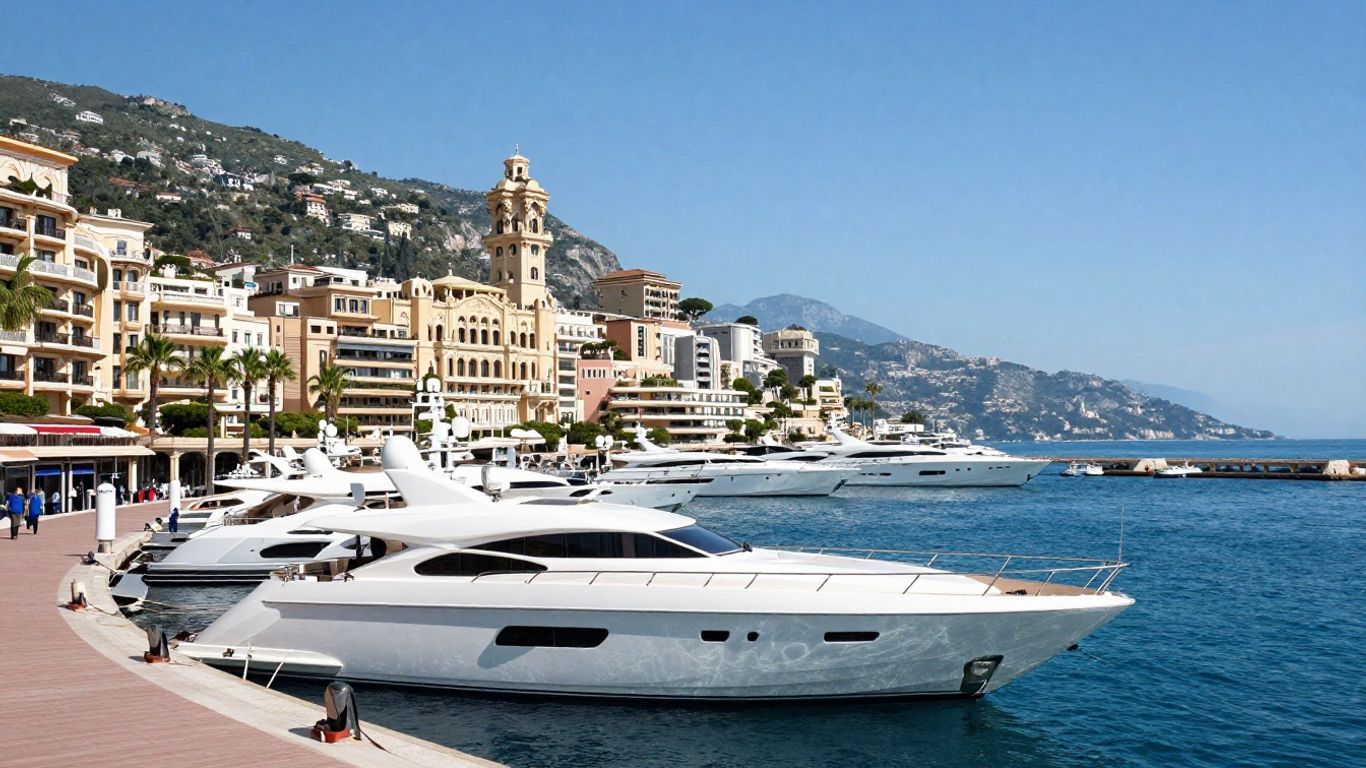
Gracing the sun-drenched French Riviera, Monaco emerges as a minuscule principality that, despite its size, packs an undeniable punch. Indeed, its territorial expanse is so remarkably compact—less than a single square mile—that it proudly holds the distinction of being the world's second-smallest country. Can you envision such a prestigious locale, elegantly constrained between the borders of France and the shimmering expanse of the Mediterranean Sea? That, precisely, is Monaco.
Notwithstanding its modest dimensions, Monaco has cultivated a widespread renown for several distinguishing features. One has undoubtedly heard whispers of its glamorous casinos, foremost among them the iconic Monte Carlo Casino—a veritable theater where fortunes can swiftly be made or irrevocably lost, all against a backdrop of truly opulent architecture. Yet, Monaco's allure extends far beyond the gaming tables; it is also a preeminent hub for elite sports. The Formula 1 Grand Prix of Monaco, for instance, stands as one of the most celebrated car races worldwide, witnessing high-speed vehicles expertly navigating its notoriously narrow urban circuits. It is, by any measure, an utterly breathtaking spectacle!
To truly understand the essence of Monaco, let's explore what makes this unique principality tick:
- Government: Functioning as a principality, its governance falls under the purview of a sovereign prince. Remarkably, the venerable Grimaldi family has maintained continuous rule for over 700 years—a testament to enduring dynastic power, would you not agree?
- Economy: While tourism undeniably serves as a significant draw, Monaco concurrently boasts a robust financial sector. The absence of personal income tax is, quite naturally, a substantial incentive that attracts numerous residents seeking fiscal advantages.
- Land Reclamation: In a testament to its ingenuity and necessity for expansion, Monaco has proactively reclaimed a considerable portion of its territory from the sea—a remarkable demonstration of adaptive urban planning in response to inherent spatial limitations.
Monaco truly exemplifies how a nation of modest geographic footprint can, nonetheless, wield an immense global presence—a fascinating study in influence and prestige. It masterfully blends old-world charm, evident in its historic palace and quaint old town, with the quintessential modern luxury symbolized by its impressive superyachts and high-end living.
Upon your visit, be sure not to overlook the majestic Prince's Palace in Monaco-Ville, dramatically perched high atop "The Rock." Here, you may even witness the venerable Changing of the Guard ceremony, a daily tradition that captivates onlookers. For those with an affinity for the ocean, the renowned Oceanographic Museum—ingeniously integrated directly into the cliffside—presents not only incredible panoramic views but also a captivating array of marine exhibits. Indeed, Monaco stands as compelling proof that truly exceptional experiences often manifest in the most compact of packages.
3. San Marino
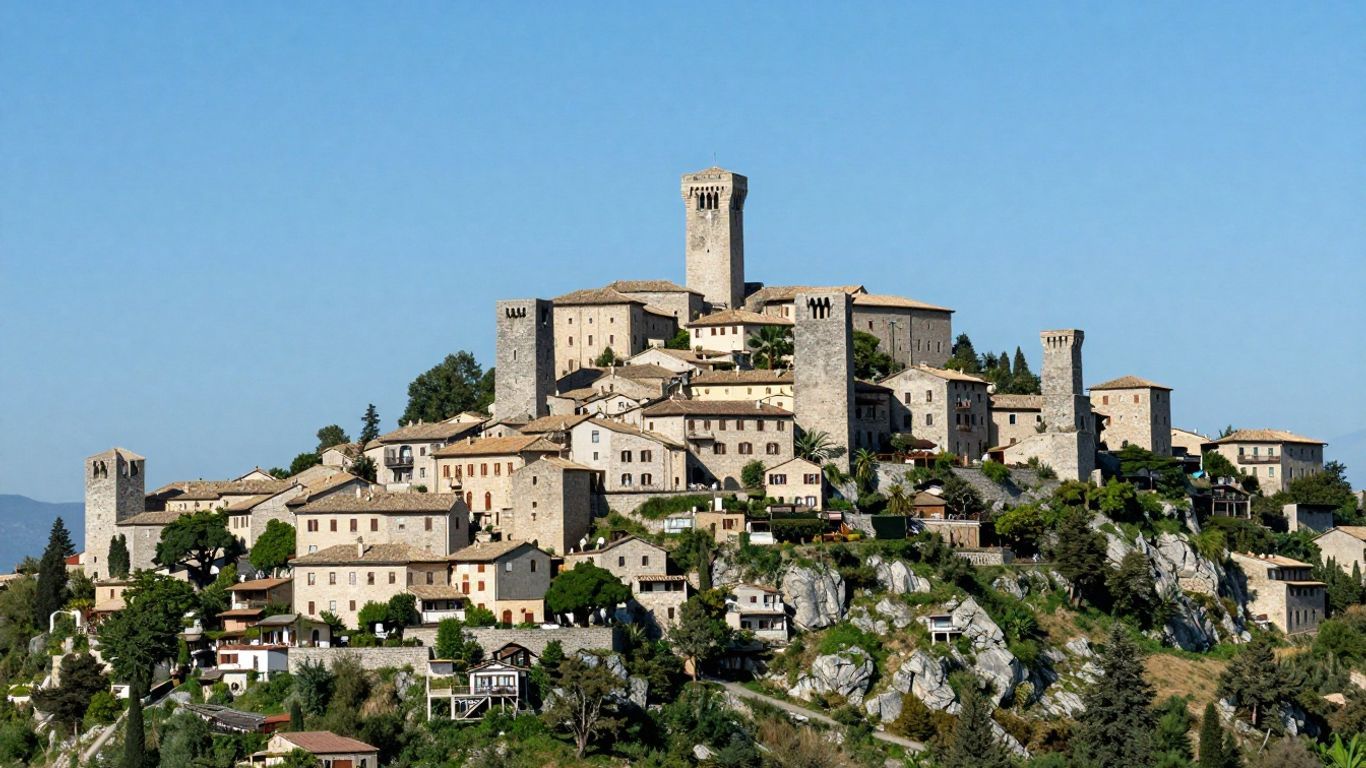
San Marino, while perhaps unassuming on a standard map, is a venerable republic that, within its hilltop borders, encapsulates millennia of profound history. Established in 301 AD, San Marino proudly asserts its claim as the world’s oldest continuously existing republic—a remarkable feat of enduring sovereignty. Completely enveloped by Italy and dramatically perched atop the commanding Mount Titano, this nation's geographical expanse and demographic figures are undeniably modest; yet, its narrative is anything but inconsequential.
Here’s a quick look at San Marino’s vital stats:
| Area | Population | Official Language | Currency |
|---|---|---|---|
| 61 sq km | ~34,000 | Italian | Euro (EUR) |
Notwithstanding its landlocked status and its seemingly precarious position nestled within the Italian countryside, San Marino has steadfastly preserved its independence for more than 1,700 years—a testament to resilience. Legend recounts its founding by a humble stonecutter named Marinus, who sought sanctuary here and, in time, ascended to become the nation's revered patron saint.
So, what truly sets San Marino apart?
- The Three Towers of San Marino (Guaita, Cesta, and Montale) stand as ancient, formidable fortresses, interconnected by scenic walking trails that afford breathtaking panoramic views.
- Approximately half of the nation's economy thrives on tourism, drawing in a diverse demographic including ardent stamp and coin collectors, avid history enthusiasts, and astute bargain hunters—the latter thanks to its notably lower sales tax rates compared to Italy.
- Deep-Rooted Democracy: San Marino’s parliament holds the distinction of being one of Europe’s oldest continuously operating legislative bodies, steadfastly upholding democratic traditions that predate the formation of most modern nations.
Should one choose to meander through the Old Town's charming cobbled streets or ascend to its imposing medieval ramparts, an immediate sense of stepping into a living fairy tale washes over—only here, one encounters significantly fewer crowds and a palpable, quiet pride in a history truly unlike any other.
Coveted stamps, unique memorabilia, and an official passport stamp—available for a modest fee—are cherished mementos for visitors. Couple these delightful souvenirs with robust, Italian-infused culinary offerings and a leisurely stroll around the inviting Piazza della Libertà, and one begins to truly apprehend the spirit of a community that has, with unwavering tenacity and profound peace, safeguarded its independence through countless centuries.
4. Liechtenstein
The Principality of Liechtenstein, a remarkably compact nation, finds itself gracefully cradled between Switzerland and Austria, entirely enveloped by the majestic sweep of the Alps. Encompassing a mere 160 square kilometers, it proudly holds its place among Europe’s most diminutive—and, perhaps surprisingly, its least frequented—nations. Yet, for all its miniature scale, Liechtenstein boasts an abundance of breathtaking Alpine landscapes, venerable medieval castles, and an unexpectedly dynamic and prosperous economy.
Here's a look at some key facts about Liechtenstein:
| Detail | |
|---|---|
| Area | 160 km² |
| Population | ~39,000 |
| Capital | Vaduz |
| Official Language | German |
| Government | Constitutional monarchy |
Comprising just 11 charming villages, the nation's tranquil capital is Vaduz. Although Vaduz itself possesses the intimate ambiance of a small town, it nonetheless hosts a vibrant array of modern art venues, intriguing, quirky museums, and, most famously, the majestic Vaduz Castle—dramatically perched high above, serving as the current residence of the princely family. A distinctive geographical feature of Liechtenstein is its unique status as being 'doubly landlocked'—meaning it is entirely encircled by other landlocked nations, namely Switzerland and Austria.
So, what specific attributes elevate Liechtenstein to a unique standing?
- Accessibility: Devoid of its own airports or seaports, access to Liechtenstein is most conveniently achieved via bus or car from either Switzerland or Austria, integrating it seamlessly into regional travel networks.
- Royal Influence: The venerable princely family continues to exert significant influence over both the daily life and political landscape of the nation, maintaining a direct connection with its populace.
- Economic Prosperity: Renowned for its favorable tax policies, the country actively attracts businesses from across Europe, fostering a robust and dynamic financial sector.
- Leisure & Culture: It stands as an exceptional destination for hiking, refined wine tasting, and even dedicated stamp collecting—indeed, this diminutive nation boasts a remarkably vibrant philatelic culture.
The tranquil mountain villages, meandering hiking trails, and ancient, centuries-old castles collectively imbue Liechtenstein with a profound sense of remoteness, distinguishing it sharply from the bustling urban centers merely a border away. Indeed, a leisurely stroll through Vaduz or an exploration of picturesque locales such as Triesenberg can effortlessly transport one into the pages of an enchanting Alpine storybook.
For those discerning travelers traversing Europe who seek to recount tales of visiting a destination truly distinct and off the well-trodden path, Liechtenstein should unequivocally rank at the apex of their itinerary.
5. Andorra
High amidst the majestic Pyrenees Mountains, elegantly positioned between the formidable nations of Spain and France, lies the captivating Principality of Andorra. Notably, it holds the distinction of being Europe's largest microstate, encompassing approximately 180 square miles and sustaining a population of around 75,000 inhabitants. This venerable locale boasts a history that spans centuries, replete with captivating tales of Charlemagne and distinctive feudal arrangements that continue to shape its unique governance even in the contemporary era.
Andorra’s singularly unique political framework is governed by a system of co-princes: notably, the President of France and the Bishop of Urgell in Spain. Remarkably, notwithstanding this extraordinary shared leadership, the principality steadfastly preserves its full independence. This unusual arrangement, coupled with its stunning mountainous topography, renders Andorra an exceptionally intriguing destination for visitors.
To further appreciate Andorra's unique character, let us consider some key facts:
- Location: Pyrenees Mountains (between France and Spain)
- Area: Approximately 180 square miles
- Population: Around 75,000
- Capital: Andorra la Vella
- Official Language: Catalan
For a significant period, Andorra existed as a comparatively isolated and rather modest economic entity. However, its trajectory has transformed considerably, particularly in the post-World War II era. The very mountains that once served to sequester it now stand as its primary allure. Indeed, winter skiing and summer hiking constitute significant pillars of its contemporary economy. Furthermore, in a manner akin to several other European microstates, Andorra has garnered recognition for its advantageous banking regulations, duty-free retail opportunities, and generally low taxation—features that invariably draw visitors in search of favorable propositions.
Andorra la Vella, the nation's capital, masterfully juxtaposes the venerable with the modern. One can leisurely traverse the charming Old Quarter, replete with its historic stone houses and winding narrow streets, before seamlessly transitioning into a bustling, contemporary shopping district. It is, unequivocally, a destination where profound history converges with vibrant contemporary life, all magnificently framed by a breathtaking panorama of mountainous grandeur.
Conclusion
Thus, we conclude our exploration—presenting the five smallest countries in the world, each singularly defined by its own compelling narrative and distinct allure. Notwithstanding their minuscule representation on global cartography, these nations collectively encompass an astonishing wealth of history, vibrant culture, and unparalleled natural splendor. Whether one is wandering through ancient castles in Liechtenstein, perhaps envisioning a sun-drenched escape in a locale such as Malta, or exploring the tranquil, historic streets of San Marino—these destinations unequivocally demonstrate that geographical size is by no means the sole arbiter of a rich experience. Should your travel aspirations lean towards an experience distinctly different from the customary bustling metropolitan excursion, we heartily recommend considering the inclusion of one of these remarkable micro-nations on your itinerary. Indeed, you may well be astonished by the sheer depth of discovery awaiting you within a mere day or two. After all, is it not true that the most profound adventures often come thoughtfully packaged in the most modest of forms?
Frequently Asked Questions
What makes Vatican City so special, even though it's tiny?
Despite its status as the world's smallest sovereign state, Vatican City is replete with an astonishing wealth of art and history. It proudly houses St. Peter's Basilica—the largest church on Earth—and unparalleled artistic masterpieces, including Michelangelo's iconic work within the Sistine Chapel. Consequently, it stands as an indispensable destination for anyone with an interest in culture and faith.
Why is Monaco known as a playground for the rich?
Monaco enjoys widespread renown for its opulent lifestyle. This reputation stems from its array of glamorous casinos, the high-octane spectacle of Formula One car races, and its harbors teeming with stunning superyachts. As a notably affluent principality, it attracts a significant number of millionaires among its residents, thereby solidifying its glamorous international image.
What's the main attraction in San Marino?
San Marino is celebrated as the world's oldest republic, majestically situated atop Mount Titano. Its primary allure for visitors lies in exploring its ancient stone towers and meandering through its historic streets. From these elevated vantage points, the panoramic views are truly spectacular!
What kind of scenery can I expect in Liechtenstein?
Nestled gracefully between Austria and Switzerland, Liechtenstein presents breathtaking mountain vistas, echoing the splendid scenery of its larger neighbors. Visitors can explore venerable old castles, such as the iconic Vaduz Castle, and immerse themselves in the tranquil, picturesque countryside. It truly is an ideal destination for a serene retreat.
What is Andorra like, being between Spain and France?
Andorra is strategically positioned high within the rugged Pyrenees mountains, forming a natural border between Spain and France. This location makes it a highly sought-after destination for both avid shoppers and enthusiastic hikers. The surrounding mountain scenery, characterized by its untamed beauty, offers a superb sanctuary for lovers of the outdoors.
Are these small countries hard to visit?
While some of these nations are indeed compact, they are, by and large, quite accessible—particularly those situated in Europe. Many benefit from excellent transport links from neighboring larger countries, making them effortless to incorporate into a broader travel itinerary. Certain states, such as Vatican City, are, in fact, integral parts of major cities!


