


resources
Discover the Smallest City in the World: A Hidden Gem Revealed
16 Apr 2026

While our conception of a 'city' often conjures images of sprawling metropolises bustling with millions, what if we told you that numerous locales officially hold this designation despite their remarkably diminutive scale? Today, we embark on a fascinating exploration to uncover some of the world's smallest cities—places that truly redefine the essence of urban life. These are often hidden gems, offering an intriguing glimpse into unique communities, and frankly, their existence is quite captivating.
Key Takeaways
- Adamstown, nestled in the remote Pitcairn Islands, frequently earns recognition as the smallest city, housing just 52 residents and showcasing a strong emphasis on marine conservation.
- Croatia's Hum retains its ancient city status despite its minuscule proportions, celebrated for its profound historical significance and distinctive infrastructure.
- Vatican City, though a sovereign state, is remarkably compact, renowned globally for its spiritual importance and an unparalleled collection of art and architecture.
- Ngerulmud in Palau offers a tranquil tropical escape, boasting beautiful coastlines and serving as a prime destination for exploring vibrant coral reefs.
- The very definition of a 'city' has evolved significantly over time, with historical factors like governance and defensive walls often playing a more crucial role than mere population size.
Unveiling the Smallest City in the World
Defining 'City' Through History
What precisely constitutes a 'city'? This definition, as one might expect, has significantly evolved over the centuries. Historically, such a designation frequently conferred specific privileges, perhaps the right to construct defensive walls, a royal charter, or the autonomy to self-govern. Crucially, it wasn't invariably contingent upon the sheer number of inhabitants. Consider medieval European contexts: a locale could readily acquire city status based on its administrative importance, irrespective of its resident population. This historical lens is paramount to grasping why certain remarkably small settlements today proudly retain their 'city' title. It truly offers a captivating insight into how our perceptions of urban life have shifted—and how some places have steadfastly preserved their ancient distinctions. Indeed, the very essence of a city has always encompassed far more than its physical dimensions.
The Appeal of Miniature Urban Landscapes
There’s an undeniable, unique charm inherent in locales that gracefully defy our conventional expectations of what a city truly entails. These miniature urban landscapes extend a distinctly different kind of experience, frequently distinguished by an exceptionally strong sense of community and a refreshingly unhurried pace of life. They may offer an intimate glimpse into history, a profound connection to the natural world, or even serve as a tranquil spiritual haven—all remarkably contained within a compact setting.
- Intimate Community Feel: Smaller populations often foster closer, more interwoven relationships among residents.
- Preservation of Heritage: Many small cities excel at safeguarding historical architecture and cherished traditions.
- Unique Access to Nature: Often situated within stunning natural environments, they offer remarkably easy access to the outdoors.
Ultimately, these destinations compel us to re-evaluate our preconceived notions of urban living, encouraging a deeper appreciation for the rich diversity of human settlements. Often functioning as genuine hidden gems, they await discovery by those yearning for experiences far removed from the clamor of bustling metropolises. Indeed, exploring such locales can feel akin to stepping into a bygone era, providing a serene escape from the relentless pace of the modern world. It’s an invaluable opportunity to observe life in truly distinctive places, much like wandering through the storied streets of Edinburgh.
The enduring allure of these small cities, it seems, truly lies in their remarkable ability to offer a concentrated, yet profoundly rich, experience of culture, history, and community—convincingly proving that mere size is hardly the sole measure of significance.
Adamstown: A Remote Island Sanctuary
Life on the Pitcairn Islands
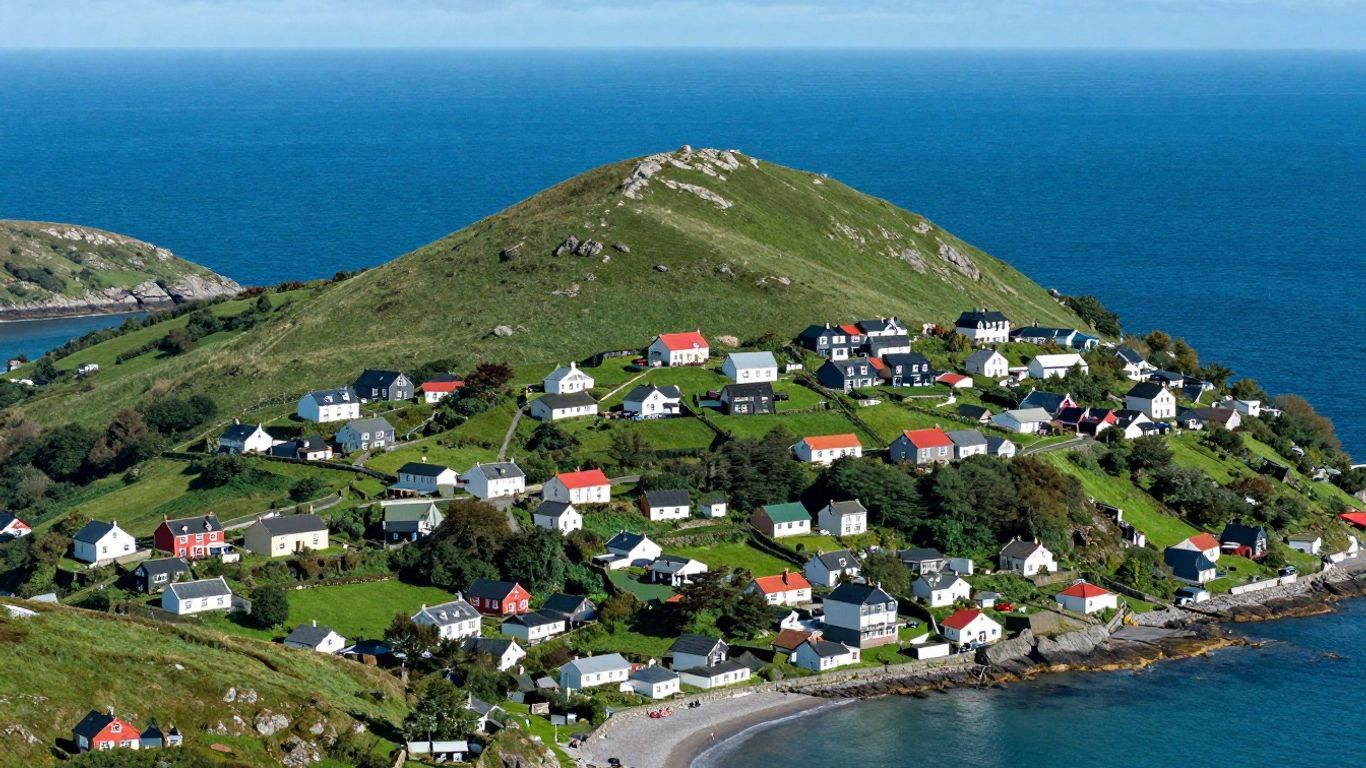
Nestled far out in the immense expanse of the South Pacific Ocean, one discovers the remote Pitcairn Islands, home to their sole settlement, Adamstown. Reaching this secluded outpost is by no means a swift endeavor; it typically necessitates an extended sea voyage originating from New Zealand. This profound isolation, undeniably, forms a significant part of Adamstown's unique character. Here, community bonds are exceptionally robust, and life unfolds at a notably more deliberate pace. Imagine it as a minuscule speck of land—yet one imbued with a vast, compelling history, predominantly known as the sanctuary for the descendants of the HMS Bounty mutineers.
Marine Conservation Hub
Adamstown and its surrounding azure waters represent far more than merely a distant home; they function as a vital sanctuary for marine life. The Pitcairn Islands Marine Reserve, in fact, stands as one of the planet's largest protected areas. This significant designation implies that an expansive sector of the ocean encircling these islands is strictly off-limits to commercial fishing and other exploitative activities. It's a concerted, deliberate endeavor to ensure the sustained health and vibrancy of the underwater ecosystem.
The unwavering commitment to ocean protection here, one might argue, serves as a defining characteristic of life in Adamstown—eloquently showcasing a profound reverence for the remarkable natural environment that so richly encompasses them.
A Population of Fifty-Two
The residential count in Adamstown is, by any standard, remarkably small. According to recent surveys, the population typically hovers around just fifty-two individuals. This intimate group constitutes the entirety of the community, collectively sharing responsibilities and embracing the distinctive lifestyle inherent to inhabiting such a secluded island. It is, without question, a truly close-knit society where every resident likely shares a personal acquaintance with every other.
Here's a quick look at the demographics:
- Total Residents: Approximately 52
- Primary Settlement: Adamstown
- Location: Pitcairn Islands, South Pacific Ocean
- Governance: British Overseas Territory
Hum, Croatia: A Medieval Marvel
Preserving Ancient Status
When contemplating the notion of a 'city,' our minds frequently conjure images of bustling metropolises adorned with towering structures and an intricate network of streets. Yet, what if a city's true definition lay in its rich history and meticulously preserved character, rather than its sheer physical footprint? This precisely describes Hum, a minuscule Croatian settlement proudly bearing the official designation of 'the smallest city in the world.' This isn't a recent phenomenon; Hum has staunchly upheld its city status since medieval times. In that era, the prerogative of cityhood often implied the presence of defensive walls and a certain measure of self-governance—not necessarily a sprawling population. Hum has remarkably clung to this singular distinction, effectively establishing itself as a unique, living museum.
The Cradle of Glagolitic Script
Hum's significance extends beyond its diminutive size; it is, in fact, a place profoundly steeped in linguistic history. It holds recognition as one of the earliest centers where the Glagolitic script—the very first Slavic alphabet—was actively employed. Remarkably, this ancient writing system remains visible today. Upon entering the town, one need only observe the venerable town gate, which proudly bears inscriptions in Glagolitic. It represents a tangible, enduring link to a significant facet of Slavic cultural heritage, openly displayed for all to see.
A Glimpse into Hum's Infrastructure
So, what exactly does daily life entail within a city possessing such an exceptionally small footprint? Hum is, quite naturally, remarkably compact. Its defining features include:
- Two historic churches that stand as quiet witnesses to centuries of unwavering faith.
- A single, charming restaurant, Humska Konoba, where you can savor authentic local flavors.
- A small cemetery, a peaceful final resting place for its residents.
- A handful of residential buildings, serving as homes for the town's very few inhabitants.
The town's meticulously preserved medieval architecture and its singular historical significance collectively contribute to its undeniable charm, creating an immersive sensation of stepping back in time. This is a place where history isn't merely confined to dusty tomes; it resonates in the very stones beneath one's feet and permeates the air breathed.
With a population count that consistently hovers around merely a couple of dozen individuals, Hum extends an almost unparalleled tranquil escape. It stands as compelling proof that a city need not be expansive to be both historically significant and utterly captivating. Its enduring medieval character and its integral role in the annals of Slavic writing cement its status as a truly special, unmissable destination.
Vatican City: A Spiritual and Artistic Enclave
The World's Smallest City-State
Vatican City, a sovereign microstate entirely enveloped by the vibrant sprawl of Rome, Italy, occupies a truly unique position on the global stage. It is not merely diminutive; it is, in fact, the smallest recognized independent state worldwide. For countless millions, it represents the very heart of their faith, serving as the revered headquarters for the Roman Catholic Church. This remarkably compact territory manages to encapsulate an astonishing wealth of history, unparalleled art, and profound spiritual significance within its modest borders.
Architectural Wonders
To traverse Vatican City is, in essence, to step into a living, breathing museum. The sheer grandeur and artistic brilliance of its structures are nothing short of breathtaking. St. Peter's Basilica, for example, stands as a truly monumental church—a quintessential masterpiece of Renaissance architecture. Within its hallowed interior, one encounters an array of incredible artworks, including the sublime Pietà by Michelangelo. Then, of course, there is the iconic Sistine Chapel, globally celebrated for its magnificent ceiling frescoed by Michelangelo, vividly depicting scenes from the Book of Genesis. It truly is a remarkable place where the realms of art and faith converge in the most spectacular fashion.
A Pilgrimage Destination
Beyond its unparalleled artistic treasures, Vatican City serves as a pivotal destination for people of faith spanning every corner of the globe. As the official residence of the Pope, it naturally becomes a central focal point for significant religious events and heartfelt pilgrimages. Visitors frequently arrive seeking a deeper spiritual connection, eager to witness profound ceremonies, or simply to immerse themselves in the palpable, profound atmosphere of this sacred locale. Indeed, the intertwined sense of history and unwavering devotion is almost tangible.
The compelling synergy of its sovereign state status, its immense religious gravitas, and its truly unparalleled collection of art and architecture collectively renders Vatican City a singularly unique destination on the global map.
Ngerulmud, Palau: Tropical Tranquility
Coastal Beauty and Coral Reefs
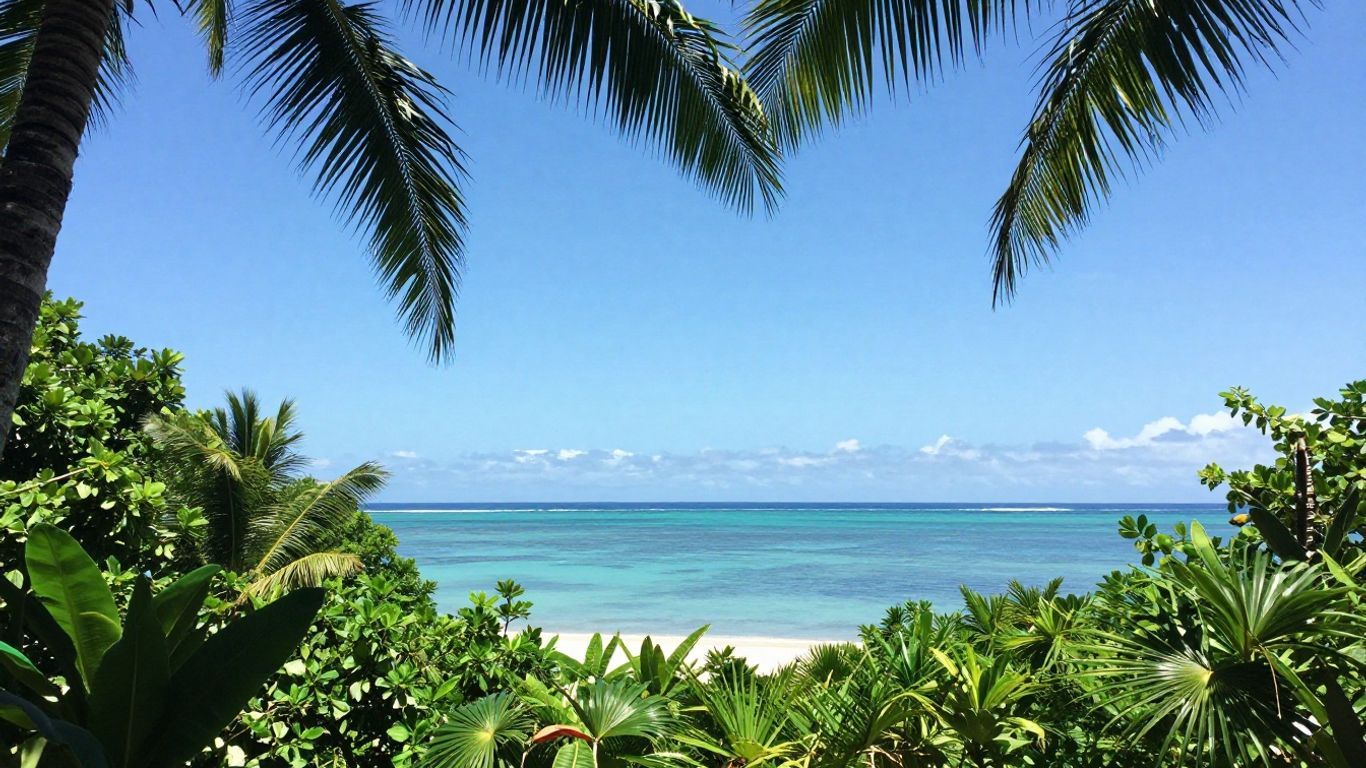
Ngerulmud, the capital of Palau, may not strike one as a bustling metropolis, but it undeniably extends a unique, profound sense of tranquility. Situated on the verdant island of Babeldaob, it is enveloped by lush green hills and commands breathtaking vistas of the Pacific Ocean. The true magnet here, however, isn't the urban settlement itself, but rather the magnificent natural environment of which it forms an intrinsic part. Palau, as many know, is celebrated for its pristine waters and remarkably vibrant marine life, rendering it a truly special destination for any devotee of the ocean.
A Diver's Paradise
Palau, it's worth noting, enjoys global acclaim for its truly exceptional underwater scenery. The archipelago proudly boasts some of the most diverse and thriving coral reefs anywhere on the planet. These intricate reefs serve as a vibrant habitat for an astonishing array of sea creatures, ranging from minuscule, kaleidoscopic fish to magnificent larger marine animals. It is, unequivocally, a premier destination that draws enthusiasts from across the world, all eager to experience these underwater marvels firsthand.
Exploring Palau's Natural Wonders
Beyond its universally celebrated diving locations, Palau presents an abundance of natural attractions and activities. The islands are beautifully punctuated by stunning, secluded beaches, crystalline lagoons, and distinctive geological formations, such as the iconic Rock Islands. These mushroom-shaped islets, luxuriantly cloaked in verdant vegetation, craft a truly breathtaking landscape, captivating observers both above and beneath the water's surface.
Here's a look at what makes Palau's natural environment so special:
- Marine Life: An incredible variety of fish, sharks, rays, and turtles inhabit the vibrant coral reefs.
- Rock Islands: These iconic limestone formations offer stunning scenic views and unparalleled kayaking opportunities.
- Jellyfish Lake: A unique inland lake where millions of stingless jellyfish can be observed in their natural habitat.
- Waterfalls: Several beautiful waterfalls can be discovered on Babeldaob island, offering refreshing natural retreats.
The sheer abundance and astonishing variety of marine life flourishing within Palau's waters are, quite frankly, truly remarkable. It is a destination where nature's intrinsic artistry is vibrantly showcased, manifest equally in the kaleidoscope of coral gardens and the diverse, enchanting creatures that proudly call them home.
A World of Wonders, Big and Small
Thus, we've completed a brief, yet illuminating, circumnavigation of the globe, focusing on some exceptionally tiny locales that steadfastly retain the esteemed title of 'city.' It's quite remarkable, isn't it, to consider that places like Adamstown or Hum, supporting merely a handful of residents, are officially recognized as urban centers? This truly compels one to ponder the very definition of 'city' itself. Evidently, it transcends mere population count; it encompasses a rich tapestry of history, vibrant culture, and perhaps even a touch of tenacious resolve to preserve that venerable city status. These destinations, though physically modest, are imbued with grand narratives, and they are assuredly worth exploring should your travels incline towards the uniquely distinct.
Frequently Asked Questions
What makes a place a 'city'?
Historically, the designation of a 'city' was not primarily determined by population figures. Instead, it often hinged on factors such as possessing its own governance and defensive fortifications. While today's definitions can certainly vary, sheer size is frequently not the predominant criterion. Many locales retain their 'city' title owing to their historical legacy, irrespective of their diminutive scale.
Is Adamstown the smallest city in the world?
Indeed, Adamstown, serving as the capital of the remote Pitcairn Islands, is widely regarded as the world's smallest city. This exceptionally isolated South Pacific island is home to approximately 52 residents. It is also distinguished as a vital sanctuary for marine life, including vulnerable shark species.
What's special about Hum, Croatia?
Hum, situated in Croatia, is renowned for its extraordinarily compact size, often cited as potentially the world's smallest city. This medieval town has admirably preserved its ancient status. Furthermore, it holds significant historical importance as one of the earliest centers for the use of the Glagolitic script—an archaic Slavic writing system. You can, in fact, observe examples of this script directly on the town's historic gate!
Why is Vatican City considered a city?
Vatican City's uniqueness stems from its status as the world's smallest independent country, nestled entirely within Rome, Italy. It serves as the spiritual epicenter of the Roman Catholic Church and is replete with astonishing art and architecture, notably St. Peter's Basilica and the Sistine Chapel. Millions of visitors are drawn here annually for spiritual pilgrimage and to witness its remarkable historical treasures.
What is Ngerulmud, Palau known for?
Ngerulmud, the capital of Palau, is widely recognized as a veritable tropical paradise. It is celebrated for its exquisite coastlines, crystal-clear waters, and spectacularly vibrant coral reefs, positioning it as a premier destination for diving and snorkeling enthusiasts. Essentially, it provides a serene retreat enveloped by breathtaking natural splendor.
Are there other very small cities?
Indeed, numerous other locales globally are recognized as exceptionally small cities. While Adamstown, Hum, and Vatican City frequently feature prominently, places such as Greenwood in Canada and St. Davids in Wales are also consistently included on lists of the world's smallest cities, each distinguished by its own distinct charm and historical narrative.


