


resources
Exploring the Largest Cities of the World: A 2026 Population Snapshot
03 Feb 2026

Ever ponder where populations are currently gravitating and laying down roots? This insightful article delves into America's most populous cities, offering a comprehensive snapshot of their projected populations as of 2026. We'll explore prevailing trends, pinpoint which urban centers are experiencing the most significant growth, and uncover the driving forces behind these compelling demographic shifts. Ultimately, it’s all about deciphering the ongoing evolution of our vibrant urban landscapes.
Key Takeaways
- New York City retains its status as the most populous city, spearheading numeric population gains.
- Cities across the South and West are experiencing considerable growth, with several notably surpassing the million-person mark.
- Population shifts reveal a widespread pattern of growth across most city sizes and regions, accompanied by an encouraging resurgence in some Northeast cities.
- Housing unit estimates and comprehensive decennial census data are crucial for deciphering how population changes are meticulously calculated.
- Fast-growing cities, such as Princeton, Texas, tend to be smaller or mid-sized, often surpassing significant population benchmarks unexpectedly.
Understanding Population Dynamics in Major Urban Centers
Key Trends in Urban Population Growth
The landscape of urban populations is ever-evolving, and recent data from 2024 reveals some truly interesting movements. For a period, many cities—particularly those in the Northeast and Midwest—experienced population declines. Yet, a notable shift is underway. We're now witnessing a comeback in some of these areas, with cities of all sizes registering growth. And it's not merely the sprawling metropolises; smaller towns and mid-sized urban areas are also commendably adding residents.
The South and West continue to be primary magnets for population increases. These regions have consistently attracted new residents, and that trend is persisting robustly. Cities in these areas, especially those ranging from 5,000 to nearly 50,000 residents, are registering some of the nation's most impressive growth rates. Even places with fewer than 5,000 people in these regions are growing, albeit at a more measured rate.
Here's a quick look at how different regions performed:
- Northeast: Exhibited a significant turnaround from previous declines, with cities over 50,000 growing by about 1.0% on average.
- Midwest: Observed moderate growth across various city sizes, with places between 10,000 and 49,999 growing by 0.7%.
- South: Spearheaded the growth with the highest average, especially in cities between 5,000 and 49,999, which grew by 1.6%.
- West: Also demonstrated robust growth, with larger cities (50,000+) and mid-sized cities (10,000-49,999) both growing by 1.0%.
However, it's crucial to bear in mind that these are averages. While some cities in a region may be experiencing rapid expansion, others might unfortunately be contracting. Ultimately, the broader narrative is one of continuous flux and necessary adaptation—a reality for urban centers everywhere.
Regional Shifts in City Populations
When we examine where people are choosing to move, certain distinct patterns emerge. The South and West are unquestionably commanding significant attention. Cities like Princeton, Texas, for instance, have seen truly explosive growth, exceeding a twofold increase in their population in just a few short years. This kind of rapid expansion, of course, represents a substantial undertaking for local infrastructure and essential services.
Meanwhile, the Northeast and Midwest are exhibiting clear indications of a resurgence. Following a period of outward migration, some of these areas are once again beginning to draw new residents. Evidently, this shift implies a reassessment of key factors—such as robust job markets, the relative cost of living, and an appealing quality of life—by individuals contemplating their residential choices.
Here's a breakdown of where the biggest numeric gains were seen:
- Top Gainers: New York City, Houston, and Los Angeles recorded the most substantial influx of residents. Notably, New York City, despite being the largest, still secured the leading position for numeric increase.
- Southern and Western Dominance: Twelve of the top 15 cities with the largest population increases were situated within the South or West. This unequivocally underscores the persistent migratory patterns towards these dynamic regions.
- Northeast Rebound: Cities like New York City demonstrate that even long-established urban centers can continue to draw considerable populations, even as other regions experience vigorous growth.
The Impact of Recent Estimates on Urban Planning
These population shifts are far more than mere statistics; they bear profound real-world implications for municipal governance and urban planning strategies. When a city's population grows quickly, urban planners must meticulously consider every facet, from housing provision and transportation networks to educational institutions and utility services. The recent estimates show that cities of all sizes are experiencing growth, implying that planning frameworks must be inherently flexible and remarkably adaptable.
For example, cities that are suddenly growing much faster than anticipated may well contend with significant challenges in meeting the escalating demand for services. This often culminates in issues such as traffic congestion, housing shortages, and increased pressure on public resources. Conversely, areas that have seen population declines could find themselves re-evaluating their strategic approaches to attract new residents or even adapting to the realities of a diminished tax base.
Consider these critical points:
- Infrastructure Demands: Rapid growth places considerable stress on roads, public transit, water systems, and power grids. Proactive planning, therefore, becomes paramount to preempting significant disruptions.
- Housing Needs: An expanding populace, quite naturally, translates to heightened demand for housing. Municipalities must thus strategically address the development of sufficient homes, apartments, and diverse living spaces to comfortably house everyone, all while maintaining a keen focus on affordability.
- Service Provision: Schools, hospitals, and emergency services must be equipped to effectively manage an expanding populace. This necessitates meticulous budgeting and judicious resource allocation.
Understanding these population dynamics represents the foundational step for city leaders and planners in formulating astute decisions that will undeniably mold the future of their communities.
America's Most Populous Cities: A 2026 Outlook
When we examine the biggest cities in the U.S., some names are quite recognizable, and they're projected to maintain their prominent standing. New York City, for instance, persists in its reign as the nation's most populous metropolis. Indeed, it has registered a notable population increase, underscoring the capacity for continued growth even within colossal urban centers. However, this narrative transcends mere numerical aggregates; it profoundly concerns what these figures signify for the residents themselves and for the future planning of these vital urban areas.
New York City's Enduring Dominance
New York City unquestionably retains its distinction as the most populous city in the United States. Based on recent estimates, it's not only maintaining its colossal footprint but, remarkably, actively augmenting its resident count. Such sustained growth is truly remarkable for a city that's already so immense. This phenomenon strongly suggests potent 'pull' factors at play—be they a thriving job market, unparalleled cultural experiences, or other compelling opportunities—that perpetually draw individuals to its vibrant core.
The Rise of Southern and Western Metropolises
While New York leads, the landscape of America's largest cities is undeniably undergoing a significant transformation. A discernible trend of robust growth is emerging in cities located in the South and the West. These regions are drawing a considerable influx of new residents, thereby recalibrating the national demographic balance. This presents a highly dynamic demographic tableau, with places like Houston and Phoenix recording substantial population gains.
Here's a look at some of the cities that saw the biggest population increases recently:
| Rank | Area Name | State Name | Numeric Increase (2023-2024) | 2024 Total Population |
|---|---|---|---|---|
| 1 | New York City | New York | 87,184 | 8,478,072 |
| 2 | Houston | Texas | 43,217 | 2,390,125 |
| 3 | Los Angeles | California | 31,276 | 3,878,704 |
| 4 | San Antonio | Texas | 23,945 | 1,526,656 |
| 5 | Fort Worth | Texas | 23,442 | 1,008,106 |
Cities Crossing the Million-Population Mark
Furthermore, a compelling development has been witnessed in the number of cities that have recently crossed the one million population mark. Indeed, this constitutes a monumental milestone for any city, signifying not only considerable growth but also profound urban development. Conceivably, such cities are evolving into pivotal hubs, attracting an even greater number of people and businesses. For example, Jacksonville, Florida, and Fort Worth, Texas, have both reached this impressive threshold, underscoring the persistent expansion in different parts of the country.
The growth patterns we're observing strongly suggest a sustained migratory flow towards areas that appear to offer compelling economic advantages and, perhaps, a distinctive lifestyle compared to older, more established urban centers. To be clear, this does not imply that venerable, older cities are stagnant—far from it—yet, the sheer pace and magnitudinal scale of expansion in the South and West truly merit particular attention.
These demographic shifts are crucial to monitor, as they exert influence over an extensive range of considerations—from critical infrastructure requirements to nuanced economic development strategies. Understanding precisely where people are moving provides us with a more lucid understanding of America's ever-evolving urban landscape.
Analyzing Numeric Population Gains
When discussing city growth, it's often tempting to focus solely on percentage increases. However, at times, the raw, numeric influx of residents into a city can reveal a distinctly different narrative. Here, we'll delve into which cities are adding the most residents, rather than merely those exhibiting the fastest relative growth.
Top Cities by Numeric Increase
While percentage growth can indeed spotlight rapid expansion in smaller places, a focus on raw numeric gains, conversely, pinpoints where the most substantial population shifts are unfolding. New York City, N.Y., remarkably, led the pack for numeric gains between 2023 and 2024, with an impressive addition of 87,184 residents. This powerfully illustrates that even long-established, expansive cities possess the enduring capacity to draw considerable populations. Close behind were Houston, Texas (43,217), and Los Angeles, California (31,276). Other major cities like San Antonio, Texas, and Fort Worth, Texas, also secured positions within the top five, further demonstrating a consistent growth trajectory in large urban centers.
Here's a look at some of the cities with the largest numeric population increases:
| Rank | Area Name | State Name | Numeric Increase (2023-2024) |
|---|---|---|---|
| 1 | New York City | New York | 87,184 |
| 2 | Houston | Texas | 43,217 |
| 3 | Los Angeles | California | 31,276 |
| 4 | San Antonio | Texas | 23,945 |
| 5 | Fort Worth | Texas | 23,442 |
The Role of Southern and Western Regions in Growth
The data unmistakably indicates that the South and West act as principal catalysts for numeric population growth. Of the top 15 cities with the largest numeric gains, the vast majority were situated within these two dynamic regions. This enduring trend mirrors persistent migratory patterns and the allure of burgeoning economic opportunities that continue to attract individuals to these locales. Cities like Jacksonville, Florida, and Fort Worth, Texas, even surpassed the formidable one million-resident threshold during this specific period, emphatically underscoring the considerable expansion occurring in the South.
Northeast Cities Rebounding in Population
Quite interestingly, the 2024 estimates reveal a notable demographic pivot for some cities in the Northeast. Following sustained periods of population contraction, a number of cities within this region are now, commendably, registering population gains. Such a development hints at a potential reversal—or at least a stabilization—of previous demographic trajectories. While the South and West unquestionably continue to spearhead overall numeric gains, the resurgence observed in certain Northeastern cities represents a truly significant development worthy of close observation. Several factors might be influencing this phenomenon, not least evolving economic conditions and the shifting housing market dynamics within these long-established urban cores. Indeed, it serves as a powerful reminder that population shifts rarely follow a linear path and can, and do, evolve considerably over time—much like how Sydney is strategically adapting its infrastructure to manage burgeoning growth [a8dd].
It's crucial to acknowledge that population estimates are inherently dynamic. While large cities frequently witness the most substantial numeric gains, however, comprehending the nuanced regional shifts—and the encouraging rebound in locales such as the Northeast—offers a far more comprehensive portrait of precisely where individuals are opting to establish their lives, and critically, the underlying motivations for these decisions.
Growth Patterns Across Different City Sizes
Population Changes in Large Urban Areas
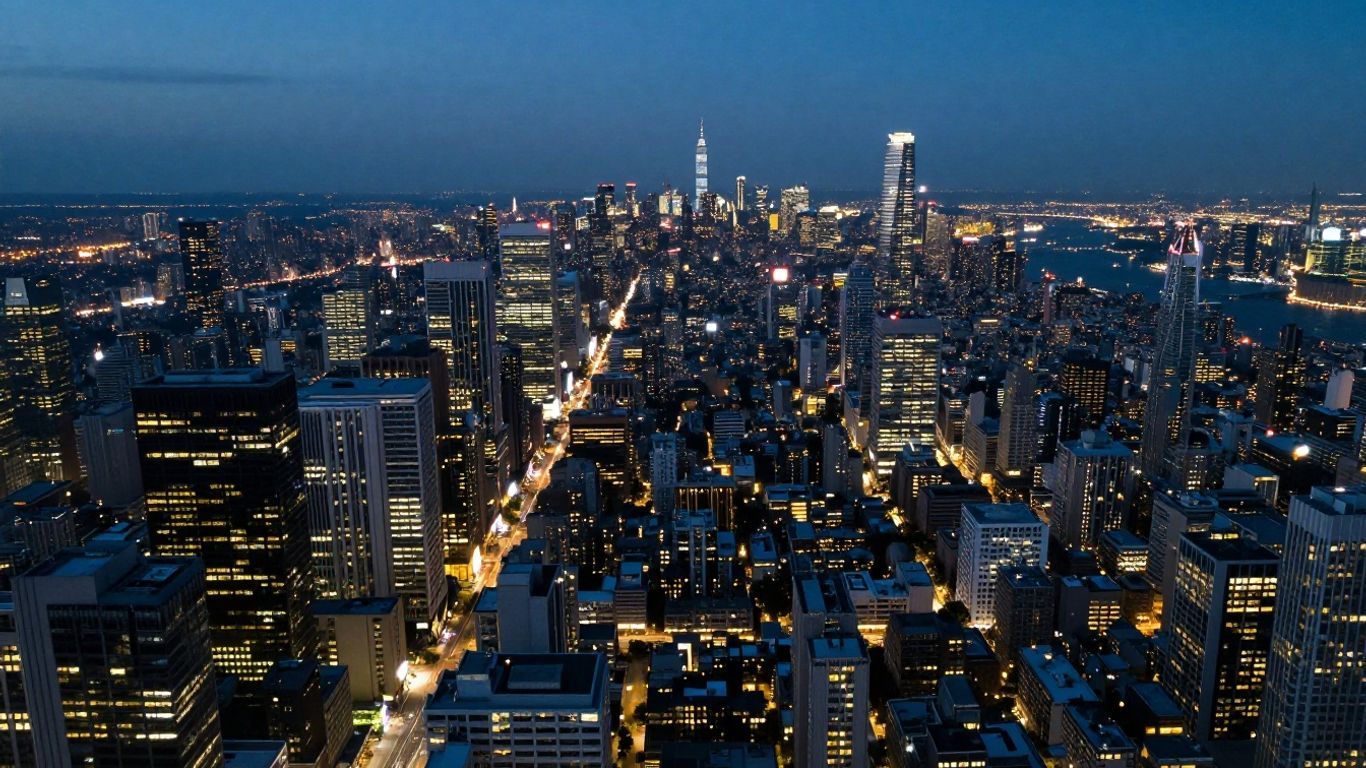
When we look at the biggest cities—the ones with 50,000 or more residents—we observe a remarkably consistent growth rate. In 2024, these large urban centers registered an average population increase of approximately 1.0%. This represents a commendable leap, especially when compared to the previous year's figures. It distinctly demonstrates that even the most venerable and expansive cities continue to exert a powerful magnetic pull. Cities like New York, Houston, and Los Angeles, for example, recorded some of the most substantial numeric population gains, with tens of thousands of new residents joining their ranks.
Growth Trends in Mid-Sized Cities
Mid-sized cities, generally those with populations between 10,000 and 49,999, are likewise performing quite robustly. These have collectively experienced an average growth rate of approximately 1.1%. This particular demographic category is frequently regarded as a desirable 'sweet spot,' providing an appealing equilibrium between the extensive amenities of larger metropolises and a generally more manageable rhythm of life. Indeed, many such cities are undergoing significant expansion, with some, notably, surpassing the 100,000-resident threshold for the very first time. The South and West, in particular, are exhibiting pronounced strength within this category.
The Dynamics of Smaller Municipalities
Even the smallest incorporated places—those with fewer than 5,000 residents—are, encouragingly, demonstrating renewed vitality. While their overall growth rate remains somewhat modest, averaging around 0.3% nationally, it nevertheless represents a positive departure from prior years when several experienced subtle, yet discernible, declines. This implies a broader, more diversified trend of individuals relocating to a wider array of communities, extending far beyond solely the sprawling mega-cities. Intriguingly, in the Northeast, even these smaller towns recorded population increases in 2024, following a notable period of previous decline.
Evidently, it's clear that population shifts are no longer solely confined to the sprawling urban cores. Instead, growth is manifesting across the entire spectrum—from the biggest metropolises to the smallest towns—even if the specific pace and underlying rationales may indeed vary considerably.
Here's a quick look at the average growth rates by city size:
- Cities with 50,000+ residents: ~1.0% average growth
- Cities with 10,000-49,999 residents: ~1.1% average growth
- Cities with 5,000-9,999 residents: ~1.0% average growth
- Cities with fewer than 5,000 residents: ~0.3% average growth
Factors Influencing City Population Shifts
So, what precisely underpins the ebb and flow of a city's population? It's rarely a singular cause; rather, it's a complex interplay of myriad factors, each contributing significantly to the dynamic. Consider it akin to a meticulously crafted recipe: achieving a desirable outcome necessitates the precise combination of ingredients, in just the right proportions.
The Influence of Housing Unit Estimates
A significant component of this complex puzzle is how we count housing units. When new apartments or houses are built, it often serves as a strong indicator that additional residents are likely to relocate there. The U.S. Census Bureau leverages housing unit estimates to deduce population shifts occurring between the comprehensive decennial censuses. Should an area experience a surge in new housing construction, it's highly probable that its population is expanding, even absent immediate, precise individual counts. This holds particularly true for regions undergoing swift developmental transformation.
Incorporating Decennial Census Data
Every ten years, the comprehensive official count is conducted—the Decennial Census. This serves as the fundamental bedrock upon which all subsequent population estimates are constructed. It provides the most precise demographic snapshot available and is instrumental in adjusting and calibrating annual estimations. One might conceptualize it as the crucial overarching 'check-up' that ensures the integrity of all subsequent, more frequent assessments. Without this robust foundational data, the reliability of yearly figures would be significantly diminished. The data from the 2020 Census still profoundly shapes how we understand population trends today.
Understanding Population Estimation Methodologies
But how, precisely, are these annual population figures derived? It's, admittedly, a sophisticated and multifaceted process. The Census Bureau employs a variety of methods. Their methodology involves analyzing elements such as birth and death records, migration patterns (both within the U.S. and from other countries), and changes in housing. They also meticulously utilize surveys and administrative records from other government agencies. This represents an unceasing endeavor to refine these methodologies for maximum accuracy, particularly in the interim periods between the decennial census undertakings.
Here's a simplified look at what goes into the estimates:
- Housing Unit Estimates: Tracking new construction and demolitions.
- Vital Records: Using birth and death certificates to account for natural population change.
- Migration Data: Analyzing data on people moving in and out of areas, including international migration.
- Administrative Records: Incorporating data from sources like tax returns or school enrollment.
Crucially, it's vital to recall that these figures are indeed estimates. Although grounded in robust data and sophisticated methodologies, they inherently differ from an exhaustive, full enumeration. While providing an excellent approximation of population shifts, a margin of error invariably persists. Ultimately, the objective is to furnish the most current demographic portrait feasible, thereby facilitating effective planning and a deeper understanding of our communities.
For instance, cities across the South and West have registered significant growth, a phenomenon partly attributable to new housing developments and abundant job opportunities. Concurrently, certain Northeastern cities that previously experienced declines are now exhibiting promising signs of population increases, potentially signaling an intriguing shift in migration patterns. Such fluctuations powerfully underscore the inherent dynamism of urban populations.
Emerging Population Centers and Their Trajectories
While journalistic headlines frequently spotlight the colossal scale of long-established metropolises, an equally captivating narrative is unfolding through the emergence of burgeoning population centers and the evolving dynamics within existing ones. The focus, then, extends beyond mere size; it encompasses the crucial questions of where individuals are relocating and, more importantly, their motivations. Indeed, several intriguing patterns are discernible, actively reshaping the very fabric of our urban landscape.
Fastest-Growing Cities and Their Characteristics
Some cities are experiencing growth at an absolutely remarkable pace. Take Princeton, Texas, for example. This particular city registered an astonishing growth rate exceeding 30% in a mere single year, effectively more than doubling its population since 2020. Such extraordinary rapid expansion is, notably, not an isolated phenomenon, with other municipalities—particularly across the South and West—also exhibiting significant population gains. These fast-growing areas typically exhibit a convergence of distinctive characteristics:
- Economic Opportunities: New jobs, often in burgeoning sectors like tech, manufacturing, or logistics, consistently attract new residents.
- Affordability: Compared to older, more established urban centers, these emerging hubs can frequently offer more accessible and affordable housing options.
- Quality of Life: Many boast attractive amenities, reputable schools, and a generally lower cost of living, enhancing their appeal.
Here's a look at some of the top performers in terms of percentage growth:
| Rank | Area Name | State Name | Percent Increase | 2024 Total Population |
|---|---|---|---|---|
| 1 | Princeton city | Texas | 30.6 | 37,019 |
| 2 | Fulshear city | Texas | 26.9 | 54,629 |
| 3 | Leesburg city | Florida | 18.5 | 37,815 |
| 4 | Celina city | Texas | 18.2 | 51,661 |
| 5 | Anna city | Texas | 14.6 | 31,986 |
Cities Reaching New Population Milestones
Beyond rapid percentage growth, a number of cities are, in fact, traversing significant population thresholds, thereby solidifying their status as burgeoning major urban areas. In 2024, two cities, Jacksonville, Florida, and Fort Worth, Texas, officially exceeded the one million resident benchmark. This achievement transcends mere numerical statistics; it inherently signifies a profound reclassification of their urban status, along with the concomitant need for expanded services and infrastructure to sustain a considerably larger populace. Similarly, numerous other cities, frequently clustered within the Sun Belt, surpassed the 100,000-person milestone. Such widespread growth points to a broader, nationwide trend of population redistribution, with a notable concentration of these new 'million-plus' cities emerging in the South and West. Grasping the nuances of these demographic shifts is absolutely paramount for informed future development—much like how blockchain technology is poised to revolutionize the healthcare industry with enhanced security and accessibility [a05a].
The Significance of Population Thresholds
Crossing population thresholds, whether it's reaching 20,000, 100,000, or 1 million residents, carries profound real-world implications. Such milestones frequently act as catalysts for significant changes in municipal governance, in the strategic planning of transportation and housing, and even in the spectrum of businesses a city can attract. For instance, cities that cross the 100,000 mark might, for example, become eligible for increased federal funding opportunities or find themselves confronting novel regulatory imperatives. The U.S. Census Bureau's estimates offer a crucial, up-to-date snapshot of these transformations, thereby enabling urban planners and policymakers to proactively anticipate forthcoming needs.
The relentless movement of people—demographic migration—remains a perpetual force, indelibly shaping the very fabric of our communities. While the presence of established urban giants endures, the burgeoning growth observed in smaller and mid-sized cities—particularly within specific regions—signals a dynamic, ongoing evolution in precisely where Americans are opting to live and, indeed, to forge their futures.
These emerging centers, whether defined by rapid percentage gains or by crossing major population milestones, are steadily growing in significance within the overarching national demographic landscape. Their collective trajectories, therefore, provide a compelling glimpse into the evolving future of urban development and population distribution across the United States.
Looking Ahead: What These Numbers Tell Us
In essence, we've explored some of the biggest cities in the U.S. and how their populations are changing. It's quite compelling to observe which places are growing the most, both numerically and proportionally. New York City, Houston, and Los Angeles are still adding a great many people—a fact that scarcely comes as a surprise. Yet, it's equally fascinating to witness smaller towns, particularly in the South and West, truly flourishing. Such comprehensive data helps us better comprehend where people are moving and the underlying motivations behind those choices. As we cast our gaze toward 2026, these discernible trends offer invaluable insights into what to anticipate for urban growth nationwide. Indeed, it presents a highly dynamic picture, and it will be truly captivating to observe how these demographic shifts continue to unfold.
Frequently Asked Questions
Which cities grew the most in population recently?
New York City, Houston, and Los Angeles registered the most substantial increases in population. New York City, in fact, added the most residents, marking a notable resurgence. Other cities like San Antonio and Fort Worth in Texas also experienced considerable population gains, underscoring widespread growth across various regions of the nation.
Are cities in the South and West growing faster than others?
Yes, cities in the South and West generally tend to be expanding at a more rapid pace. Indeed, a significant number of the cities recording the most substantial population increases are situated within these regions. This consistent trend indicates a considerable migration toward these areas, likely driven by factors such as promising job markets or the allure of a distinct lifestyle.
Did any cities reach a big population milestone?
Certainly! Jacksonville, Florida, and Fort Worth, Texas, both surpassed the significant one million population benchmark between 2023 and 2024. This pivotal achievement elevates their status to major metropolitan areas, accommodating a truly substantial number of residents.
Are smaller towns and cities growing too?
Indeed, municipalities across the entire spectrum of sizes are experiencing growth, which is certainly welcome news! Even quaint, smaller towns are observing an influx of new residents. While colossal cities such as New York frequently command the spotlight for their sheer population figures, it's noteworthy that smaller locales are likewise registering appreciable growth.
Why are city populations changing so much?
Population dynamics are influenced by a multitude of factors. Elements such as the construction of new housing, the availability of robust job opportunities, and individuals seeking diverse living environments all contribute significantly. To ascertain these demographic shifts, the U.S. Census Bureau employs a variety of methodologies, notably incorporating housing unit estimates and historical census data.
What does 'numeric increase' mean for cities?
Essentially, 'numeric increase' refers to the absolute total number of residents a city has acquired over a specified timeframe, for instance, from one year to the subsequent. To illustrate, if a city's population stood at 100,000 and subsequently rose to 101,000, its numeric increase would be precisely 1,000 individuals.


