
resources
Exploring US Cities by Population: A 2026 Overview
05 Apr 2026

This article explores cities by population in the U.S. for 2026, offering an insightful look into where Americans reside, which urban centers are experiencing the most significant growth, and the broader implications of population size. It’s quite interesting, isn't it, to observe how the country’s population is distributed? We’ll delve into both the largest cities and some smaller, burgeoning communities that are attracting a considerable influx of new residents. Essentially, we're providing a comprehensive snapshot of where people are choosing to call home right now.
Key Takeaways
- The US population largely remains concentrated in prominent urban centers, yet growth patterns are notably shifting across various regions.
- Cities within the Southern and Western states are experiencing more rapid population growth compared to their counterparts in the Northeast and Midwest, although some northern cities are now seeing increases after prior declines.
- While the largest cities numerically gain the most residents, smaller towns and cities are also expanding, exhibiting diverse percentage increases.
- A significant majority of incorporated places throughout the U.S. consist of small towns, typically housing fewer than 5,000 residents.
- Population changes observed between 2023 and 2024 revealed reversals and substantial shifts, with cities of all sizes generally growing at a faster pace than in the preceding year.
Understanding Cities by Population US Trends
Shifting Growth Patterns Across Regions
In recent times, U.S. cities have demonstrated discernible shifts in both the manner and location of their population expansion. Cities across the country experienced a notable uptick in population growth from 2023 to 2024, with Southern and Western areas leading the charge in terms of speed. Intriguingly, the Northeast—a region that had recently been shedding residents—actually reversed this trend, posting growth once more, particularly within its larger metropolitan areas. Concurrently, cities of all sizes throughout the Midwest welcomed new residents, albeit at a somewhat milder pace.
Here's a simple look at the average growth rates across different regions and city sizes in 2024:
| Region | Under 5,000 | 5,000–9,999 | 10,000–49,999 | 50,000+ |
|---|---|---|---|---|
| Northeast | +0.1% | +0.3% | +0.7% | +1.0% |
| Midwest | +0.1% | +0.6% | +0.7% | +0.7% |
| South | +0.6% | +1.6% | +1.6% | +1.1% |
| West | +0.5% | +0.7% | +1.0% | +1.0% |
Growth, it seems, is no longer solely confined to a handful of major metropolitan areas; rather, cities and towns in all corners of the nation are expanding their populations, though at differing rates and with unique characteristics.
The Impact of Population Size on Growth Rates
The interplay between a city’s overall size and its rate of growth is, frankly, quite intriguing. While smaller communities continue to constitute the majority of incorporated places in the U.S., larger cities often register a higher numeric gain in residents—even if their percentage growth rates might appear lower by comparison.
- Towns with populations under 5,000 experienced an average growth of 0.3%.
- Cities housing 5,000 to 9,999 residents averaged 1.0% growth.
- Communities with populations ranging from 10,000 to 49,999 grew by 1.1%.
- Larger cities, specifically those with 50,000 or more residents, posted an average growth rate of 1.0%.
What stands out most vividly is the explosive growth witnessed in certain mid-sized cities—Princeton, Texas, for example, saw an increase of over 30% in just one year—even as the nation's largest cities also report impressive gains, largely due to their sheer scale.
Key Takeaways from Recent Population Changes
Here are a few points that encapsulate the most recent trends:
- Most of the fastest-growing cities—whether measured by percentage or sheer numbers—are located in the South and West.
- The Northeast is demonstrating a rebound, with its larger cities now experiencing population gains instead of losses.
- Growth is no longer exclusively the domain of vast urban centers; indeed, many mid-sized and even smaller towns have seen their best increases in years.
- While major cities like New York, Houston, and Los Angeles continue to add the most people in raw numbers, smaller places can exhibit much higher percentage increases, highlighting localized booms.
The overarching picture? U.S. cities aren’t all expanding at a uniform pace, but more places—both expansive and intimate—are gaining residents now than at any point in the immediate past. This suggests a broad-based, though uneven, demographic shift.
America's Most Populous Urban Centers
When one refers to the largest cities in the U.S., one is typically referring to places where a substantial number of people reside in close proximity. These aren't merely individual towns; rather, they are often sprawling metropolitan areas that encompass numerous smaller towns and suburbs. Indeed, these can be viewed as major hubs for employment, culture, and virtually every other facet of modern life—true engines of the economy.
New York City: Leading the Nation
New York City unequivocally maintains its preeminent position as the most populated urban center in the United States. Crucially, this encompasses not only the city itself but also the broader metropolitan area—a vast expanse that includes portions of New Jersey and Pennsylvania—which collectively houses nearly 20 million people. This immense concentration of population naturally fosters a unique environment, characterized by complex logistical demands and an ever-present need for a wide array of services.
Los Angeles and Chicago: Major Population Hubs
Following New York, the Los Angeles metropolitan area in California emerges as another colossal urban expanse, boasting over 13 million residents. It serves as a global nexus for entertainment and stands as a significant gateway to the Pacific Rim. Chicago, strategically spanning parts of Illinois, Indiana, and Wisconsin, ranks third among the nation's largest metro areas, accommodating close to 10 million people. These cities, it's clear, are formidable economic powerhouses, consistently attracting individuals from across the globe.
Houston and Phoenix: Significant Urban Growth
While New York, Los Angeles, and Chicago have historically been—and remain—major population centers, cities like Houston and Phoenix are demonstrating truly remarkable growth. The Houston metro area in Texas, for instance, is home to nearly 8 million people, solidifying its status as a significant hub in the South. Phoenix, Arizona, also features a substantial population, with its metropolitan area exceeding 5.4 million residents. These dynamic cities are actively drawing new residents, often propelled by robust job markets and, in many cases, a comparatively lower cost of living when contrasted with older, more established urban centers.
Here's a look at the top metropolitan areas by population:
| Rank | Metropolitan Area | Population (2025) | States |
|---|---|---|---|
| 1 | New York-Newark-Jersey City | 19,641,225 | NY-NJ-PA |
| 2 | Los Angeles-Long Beach-Anaheim | 13,288,904 | CA |
| 3 | Chicago-Naperville-Elgin | 9,879,320 | IL-IN-WI |
| 4 | Dallas-Fort Worth-Arlington | 7,978,340 | TX |
| 5 | Houston-The Woodlands-Sugar Land | 7,975,220 | TX |
| 6 | Atlanta-Sandy Springs-Alpharetta | 6,577,299 | GA |
| 7 | Washington-Arlington-Alexandria | 6,538,392 | DC-VA-MD-WV |
| 8 | Miami-Fort Lauderdale-Pompano Beach | 6,423,080 | FL |
| 9 | Philadelphia-Camden-Wilmington | 6,325,972 | PA-NJ-DE-MD |
| 10 | Phoenix-Mesa-Chandler | 5,469,313 | AZ |
The sheer concentration of people within these premier urban centers means they are utterly vital to the nation's economic vitality and cultural tapestry. They frequently spearhead innovation, drive business development, and set trends that ripple across the entire country.
Cities Experiencing Notable Population Gains
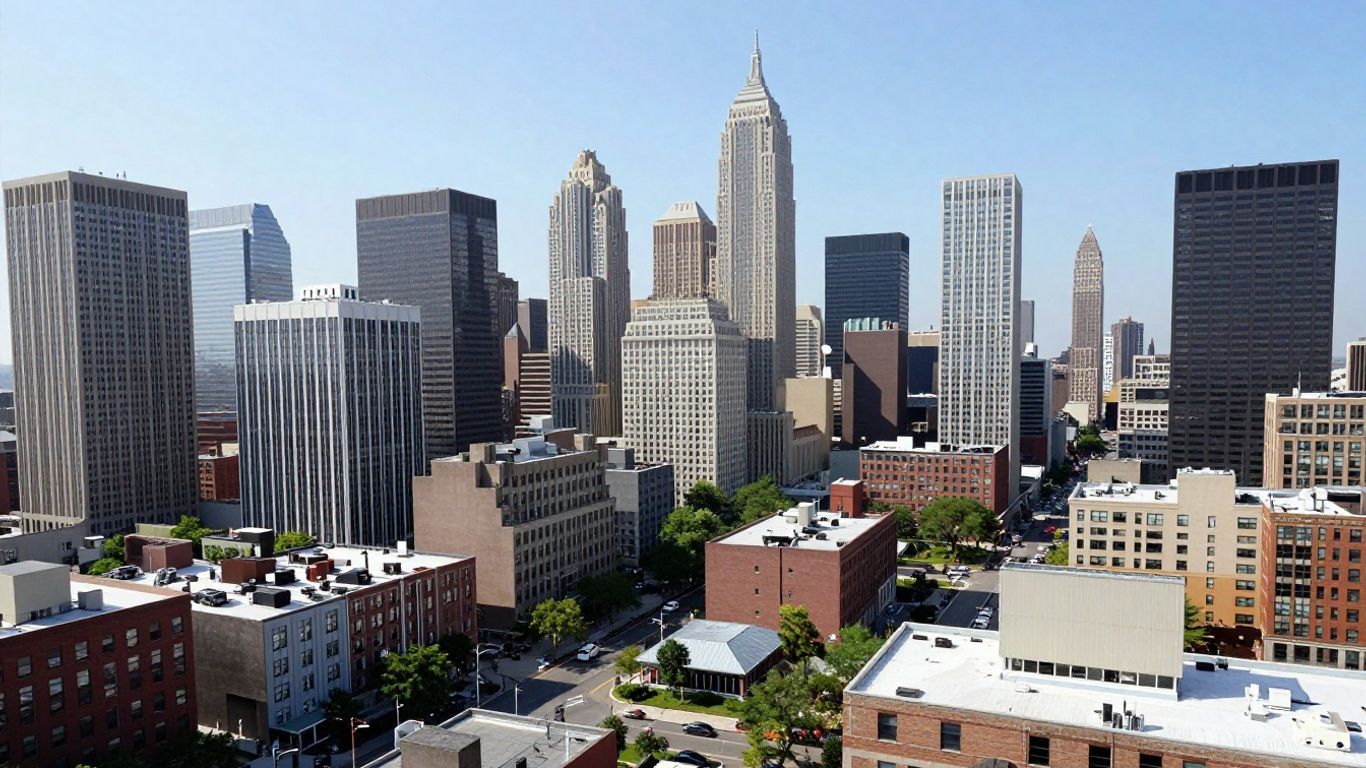
Indeed, it's quite insightful to observe which cities are truly flourishing these days. While some localities might exhibit stable populations, others are steadily attracting new residents at a fairly rapid pace. This section examines the cities that have experienced some of the most substantial increases in population, considering both raw numbers and percentage growth. What does this reveal? It offers us a concise snapshot of where people are choosing to relocate and, importantly, the underlying reasons for their decisions.
Top Cities for Numeric Population Increase
When we discuss the most significant population increases, one is considering the sheer volume of new individuals who have chosen to call a particular city home. New York City, for example, frequently leads these rankings, consistently adding tens of thousands of residents year after year. Other major hubs like Houston and Los Angeles also consistently feature prominently, attracting a substantial number of new inhabitants. Yet, it's not exclusively the largest cities that are booming; places such as Fort Worth, Texas, and Jacksonville, Florida, have recently surpassed the 1 million population mark, indicating considerable and sustained growth.
Here's a look at some of the cities that added the most residents between mid-2023 and mid-2024:
| Area Name | State Name | Numeric Increase | 2024 Total Population |
|---|---|---|---|
| New York City | New York | 87,184 | (Not specified) |
| Houston | Texas | 43,217 | (Not specified) |
| Los Angeles | California | 31,276 | (Not specified) |
| San Antonio | Texas | 23,945 | (Not specified) |
| Fort Worth | Texas | 23,442 | (Not specified) |
Cities Crossing Key Population Thresholds
At times, a city's expansion is most vividly highlighted by its achievement of a significant population milestone. Surpassing the 1 million or even the 100,000 resident mark is, without question, a significant achievement. It often signifies a city's evolution into a more substantial economic and social center, attracting further investment and development. Between 2023 and 2024, several cities, particularly those situated in the dynamic South and West, successfully crossed these important thresholds. For instance, Jacksonville, Florida, and Fort Worth, Texas, both impressively exceeded 1 million people. Furthermore, a number of other cities—including several more in Florida and Texas—comfortably moved past the 100,000 population mark, indicating broad regional growth.
Fastest-Growing Cities by Percentage
While expansive cities might well add the greatest number of people in absolute terms, some smaller cities are experiencing remarkably swift growth relative to their existing size. This impressive percentage growth can effectively highlight areas undergoing rapid development or emerging as highly desirable new places to reside. Princeton, Texas, for instance, has consistently emerged as a standout, showcasing remarkable percentage increases year after year. Other communities, such as Fulshear, Texas, and Leesburg, Florida, similarly demonstrate impressive growth rates, often fueled by factors like affordability and burgeoning job opportunities.
Here are some of the cities that saw the highest percentage growth:
- Princeton, Texas (30.6%)
- Fulshear, Texas (26.9%)
- Leesburg, Florida (18.5%)
- Celina, Texas (18.2%)
- Anna, Texas (14.6%)
The patterns of population gain clearly reveal a dynamic shift across the country. While established large cities predictably continue to attract many new residents, smaller and mid-sized cities—especially those in the South and West—are experiencing significant percentage growth, signaling robust new development and evolving migration trends.
These shifts in population are actively reshaping communities and simultaneously generating new opportunities. Understanding these growth trends helps us discern the country's trajectory and how different regions are developing. For more insights into how cities are evolving, you can explore resources like citiesabc.
Regional Dynamics in US Population Distribution
When we consider the distribution of residents across the United States, it becomes evident that population isn't uniformly spread. Distinct regions are grappling with unique demographic trends, collectively shaping the nation's evolving human map. Grasping these shifts is, in essence, fundamental to comprehending the larger narrative of population changes.
Growth in the Northeast and Midwest
Historically, the Northeast and Midwest regions often experienced slower population growth, or even outright declines in certain areas. However, recent data from 2024 reveals a notable shift. The Northeast, particularly, has begun to see population growth once more. Cities and towns within this region, especially its larger centers with 50,000 or more residents, are now expanding at a faster pace than previously observed. The Midwest, too, is showing modest growth, with both smaller towns and mid-sized cities actively contributing to this positive trend.
Here's a look at the average growth rates by region and place size in 2024:
| Region | Population Size | Average Growth Rate |
|---|---|---|
| Northeast | < 5,000 | 0.1% |
| Northeast | 50,000+ | 1.0% |
| Midwest | < 5,000 | 0.1% |
| Midwest | 5,000 - 9,999 | 0.6% |
| Midwest | 10,000 - 49,999 | 0.7% |
| Midwest | 50,000+ | 0.7% |
Accelerated Growth in the South and West
The Southern and Western regions consistently remain significant attractors for population growth. These areas have been drawing in new residents for many years, and this trend appears to be enduring, showing no discernable signs of slowing down. Factors such as warmer climates, a comparatively lower cost of living in some locales, and expanding job markets—especially in sectors like technology and healthcare—are strong draws. Are people actively seeking new opportunities here? Absolutely; the Sunbelt states, in particular, are experiencing exceptionally significant increases.
Here's how the South and West are performing:
- South: This region consistently exhibits the highest average population growth. While smaller towns (under 5,000 people) are expanding, the most substantial increases are evident in places with populations between 5,000 and 49,999 residents, which are growing at an impressive average rate of 1.6%.
- West: This region also experiences robust growth. Cities and towns with populations between 10,000 and 49,999, as well as those with 50,000 or more residents, are seeing an average growth rate of 1.0%. Even the most diminutive communities in the West are growing, albeit at a more measured pace.
The enduring concentration of population in large metropolitan areas continues to be a defining characteristic of the U.S. landscape. These vibrant hubs, often spanning multiple counties and even states, are where a significant portion of the nation's economic activity and innovation originates. Comprehending the nuanced dynamics within these vast urban centers is paramount for businesses—consider, for instance, those looking to optimize their distribution networks by shifting towards smaller fulfillment centers.
Population Trends in Smaller Communities
While expansive cities often dominate public discourse, smaller communities are likewise undergoing their own unique population shifts. Across all regions, places with fewer than 5,000 residents are generally observing a degree of growth, though it’s frequently at a more gradual pace compared to their larger counterparts. This trend indicates a continued, albeit subtle, movement towards—or retention of—residents in smaller towns. Princeton, Texas, for example, a thriving suburb of Dallas, has witnessed its population more than double since 2020, powerfully demonstrating that even more intimate locales can experience rapid expansion. Such growth in smaller communities, it's worth noting, can significantly impact local resources and infrastructure, necessitating thoughtful planning.
The Landscape of Incorporated Places
When we discuss where people reside in the U.S., one might instinctively focus on the sprawling metropolises and expansive urban areas. Yet, the nation is, in fact, comprised of a vast number of smaller communities. These are the "incorporated places," which are essentially legally defined municipal governments. Consider these to be the towns, villages, and cities that exercise their own local governance and self-determination.
Prevalence of Small Towns
Perhaps it's surprising to discover just how abundant small towns truly are. As of 2024, the U.S. encompasses over 19,000 incorporated places. The overwhelming majority of these—approximately 75 percent—are home to fewer than 5,000 residents. That translates to more than 14,000 communities that are rather modest in terms of population. Don't these places often possess a distinct local character and foster a genuinely close-knit community feel?
Distribution of Larger Cities
While small towns are undoubtedly abundant, it's in the larger cities where a significant portion of the U.S. population resides. These more expansive municipalities, even if they don't individually form massive metropolitan areas, serve as crucial centers of commerce, culture, and community life.
Cities with Populations of 50,000 and Over
Considering the broader scope, cities with populations of 50,000 or more represent a smaller fraction of the total incorporated places but house a considerable portion of the populace. In 2024, only about 4.2 percent of all incorporated places—amounting to approximately 817 cities—had populations of 50,000 or more. An even smaller number, just 342 cities (a mere 1.8 percent), reported populations exceeding 100,000. These larger cities, it’s worth noting, frequently act as dynamic hubs for economic activity and invariably draw individuals seeking more extensive opportunities.
The organizational structure of incorporated places in the U.S. reveals a clear and compelling pattern: an immense multitude of very small communities coexisting alongside a lesser number of significantly larger population centers. This distribution profoundly influences everything from the provision of local services to the contours of regional economies.
Looking Ahead: The Evolving American Landscape
As we conclude this examination of U.S. cities in 2026, it's abundantly clear that population shifts remain a constant force. We've observed how major hubs like New York City continue to lead in sheer numbers, while vibrant places like Houston and Los Angeles exhibit significant, sustained growth. It's also quite interesting to note the promising comeback of some Northeastern cities and the consistent expansion witnessed throughout the South and West. The collected data demonstrates that cities of all sizes are, in fact, growing, albeit at varied rates. Comprehending these dynamic trends helps us gain a broader perspective on where people are choosing to live and the diverse reasons underpinning their choices. This ongoing movement fundamentally shapes our communities and economies in ways we are continuously endeavoring to understand.
Frequently Asked Questions
Which U.S. cities have the most people?
New York City consistently ranks as the most populous urban center in the U.S., boasting over 8 million residents. Following closely are Los Angeles and Chicago, which are also immensely significant population hubs. Additionally, cities such as Houston and Phoenix stand among the largest, demonstrating considerable growth.
Are cities in the U.S. growing or shrinking?
Generally speaking, cities across the U.S. are experiencing growth! Many locales, even those in the Northeast and Midwest that previously saw population declines, are now welcoming more residents. Cities situated in the dynamic South and West, however, are expanding at an even more accelerated pace.
What does 'numeric increase' mean for city populations?
A 'numeric increase' refers to the actual, raw number of people a city gained. For instance, New York City recorded the largest numeric increase, adding over 87,000 residents. Houston and Los Angeles also reported substantial gains in their overall population figures.
Are there specific cities that are growing really fast?
Indeed, some cities are experiencing remarkably rapid growth! Princeton, Texas, emerged as the fastest-growing city by percentage, boosting its population by over 30% in just one year. Many other communities in Texas and Florida are also expanding at an impressive speed.
Do most people live in big cities or small towns?
In the U.S., a majority of the population resides in larger cities and towns, particularly those with 50,000 or more residents. However, it’s worth noting that the U.S. still comprises a vast number of small towns; in fact, most of the officially recognized cities or towns have fewer than 5,000 inhabitants.
Did any cities reach a new population milestone recently?
Yes, two notable cities surpassed the 1 million population mark between 2023 and 2024. Jacksonville, Florida, and Fort Worth, Texas, are now each home to over a million people, signifying their emergence as major population hubs within the country.
Share

citiesabc resources
Citiesabc is a digital transformation platform dedicated to empowering, guiding, and indexing cities worldwide. Established by a team of global industry leaders, academics, and experts, it offers innovative solutions, comprehensive lists, rankings, and connections for the world's top cities and their populations


