


resources
Mastering the 50 US States Capitals: Your Ultimate Guide
27 Feb 2026

Contemplating the fifty U.S. state capitals can certainly feel like a considerable undertaking, couldn't it? It's quite understandable to find them easily confused, particularly when attempting to commit them all to memory simultaneously. Whether you're diligently preparing for an academic examination, engaging in spirited trivia, or simply fostering a deeper curiosity about the nation, this comprehensive guide aims to simplify the learning process. We'll systematically delineate each capital, state by state, allowing you to confidently grasp this essential knowledge without feeling overwhelmed. Indeed, let's embark on mastering these crucial capitals!
Key Takeaways
- Learning all 50 US states capitals is achievable with a structured approach.
- Many resources, like interactive maps and flashcards, can help you study.
- Quizzes and games are fun ways to test your knowledge of the 50 US states capitals.
- Understanding state locations alongside their capitals improves recall.
- Regular practice is key to remembering the 50 US states capitals.
1. Albany
Our journey through the fifty U.S. state capitals commences with Albany, the capital of New York. Nestled gracefully along the Hudson River, Albany boasts a venerable history spanning centuries, predating its official designation as a state capital. It proudly stands as one of the oldest continuously chartered cities in the United States—a fascinating distinction, wouldn't you agree?
Albany officially became the capital of New York in 1797. This pivotal decision followed a period during which the capital's location shifted somewhat, but Albany's strategic central location and profound historical significance ultimately rendered it a compelling choice.
Consider these pertinent facts regarding Albany:
- State: New York
- Founded: 1614 (as a Dutch trading post)
- Became Capital: 1797
- Key Landmark: New York State Museum
Beyond its primary governmental function, Albany serves as a dynamic hub for culture and education. It is home to several esteemed universities and a notably vibrant arts scene. The architectural landscape in Albany is particularly intriguing, showcasing a harmonious blend of historic edifices and contemporary structures. Visitors can marvel at the undeniable grandeur of the New York State Capitol building—truly a sight to behold.
Albany's strategic placement on the Hudson River proved instrumental in its nascent development and, crucially, in its eventual selection as the state capital. For centuries, it functioned as a pivotal nexus for trade and transportation.
Upon your visit, be sure to explore the Empire State Plaza—a massive, impressive complex that houses government buildings and cultural institutions. It offers an excellent vantage point from which to truly grasp the city's civic heart.
Related Content: biggest state in usa
2. Annapolis
A warm welcome to Annapolis, Maryland's venerable capital city! Nestled gracefully on the Chesapeake Bay, Annapolis is a city steeped in history and maritime charm. Indeed, it isn't merely another capital; it's a vibrant hub exuding a unique character that captivates and draws visitors.
Annapolis holds the distinction of being the oldest continuously inhabited German settlement in North America. This fact alone offers a profound insight into the deep historical roots embedded within its very fabric.
Consider these defining attributes that distinguish Annapolis:
- Naval Academy: Home to the United States Naval Academy, a prestigious institution that has been training officers since 1845. You can often see midshipmen in their distinctive uniforms walking around the city.
- Historic Seaport: Annapolis boasts a beautiful historic seaport, a popular destination for sailing enthusiasts and those who enjoy waterfront activities. The narrow, cobblestone streets and 18th-century architecture add to its old-world appeal.
- Maryland State House: This iconic building is not only the seat of Maryland's government but also the oldest state capitol in continuous legislative use. It's also where the Treaty of Paris was ratified, ending the Revolutionary War.
Upon visiting Annapolis, one immediately perceives a profound connection to its aquatic environment. From the graceful sailboats dotting the harbor to the delectable fresh seafood served in its local eateries, the Chesapeake Bay unequivocally plays a central role in the city's identity.
The city's intricate layout and distinctive architecture eloquently narrate its past, with numerous buildings predating the colonial era. Indeed, strolling through downtown Annapolis often evokes a sense of stepping back in time, affording a tangible glimpse into America's foundational history.
Annapolis, therefore, presents a captivating blend of historical significance and modern-day allure, rendering it an undeniably memorable stop on any comprehensive tour of U.S. state capitals.
3. Atlanta
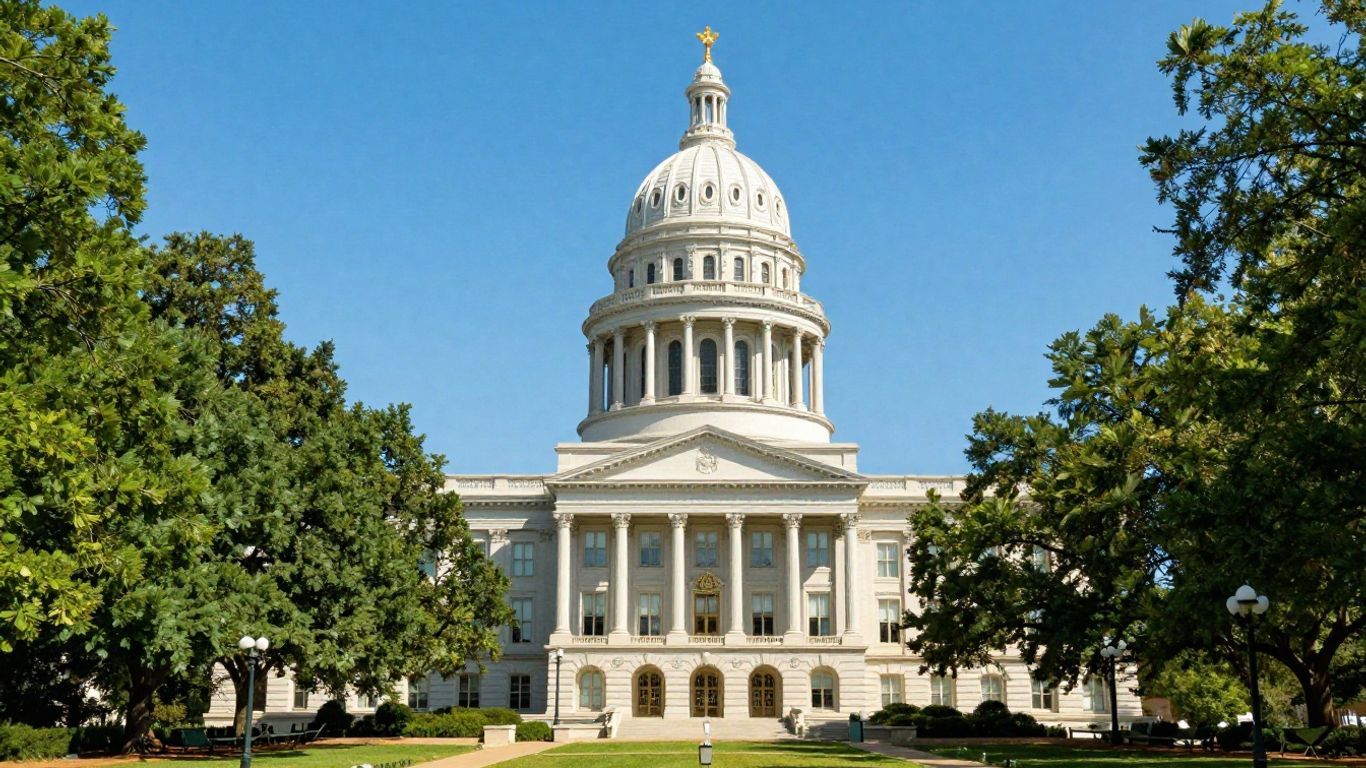
Atlanta, the distinguished capital of Georgia, is a metropolis that distinctly pulsates with activity. Beyond its pivotal role as a major hub for business and transportation in the Southeast, it possesses a rich history and a vibrantly dynamic culture.
Atlanta is known as the "City in a Forest" because of its abundant tree canopy. This apt nickname genuinely encapsulates the city's essence—a sprawling urban center where verdant green spaces are, remarkably, never truly distant.
When delving into Georgia's geography, understanding its capital is, of course, paramount. Atlanta is strategically situated in Fulton County, precisely within the northern region of the state. It represents a captivating locale where one discovers a compelling blend of the venerable and the contemporary—from charming historic neighborhoods to impressive modern skyscrapers.
Observe these distinct characteristics that elevate Atlanta:
- Economic Powerhouse: It's a major center for industries like film, technology, and logistics. Many big companies have their headquarters here.
- Cultural Melting Pot: Atlanta boasts a diverse population, which is reflected in its food, music, and arts scenes. You can find everything from soul food to international cuisine.
- Historical Significance: The city played a big role in the Civil Rights Movement, and you can visit important sites like the Martin Luther King, Jr. National Historical Park.
Atlanta's trajectory of growth has been truly remarkable over the decades. It has seamlessly transitioned from a burgeoning railroad town into a global city, steadily attracting individuals from across the globe.
For those engaged in the study of U.S. states and their capitals, Atlanta presents itself as a particularly noteworthy inclusion. It is, undeniably, a city in perpetual evolution, consistently offering something to captivate every visitor.
4. Austin
Discover Austin, the vibrant capital of Texas! Nestled in the heart of Central Texas, Austin is celebrated for its exceptionally lively music scene, abundant outdoor activities, and an overall ambiance that is quite unique. It's far more than a mere answer for geography quizzes; it's a city imbued with an undeniable and dynamic personality.
Austin has been the state capital of Texas since 1839. Originally named Waterloo, it was renamed Austin in honor of Stephen F. Austin, who was instrumental in the Texas Revolution.
These are but a few aspects that allow Austin to truly distinguish itself:
- Live Music Capital of the World: You'll find music venues everywhere, from small bars to large arenas, showcasing all sorts of genres.
- Outdoor Recreation: Lady Bird Lake offers kayaking and paddleboarding right in the city, and Zilker Park is a huge green space for relaxing or catching an event.
- Tech Hub: Austin has become a major center for technology companies, earning it the nickname "Silicon Hills."
The city's unofficial—yet profoundly embraced—motto, "Keep Austin Weird," truly encapsulates its distinctive spirit. It actively champions individuality and fosters strong support for local businesses and artists, thereby contributing significantly to its unmistakable character.
While Texas often conjures images of sprawling, wide-open spaces, Austin, in contrast, presents a dynamic urban experience firmly rooted in its Texan heritage. It's a remarkable locale where history seamlessly intersects with innovation, all magnificently framed by a picturesque natural landscape.
5. Baton Rouge
Continuing our southward progression along the majestic Mississippi River, we reach Baton Rouge, the esteemed capital of Louisiana. This city boasts a history as rich and intricate as the bayou landscape itself. Its evocative name, signifying "Red Stick" in French, originates from a cypress pole utilized by Native Americans to delineate boundaries—a pole notably stained red by animal blood. An intriguing origin, wouldn't you agree?
However, Baton Rouge is certainly not solely defined by its historical narrative. It stands as a major industrial and petrochemical center, strategically positioned at the nexus of a bustling port. Moreover, the city is celebrated for its vibrant culture—a captivating amalgamation of French, Spanish, African, and American influences, distinctly discernible in its culinary traditions and musical heritage.
Highlighting some of Baton Rouge's distinguishing features:
- The Old State Capitol: This is no ordinary government building. It's a stunning Gothic-style castle right on the Mississippi River, now serving as a museum of political history.
- LSU: Louisiana State University brings a youthful energy to the city, with its famous "Death Valley" football stadium and beautiful campus.
- Plantations: Just outside the city, you can explore historic antebellum plantations, offering a glimpse into a bygone era.
The current Louisiana State Capitol building is the tallest in the United States, standing at 450 feet. It's a striking Art Deco structure, markedly distinct from its Gothic predecessor, and affords breathtaking panoramic views from its observation deck.
Baton Rouge serves as a key economic hub for Louisiana, with its strategic location on the Mississippi River facilitating significant trade and industrial activity. The city's development has been shaped by its diverse cultural heritage and its role as a center for education and government.
6. Bismarck
Allow us to introduce Bismarck, the capital city of North Dakota. It is strategically situated directly upon the Missouri River—a rather notable geographical feature.
While not North Dakota's most expansive city, Bismarck nonetheless commands considerable importance as the state's governmental epicenter. It functions, furthermore, as an agricultural hub, encircled by undulating plains that distinctly evoke the quintessential North Dakota landscape.
Here are some elements that truly make Bismarck distinctive:
- State Capitol Building: The current capitol building presents a notably distinctive architectural style. It's the tallest building in North Dakota and has a unique art deco style that was completed in the 1930s. It's certainly worthy of exploration should your travels bring you to the city.
- Heritage Center of North Dakota: This esteemed institution serves as the state's premier history museum and archives. It offers an invaluable opportunity to delve into the state's rich past, from its Native American heritage to its pioneer days and beyond.
- Missouri River: The river plays a significant role in the region, offering recreational opportunities and shaping the landscape. There are parks and trails along the riverfront that are popular with locals.
Bismarck's history is tied closely to the railroad and the state's agricultural roots. It became the territorial capital in 1883 and has remained the state capital ever since, growing steadily over the years.
When contemplating Bismarck, one should envision a city profoundly connected to its land and history, serving—as it does—as the administrative heart of North Dakota.
7. Boise
Boise, the distinguished capital of Idaho, is situated in the southwestern quadrant of the state. It is a city that remarkably blends opportunities for outdoor adventure with an expanding, dynamic urban scene. The Boise River flows directly through its core, providing ample opportunities for rafting and kayaking, while the proximate foothills prove ideal for invigorating hiking and biking.
Boise is the most populous city in Idaho, a significant hub for the state's economy and culture. It is renowned for its welcoming atmosphere and a remarkably vibrant downtown district.
These are some of the defining characteristics that make Boise shine:
- The Great Outdoors: With easy access to mountains and rivers, it truly is a paradise for outdoor enthusiasts. Imagine exhilarating skiing in winter and refreshing water sports in summer.
- A Growing Tech Scene: Boise has increasingly become a magnet for technology companies, thereby injecting new employment opportunities and a youthful dynamism into the city.
- Cultural Attractions: Be sure to visit the Boise Art Museum, the Idaho State Historical Museum, or perhaps enjoy a performance at the historic Egyptian Theatre.
Boise's strategic location positions it as a superb gateway to exploring Idaho's vast wilderness, yet it simultaneously offers a comfortable urban lifestyle complete with abundant amenities. It is, indeed, a place where one can readily transition from a corporate meeting to a serene mountain trail in remarkably little time.
8. Boston
Boston, Massachusetts—this venerable city holds immense significance, not merely for its home state, but for the entire nation's historical narrative. As one of the oldest cities in the U.S., its rich history is palpable with every step through its streets.
Consider its foundational role: the Boston Tea Party, Paul Revere's iconic ride, the very genesis of the American Revolution—all unfolded within these historic confines. It offers a unique opportunity to explore venerable sites such as Faneuil Hall and the Freedom Trail, allowing one to truly immerse themselves in the spirit of that foundational era.
Beyond its rich historical tapestry, Boston also functions as a preeminent hub for education and innovation. With world-renowned universities like Harvard and MIT in close proximity, the city is a crucible of brilliant minds and groundbreaking ideas. It is, moreover, a significant center for biotechnology and finance.
Thus, when you envision Boston, recall that it transcends the designation of a mere capital city. It is a locale brimming with profound historical significance and a distinctly forward-thinking ethos.
These characteristics notably set Boston apart:
- Historical Significance: Birthplace of many key events leading to the American Revolution.
- Education Hub: Home to some of the world's most prestigious universities.
- Economic Powerhouse: A leader in fields like finance, technology, and biotechnology.
- Cultural Center: Known for its museums, theaters, and vibrant arts scene.
Boston truly embodies a city that gracefully bridges the past and the future. It's a place where one can gain considerable insight into our origins while simultaneously observing the trajectories of our future.
9. Carson City
Nestled within the breathtaking Sierra Nevada mountains, Carson City proudly serves as the capital of Nevada. While it may sometimes be overlooked in discussions of major U.S. cities, it occupies a profoundly significant position in the state's history and governmental structure. Carson City's story is deeply tied to the Comstock Lode silver discovery.
Initially established as a trading post, it rapidly evolved into a vital supply hub for the burgeoning mining operations in its vicinity. The city was officially named the territorial capital in 1861 and became the state capital upon Nevada's admission to the Union in 1864. Distinct from many state capitals that concurrently serve as major population centers, Carson City has steadfastly retained a more modest size—a characteristic that distinctly contributes to its unique charm.
These elements ensure Carson City truly distinguishes itself:
- Historic Charm: The downtown area features well-preserved buildings from the late 19th and early 20th centuries, including the impressive Nevada State Capitol building and the historic Carson City Mint.
- Gateway to Outdoor Adventure: Its prime location renders it an ideal base for exploring Nevada's unparalleled natural beauty. Lake Tahoe is merely a brief drive away, presenting both breathtaking vistas and abundant recreational pursuits.
- State Government Hub: As the capital, it's home to the legislative, executive, and judicial branches of Nevada's state government, solidifying its role as the epicenter of political activity.
The city's development was heavily influenced by its proximity to the rich silver deposits found in the Comstock Lode. This mineral wealth fueled its growth and established its importance in the region.
While it may not command the bustling throngs of larger capital cities, Carson City nonetheless offers a singular blend of history, natural splendor, and essential governmental function—a blend that is unequivocally its own.
10. Charleston
Charleston, South Carolina, proudly holds the distinction of serving as the state capital. It is a city imbued with a rich, compelling history, widely celebrated for its meticulously preserved architecture and vibrantly engaging culture. Established in 1670, it was initially christened Charles Town, a tribute to King Charles II of England.
Charleston is a major port city and a significant economic hub for the state.
Consider these salient facts concerning Charleston:
- Founded: 1670
- Original Name: Charles Town
- Nickname: The Holy City (due to its many church st]}{
- Key Industries: Tourism, shipping, manufacturing, and technology.
Charleston's historic district stands as a primary draw for visitors, characterized by its charming cobblestone streets, majestic antebellum homes, and quintessential horse-drawn carriages. The city has played a pivotal role in numerous significant historical events, spanning from the American Revolution to the Civil War. Its strategic positioning on the Atlantic coast has rendered it an important center for trade and naval activity over many centuries.
The city's distinctive amalgamation of Southern charm and coastal beauty renders it an exceptionally popular destination. Its renowned culinary scene is also highly regarded, notably emphasizing fresh seafood and authentic Lowcountry cuisine.
11. Cheyenne
Continuing our comprehensive tour of U.S. state capitals, we now arrive at Cheyenne, Wyoming. It is a city that profoundly embodies the quintessential spirit of the American West, majestically situated upon the high plains.
Cheyenne is the capital and most populous city of Wyoming. It is precisely located in Laramie County, positioned near the southeastern corner of the state. The city's establishment in 1867 was inextricably linked to the construction of the Union Pacific Railroad—an undertaking that played a colossal role in shaping the American West.
Consider these intriguing facts about Cheyenne:
- "Magic City of the Plains": Cheyenne earned this nickname because of its rapid growth after the railroad arrived.
- Wyoming's First Capital: It was designated as the territorial capital in 1869 and then became the state capital when Wyoming joined the Union in 1890.
- Cheyenne Frontier Days: This is one of the largest outdoor rodeo and Western celebrations in the world, drawing huge crowds every summer.
Cheyenne's location at the intersection of major transportation routes, both historically with the railroad and today with Interstate 80 and Interstate 25, has always been a key factor in its development and importance.
When envisioning Cheyenne, one might readily conjure images of expansive, wide-open spaces and a profound connection to cowboy culture—and indeed, such an impression would be accurate. It is a singular place where history converges with the present, offering a vivid glimpse into the enduring legacy of the American frontier.
12. Columbia
Columbia, South Carolina, proudly bears the distinction of serving as the state capital. It is strategically located in the very heart of the state, precisely where the Saluda and Broad Rivers converge to form the Congaree River. This particular site was not chosen arbitrarily; rather, it was deliberately selected in 1786 to provide a more centrally accessible location for the state government.
Columbia is a city rich in history, having played a particularly significant role during the Civil War. It is also recognized for its esteemed educational institutions, notably including the University of South Carolina, which exerts a substantial presence in the downtown area. The city has proactively undertaken efforts to revitalize its downtown core, attracting additional businesses and enhancing its array of cultural attractions.
Consider these fascinating facts about Columbia:
- It's affectionately nicknamed "The Soda City," a moniker attributable partly to the "Cola" within its name and partly to its vibrant, effervescent atmosphere.
- The South Carolina State House—the very building where lawmakers convene—stands as a prominent landmark possessing a fascinating history, even bearing damage from Civil War shelling.
- Columbia is also home to the Riverbanks Zoo and Garden, a highly regarded attraction that consistently draws visitors from far and wide.
The city's development has been shaped by its geography, its role as a political center, and its commitment to education and culture, making it a unique capital city in the American South.
13. Columbus
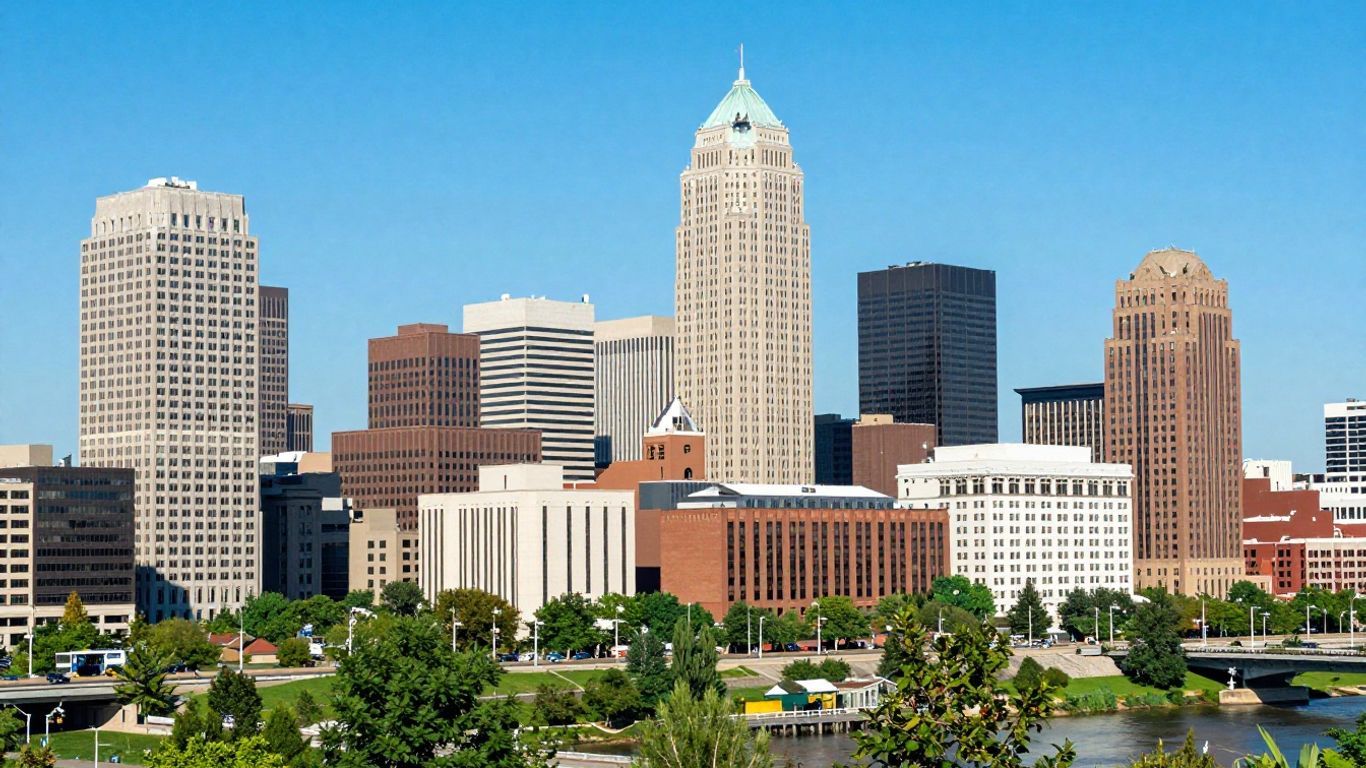
Let us now turn our attention to Columbus, Ohio. It serves as both the state capital and its most populous city. One might consider it the primary nexus for all significant activities within Ohio.
Columbus is centrally positioned within the state, affording exceptional access and connectivity. It is a city that has experienced considerable growth over the years, evolving into a notably important center for business, education, and culture.
These are but a few elements that elevate Columbus:
- It's a major center for education: As home to The Ohio State University, one of the nation's largest academic institutions, it consistently attracts students and researchers globally.
- A continually expanding economy: The city boasts a diverse economy, exhibiting particular strengths in technology, research and development, and fashion.
- Abundant green spaces: Despite its urban scale, Columbus features a commendable number of parks and outdoor areas, such as the Scioto Mile—a particularly pleasant waterfront park.
Columbus possesses a history that dates back to the formative years of Ohio's statehood. Its selection as capital was predicated on its central location, which facilitated easier access to state government for residents across Ohio. It is, in essence, a city perpetually dedicated to connecting individuals and fostering the exchange of ideas.
When you consider Columbus, bear in mind that it is far more than merely a governmental center. It is a notably lively place, buzzing with activity, spanning from its vibrant university life to its dynamic business developments. It is a city that continually propels itself forward.
14. Concord
Next on our comprehensive tour of U.S. state capitals, we highlight Concord, the capital of New Hampshire. It is centrally located within the state, nestled along the picturesque Merrimack River. Concord is not merely a seat of government; it is also a remarkably interesting locale steeped in a rich, extensive history.
Established as early as 1733, Concord has undeniably witnessed its share of pivotal historical moments. It formally assumed its role as capital in 1808, succeeding the former capital, Portsmouth. The city experienced consistent growth, propelled by industries such as lumber and, subsequently, manufacturing. Remnants of this storied past are still discernible within the city's architectural landscape.
Concord is the second-largest city in area in the United States, after Juneau, Alaska. That's an exceptionally striking fact when considering the multitude of states across the nation!
These characteristics particularly define Concord:
- State House: This is the very edifice where all New Hampshire legislative proceedings unfold. It's one of the oldest state houses in the U.S. still actively serving its original purpose.
- Manufacturing History: For an extended period, Concord was renowned for its "Concord coaches"—durable stagecoaches widely employed throughout the American West. Indeed, they were crafted right here.
- Location: Its central positioning inherently transforms it into a vital hub for the state, effectively connecting various regions of New Hampshire.
Concord's role as the capital transcends mere symbolism; it operates as a fully functional center for state government, endowed with a rich industrial past that profoundly shaped its identity. The city masterfully balances its historical foundations with its contemporary function as a state capital.
Therefore, when considering New Hampshire, do remember Concord. It's a city with a robust past and an undeniably crucial present role within the Granite State.
15. Denver
Our journey through U.S. state capitals now brings us to Denver, Colorado. Frequently referred to as the "Mile High City" due to its precise elevation of one mile above sea level, Denver is a metropolis brimming with activity. It serves not merely as a stopover, but as a compelling destination in its own right—boasting a vibrant downtown and acting as a majestic gateway to the Rocky Mountains.
Denver's elevation is a defining characteristic, influencing everything from its climate to the way athletes perform when they visit.
Consider these concise facts regarding Denver:
- State: Colorado
- Founded: 1858
- Nickname: The Mile High City
- Known For: Proximity to the Rocky Mountains, craft breweries, and a thriving arts scene.
Denver functions as a paramount hub for the entire Rocky Mountain region. Its advantageous location renders it a highly favored starting point for myriad outdoor adventures, whether one is seeking winter ski resorts or summer hiking trails. The city itself benefits from a continually expanding population and a diverse economy, wherein sectors such as aerospace, technology, and tourism play demonstrably significant roles.
The city's development has been closely tied to its geographical position, acting as a central point for transportation and commerce in the Mountain West. This has shaped its character and growth over the years.
While Denver might instinctively conjure images of mountains, the city itself possesses a rich history and a distinctive culture all its own. It's a dynamic locale where sophisticated urban life converges with the majestic great outdoors, offering a truly unique blend that captivates both residents and visitors.
16. Des Moines
Continuing our exploration of U.S. state capitals, we now focus on Des Moines, the capital of Iowa. It is a city that has experienced considerable growth over the years, evolving into a prominent hub for sectors such as insurance and finance.
Des Moines is the most populous city in Iowa and serves as the county seat of Polk County. It is situated in the central region of the state, precisely at the confluence of the Des Moines and Raccoon Rivers. This strategic location has played a significant role in its historical trajectory and ongoing development.
Consider these concise facts concerning Des Moines:
- Founded: 1843
- Population: Over 210,000 (as of recent estimates)
- Nickname: "The City of Certainties"
The city's economy has diversified significantly, moving beyond its agricultural roots to embrace sectors like technology and healthcare. This strategic shift has infused the area with renewed energy and myriad opportunities, establishing it as a dynamic place to live and work.
While one might initially envision rolling farmland when considering Des Moines, it is also a locale boasting a surprisingly vibrant cultural scene. The city is home to esteemed art centers, theaters, and an expanding culinary landscape. It's a city that gracefully balances its inherent Midwestern charm with a decidedly forward-looking attitude.
17. Dover
Our next stop is Dover, the capital of Delaware. It is a city possessing an extensive history, having played a notable role in the formative years of the United States.
Dover is the second-oldest city in Delaware. It was established as early as 1683 by William Penn—a remarkable historical detail, wouldn't you agree? While not the largest city in Delaware, it nonetheless holds considerable importance as the state's governmental epicenter.
Consider these distinctive features that set Dover apart:
- State Government Hub: Dover is the convocation point for Delaware's General Assembly, responsible for legislating the state's laws. One finds Legislative Hall prominently situated right in the city's heart.
- Historical Significance: The city boasts a meticulously preserved historic district featuring buildings that date back to the 18th century. A stroll through its streets often evokes a sense of stepping back in time.
- Dover Air Force Base: This serves as a major employer and a significant contributor to both the local economy and community.
Dover may not command the widespread recognition of certain other state capitals, yet its profound role in American history and its indispensable function as Delaware's seat of government are undeniably significant. It's a place where the past and present of the First State gracefully converge.
18. Frankfort
Frankfort, Kentucky, while perhaps not the state's most expansive city, nonetheless holds the crucial distinction of serving as its capital. Strategically situated along the Kentucky River, Frankfort possesses a history intrinsically linked to the state's development and its globally renowned bourbon industry.
Frankfort's significance as a capital city is rooted in its central location and historical importance within Kentucky. It is a locale where the mechanisms of state government actively operate, yet it also generously offers a compelling glimpse into Kentucky's rich heritage.
These are several key aspects to understand about Frankfort:
- Government Hub: Frankfort is the operational center for Kentucky's legislative, executive, and judicial branches of government. The State Capitol building—a truly grand structure—serves as the epicenter of these vital activities.
- Bourbon Trail Stop: The city represents a notable stop along the famed Kentucky Bourbon Trail. Here, several historic distilleries offer engaging tours and tastings, illuminating the intricate craft of bourbon making.
- Historical Sites: Frankfort boasts numerous historical attractions, including the Old State House, which currently functions as a museum, and the Kentucky Military Museum.
When one visits Frankfort, opportunities abound to explore the exquisite grounds of the State Capitol, delve into Kentucky's fascinating history, and—naturally—immerse oneself in the world-renowned bourbon culture that so profoundly defines this region.
Frankfort distinctly serves as a poignant reminder that a state's capital is not invariably its most populous city, but rather a locale carefully selected for its historical context and its crucial governmental function.
19. Harrisburg
Harrisburg, the capital of Pennsylvania, is gracefully situated along the Susquehanna River. It is far more than merely a seat of government; it is a locale possessing a notably fascinating history, particularly when one considers its pivotal role in transportation and industry.
Pennsylvania's capital city was named after John Harris Sr., who established a ferry crossing on the Susquehanna River in 1733. This ferry represented a monumental advancement in its era, effectively connecting the eastern and western sectors of the colony and significantly contributing to Harrisburg's emergence as a crucial transportation hub.
These characteristics particularly define Harrisburg:
- Transportation Hub: For a long time, Harrisburg was a major stop on the Pennsylvania Canal and later a key point for the railroad. This made it supremely important for the movement of goods and people throughout the state and across the nation.
- Industrial Roots: The city also served as a vital center for manufacturing and industry, notably in iron and steel production, facilitated by its advantageous proximity to resources and established transportation networks.
- State Government Center: As the state capital, Harrisburg is home to the Pennsylvania State Capitol Building, an exceptionally impressive architectural marvel that both attracts visitors and houses the state's legislative and executive branches.
The city's location along the Susquehanna River has shaped its development significantly, from its early days as a ferry crossing to its role in the industrial revolution and its current status as the state's political heart.
Upon visiting, one can admire the Capitol Building itself—a truly remarkable sight—or delve into the National Civil War Museum, conveniently located within the city. It's a compelling locale where history, industry, and government converge seamlessly.
20. Hartford
Hartford, Connecticut, proudly bears the distinction of serving as the state capital. It is centrally located within the state, gracefully positioned along the Connecticut River.
Established as early as 1635, Hartford boasts an impressively long and storied history. For an extended period, it functioned as a major center for the insurance industry, thus earning the moniker "The Insurance Capital of the World." Even now, numerous prominent insurance companies maintain a substantial presence here.
Beyond its foundational insurance sector, Hartford sustains a notably diverse economy. One will discover a compelling mix of industries, encompassing finance, healthcare, and education. It is, moreover, home to several distinguished institutions.
Consider these intriguing facets of Hartford:
- Oldest continuously published periodical: The Hartford Courant, America's oldest newspaper, still operates here.
- Literary connections: Mark Twain and Harriet Beecher Stowe both lived in Hartford and their homes are now museums.
- Educational hub: The city is home to several colleges and universities, contributing to its vibrant atmosphere.
Hartford's strategic location renders it a highly convenient nexus for transportation and business. It's well-connected by major highways and features a commendable public transit system, effectively facilitating movement for both residents and visitors.
It is a city that gracefully blends its historical roots with a forward-looking approach, solidifying its significant stature within Connecticut and the broader New England region.
21. Helena
Helena, Montana—a locale that, though sometimes overlooked in discussions of state capitals, possesses a remarkably compelling history. Nestled within the majestic Rocky Mountains, Helena did not always hold the capital designation. Indeed, it formally became the capital in 1875, during a period when Montana was still a U.S. territory. Prior to that, the capital's location had shifted several times, but Helena ultimately proved to be the lasting choice.
The city's history is deeply tied to the gold rush. Prospectors discovered gold in the gulches surrounding present-day Helena in the 1860s, which truly catalyzed its initial growth. It expanded rapidly, quickly establishing itself as a robust hub for mining and commerce. Evidences of this rich history are still visible in the downtown architecture, characterized by numerous venerable, grand buildings.
These are a few distinctive features that define Helena:
- Location: It's situated in the Prickly Pear Valley, surrounded by mountains. This affords it exceptionally scenic vistas and abundant opportunities for outdoor activities.
- State Capitol Building: The current capitol building was finished in 1902 and features a dome with a statue of Lady Liberty on top. It's a commendable piece of architecture.
- Last Chance Gulch: This is Helena's principal thoroughfare, aptly named after the final desperate attempts miners made to strike gold. Presently, it is replete with an array of shops, restaurants, and historical markers.
Helena's population remains relatively modest for a state capital, a factor that decidedly contributes to its unique, more intimate ambiance. It's a place where one can still palpably sense the enduring frontier spirit, seamlessly interwoven with the essential functions of a modern state government.
While not a sprawling metropolis, Helena nonetheless offers a compelling glimpse into Montana's past and present. It serves as an excellent illustration of how a city can evolve from a bustling boomtown into a fully functioning capital while diligently preserving its rich heritage.
22. Honolulu
Aloha, and welcome to Honolulu, the vibrant capital of Hawaii! Gracefully nestled on the island of Oahu, Honolulu is more than merely a state capital; it serves as a major gateway to the Pacific and a remarkable nexus where diverse cultures converge.
Honolulu is the only U.S. state capital that is also a major international airport and a major tourist destination. It is a city that exquisitely blends sophisticated urban life with the breathtaking natural beauty for which Hawaii is justly renowned.
When contemplating Honolulu, iconic images of Waikiki Beach, Diamond Head, and Pearl Harbor likely surface. While these are indeed iconic locales, the city's offerings extend far beyond. It functions as a vital hub for Hawaiian culture, history, and government.
These are some distinguishing characteristics that define Honolulu:
- Cultural Melting Pot: Honolulu has a rich history shaped by Native Hawaiian, Asian, and European influences. This rich amalgamation is vividly apparent in its culinary traditions, vibrant festivals, and daily rhythms of life.
- Economic Center: As Hawaii's capital, it serves as the seat of state government and a significant economic engine for the islands, maintaining robust ties to tourism, defense, and international trade.
- Natural Beauty: Beyond its celebrated beaches, the majestic Koolau and Waianae mountain ranges provide a dramatic natural backdrop, offering exceptional opportunities for hiking and scenic vistas.
Honolulu's unparalleled geographical position renders it a truly unique capital. It is a captivating place where the vast Pacific Ocean meets a bustling metropolis, thereby forging a distinct atmosphere utterly unique within the United States. The seamless blend of natural landscapes and urban development is, indeed, a remarkable spectacle.
From the historic Iolani Palace—the sole royal palace in the U.S.—to its contemporary skyscrapers, Honolulu showcases a truly fascinating contrast. It's a city that reverently honors its past while resolutely looking towards the future, all bathed in the warm Hawaiian sun.
23. Indianapolis
Continuing our exploration of U.S. capitals, we now arrive at Indianapolis, the capital city of Indiana. It is a locale boasting a notably interesting history and playing a significant role in the Midwest.
Indianapolis is recognized for several attributes, though perhaps most famously for its profound connection to motorsports. The Indianapolis 500, an esteemed annual auto race, consistently draws immense crowds. It represents a monumental event for both the city and racing enthusiasts worldwide.
Beyond its renowned speedway, Indianapolis also serves as a vibrant hub for business and culture within Indiana. It features an expanding downtown district replete with numerous restaurants, shops, and cultural attractions. The city is, furthermore, home to several universities and a diverse population.
Consider these concise facts regarding Indianapolis:
- Founded: 1821
- State: Indiana
- Nickname: Indy
- Known For: Indianapolis Motor Speedway, cultural attractions, and being a transportation hub.
Indianapolis functions as a pivotal center for commerce and transportation throughout the Midwest. Its strategic location has demonstrably contributed to its growth into a significant urban area, supported by a robust economic foundation.
When contemplating Indianapolis, one might readily envision its high-speed racing and the thrilling excitement of race day. However, the city's character extends beyond these celebrated aspects. It's a city possessing a solid foundational structure, a lively spirit, and an enduring commitment to continuous development.
24. Jackson
Jackson, Mississippi, proudly bears the title of the state capital. It is centrally located within Mississippi, precisely on the Pearl River. This city possesses a notably significant history, particularly concerning the Civil Rights Movement. One will discover numerous important landmarks and museums here that eloquently narrate that pivotal story.
Jackson is also distinguished by its profound connection to music, most notably blues and soul genres. It's a place where culture and history converge meaningfully.
Consider these several key aspects of Jackson:
- It's named in honor of Andrew Jackson, a U.S. Army general and later the seventh U.S. President.
- The city is a vital hub for state government and commerce in Mississippi.
- Jackson is home to several esteemed universities and colleges, thereby contributing to its vibrant intellectual atmosphere.
When one considers Mississippi's capital, Jackson is the name that invariably emerges. It's a city with deep historical roots and an unfolding narrative.
25. Jefferson City and more
We've now traversed a significant portion of the U.S. states and their capitals, yet a multitude remains to be explored! Let us maintain this momentum as we delve into the remaining capitals, including the notable Jefferson City.
Jefferson City, the capital of Missouri, sits along the Missouri River. It is a city boasting a rich history, having played a notable role in westward expansion and serving as a pivotal administrative center.
As our journey through the states and their capitals progresses, adopting a structured system proves highly beneficial. Indeed, many educators advocate for and find success utilizing a diverse array of study methods:
- Flashcards: Create your own or use pre-made ones. One side typically features the state, while the reverse displays its capital. Mix them thoroughly and engage in regular self-testing.
- Mapping Exercises: Get a blank map of the US and try to label the states and their capitals. This practice significantly aids in both geographical orientation and information recall.
- Mnemonics and Stories: Occasionally, crafting an imaginative story or a memorable phrase to link a state with its capital can profoundly enhance retention.
- Regional Study: Rather than endeavoring to learn all fifty simultaneously, consider focusing on one specific U.S. region at a time (e.g., the Midwest, Northeast, and so forth).
The endeavor of committing all fifty states and their capitals to memory can initially seem like a formidable task; however, by segmenting it into smaller, more manageable steps, the process becomes considerably more accessible. Consistent practice remains paramount, and discovering a methodology congruent with your individual learning style will undoubtedly render the process more enjoyable and, crucially, more effective.
Your Journey Across the Map Continues
And so, there you have it—all fifty U.S. state capitals, now ready for your mastery. Whether you're diligently preparing for an examination, aspiring to triumph at your next trivia night, or simply cultivating a deeper curiosity about the nation, possessing knowledge of these capitals is, undeniably, a remarkably valuable skill. Consider it akin to assembling the intricate pieces of a grand puzzle; each capital you assimilate effectively positions another segment of the United States into its proper context. Do continue practicing, perhaps engaging with some of those enjoyable quizzes or flashcards previously discussed. The more frequently you review, the more firmly these facts will embed themselves in your memory. We wish you happy learning, and may you thoroughly enjoy exploring the diverse geography of America!
Frequently Asked Questions
Why is it important to learn the US state capitals?
Acquiring knowledge of U.S. state capitals is immensely beneficial for a myriad of reasons! It's excellent for academic assessments and can certainly elevate one's status as a trivia expert. Furthermore, it enhances one's understanding of the United States' geography—a truly enriching endeavor.
What's the easiest way to remember all the capitals?
Many individuals discover that utilizing flashcards proves exceptionally effective! You can readily create your own or access pre-made sets online. Engaging with quizzes and games designed to test your knowledge also tends to make the learning process more enjoyable and significantly improves retention.
Are there any tricks to learning capitals for states that sound alike?
Indeed, it often helps to associate the capital with a distinct characteristic or notable aspect of its respective state. For instance, consider a renowned historical figure or a distinctive landmark specific to that state. Crafting short narratives or even playful rhymes can also profoundly enhance their retention.
How can I practice identifying states and their capitals on a map?
Utilizing interactive maps represents a superb method for practice! Numerous online maps and applications allow you to click on a state to reveal its capital, or alternatively, challenge you to match a capital to its correct state. This approach effectively transforms learning into an engaging game.
What if I'm just starting to learn about US states and capitals?
Rest assured, a judicious approach involves commencing with a select few states at a time—perhaps focusing on a single geographical region. Prioritize thoroughly learning their names and capitals before progressing. Abundant free study guides and straightforward quizzes are available to facilitate your easy initiation.
Can learning capitals help me with more than just geography tests?
Absolutely! Knowledge of state capitals significantly enhances your comprehension of news reports, assists in travel planning, and even deepens your appreciation for films or literature that reference various locales. It is akin to possessing a specialized key, unlocking a richer understanding of the nation.


