
resources
Saudi Arabia's Vision: Pioneering the Future of Smart City Development
26 Mar 2026

Saudi Arabia is demonstrating a profound commitment to building cities of the future. This ambitious undertaking forms a core component of its Vision 2030 initiative, meticulously designed to pivot the nation's economy beyond hydrocarbon reliance and significantly enhance the quality of life for its citizens. The discourse often centers on monumental projects involving vertical urbanism, advanced technological districts, and an overarching strategy to optimize urban functionality through comprehensive technological integration. It's a truly monumental endeavor, necessitating collaboration with global technology firms to bring these grand visions to fruition. The ultimate objective is to create urban environments that are not merely modern but are also inherently sustainable and highly livable. This strategic emphasis on smart city development certainly merits close observation.
Key Takeaways
- Saudi Arabia's Vision 2030 includes a pivotal focus on developing smart cities, serving as a dual strategy for economic diversification and enhanced quality of life.
- Projects like NEOM and Oxagon stand as pioneering examples, illustrating futuristic urban planning and sophisticated logistics hubs.
- The widespread adoption of 5G, AI, and IoT is fundamental to forging interconnected and responsive urban environments.
- Key developments encompass smart platforms for financial districts and resilient digital infrastructure within emerging economic cities.
- Collaboration with global tech firms and local operators proves indispensable for constructing the technological backbone of these Kingdom-wide smart city initiatives.
Saudi Arabia's Vision 2030: A Blueprint for Smart Cities
Driving Economic Diversification Through Urban Innovation
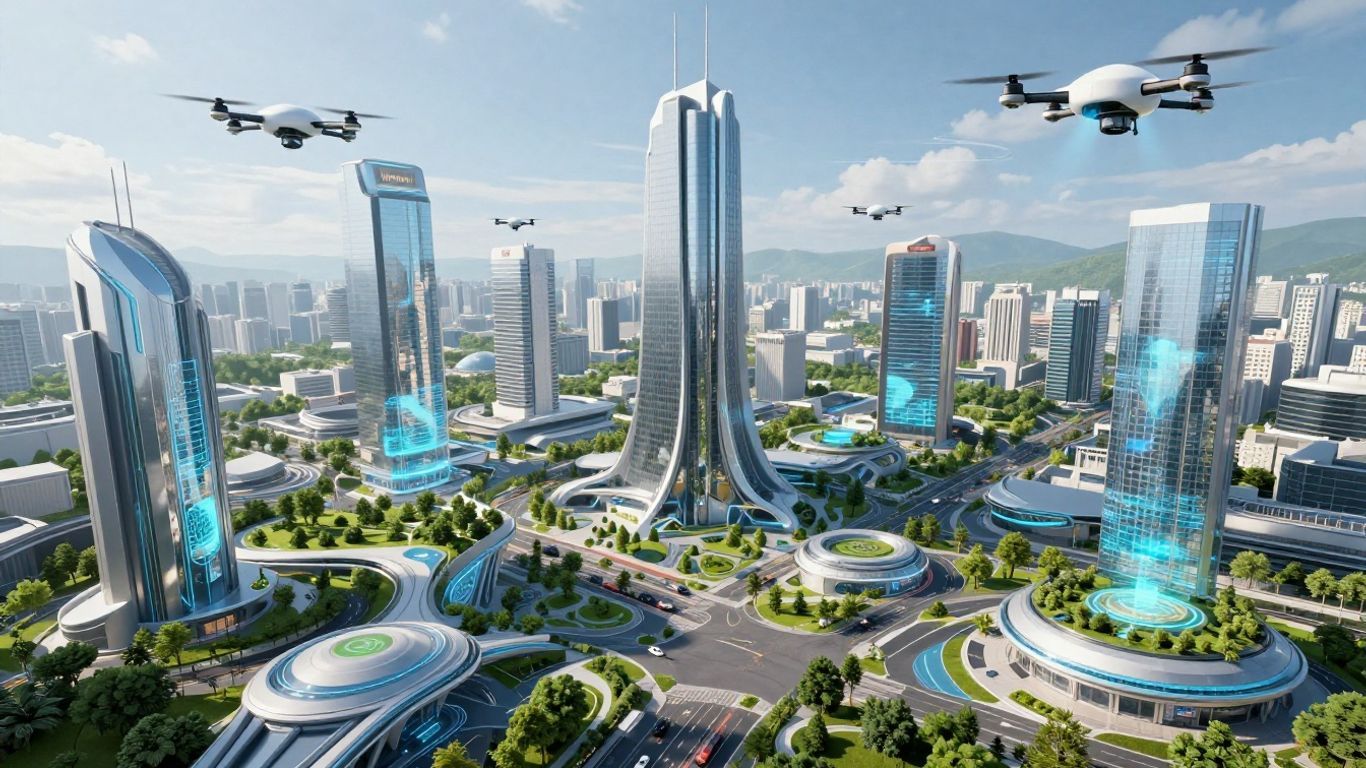
Saudi Arabia's Vision 2030 transcends a mere economic restructuring; it fundamentally reimagines urban living. This comprehensive plan, unveiled in 2016, aims to transition the economy from its singular reliance on hydrocarbons. An integral component involves the establishment of novel urban centers and the intelligent modernization of existing ones. This translates to leveraging advanced technologies to optimize functionality, attract new businesses, and generate substantial employment opportunities. The overarching goal is to cultivate urban environments that are both highly efficient and inherently attractive for habitation and enterprise, consequently fostering diversified economic expansion.
- Modernizing infrastructure for better services.
- Attracting international companies and talent.
- Creating new industries focused on technology.
The focus on urban innovation is an imperative response to the exigencies of economic transformation, aspiring to cultivate environments capable of sustaining a more expansive array of industries, thereby extending well beyond traditional oil revenues.
NEOM: A Futuristic Megacity at the Forefront
NEOM is undoubtedly one of the most widely discussed projects under Vision 2030. It's conceived as an ambitious new urban development in the northwest of the country, meticulously designed from the ground up to be a global nexus for innovation and tourism. Envision a landscape defined by cutting-edge technology, abundant clean energy, and an entirely novel paradigm of urban existence. What, you might ask, will a city of tomorrow truly look like? NEOM is envisioned as an incubator where groundbreaking concepts can be rigorously tested and brought to fruition, drawing talent and capital from across the globe. This represents a determined effort to illustrate the potential of future urbanism, seamlessly integrating technologies such as Artificial Intelligence (AI) and the Internet of Things (IoT) to foster an interconnected ecosystem.
Setting New Standards for Sustainability and Quality of Life
Building smart cities is also about fundamentally enhancing livability for residents and ensuring environmental stewardship. This commitment translates into the widespread adoption of renewable energy sources, notably solar and wind power, implementing advanced waste management strategies, and cultivating expansive green spaces. The underlying philosophy is to develop urban centers that are not merely technologically sophisticated but also inherently conducive to well-being and enjoyable living. This encompasses enhancements in critical sectors such as transportation, healthcare, and public safety, all facilitated by intelligent solutions. The aim is to forge environments where individuals can genuinely flourish, experiencing an elevated quality of life while minimizing their ecological footprint.
Pioneering Vertical Urbanism: Redefining Cityscapes
The Ambitious Vertical City Project
Saudi Arabia is embracing, quite literally, an upward trajectory with a pioneering approach to urban development. Departing from the conventional horizontal expansion prevalent in numerous urban centers, the strategic emphasis is decisively shifting towards verticality. This vision extends far beyond the mere construction of a singular skyscraper; it entails actualizing an entire urban ecosystem contained within a colossal, integrated structure. Envision, if you will, a self-sufficient microcosm where residents can seamlessly live, work, and engage in leisure activities, all meticulously stacked within a vertical construct. This concept aims to consolidate all the essential amenities and conveniences of a contemporary city into a significantly reduced physical footprint. The fundamental objective is to construct an environment that delivers the full spectrum of urban offerings, albeit within an intensely compact, vertical configuration. This represents a significant departure from traditional city planning, pushing the boundaries of what's possible in urban design.
Engineering and Logistical Challenges
Building something of this unprecedented height and complexity naturally comes with a distinctive array of complexities. Ensuring the structural integrity and stability of such colossal edifices, particularly amidst the demanding desert climate characterized by powerful winds and seismic potential, constitutes a monumental engineering undertaking. It necessitates the pioneering application of novel materials and construction methodologies not yet broadly implemented. Furthermore, the provision of essential urban services—power, potable water, efficient waste disposal, and seamless internal transportation networks—all confined within this vertical expanse, presents its own formidable challenge. Indeed, it's akin to conceptualizing an entire city's infrastructure, yet meticulously compressing it within the confines of a singular architectural marvel. How does one, for instance, design for optimal human comfort and light distribution across hundreds of vertical levels?
Here are some of the key challenges:
- Structural Integrity: Designing structures capable of enduring extreme meteorological and environmental stressors over extended durations.
- Internal Systems: Establishing highly efficient and dependable internal systems for energy, water, waste management, and transit within the vertical paradigm.
- Logistics: Orchestrating the intricate movement of inhabitants, commodities, and services throughout a densely concentrated, multi-tiered urban setting.
- Safety and Evacuation: Formulating robust emergency protocols and guaranteeing secure evacuation procedures from unprecedented elevations.
The sheer scale of these projects means that innovation in construction, materials science, and urban systems will be an absolute imperative. This endeavor transcends mere verticality; it fundamentally pivots on intelligent, secure construction practices.
A Catalyst for Economic Transformation
These massive vertical city projects far transcend their architectural grandeur; they are, in essence, engineered as powerful catalysts for profound economic transformation. By strategically concentrating enterprises, expertise, and vital resources within singular, integrated locales, the objective is to ignite emergent industries and generate substantial employment opportunities. This approach could assist Saudi Arabia in achieving comprehensive economic diversification, thereby lessening its historical dependence on hydrocarbon revenues. It's about cultivating a vibrant hub for innovation, adept at drawing in global corporations and highly skilled professionals—thereby fundamentally reshaping the nation's economic trajectory.
Technological Foundations for Smart City Saudi Arabia
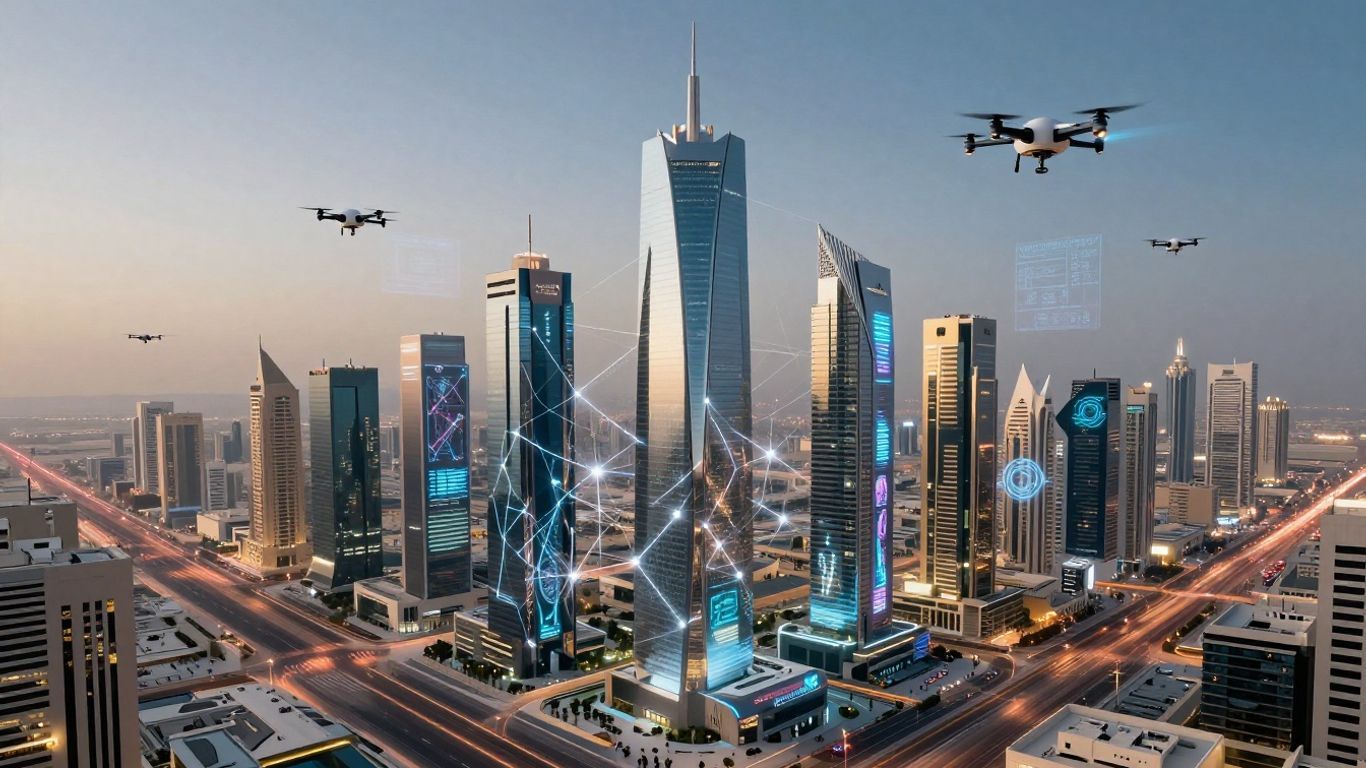
Building smart cities extends far beyond impressive architectural feats and conceptual futurism; it is, at its core, predicated upon the underlying technological infrastructure that enables its functionality. Saudi Arabia is dedicating significant resources to establishing robust digital foundations, commencing, quite rightly, with ultra-high-speed internet connectivity.
The Central Role of 5G Connectivity
Consider 5G as the indispensable digital artery for the vast torrent of data essential to smart urban functionality. Its unparalleled speed and capacity allow for the simultaneous communication of a multitude of devices, significantly surpassing the capabilities of preceding network generations. This advancement holds profound implications for critical applications such as autonomous vehicles, intelligent traffic management systems, and even advanced remote healthcare services—indeed, a crucial enabler for real-time responsiveness across the urban landscape.
- Facilitates real-time data flow, indispensable for critical urban services.
- Accommodates an immense proliferation of connected devices, ranging from environmental sensors to autonomous vehicles.
- Delivers the requisite velocity for sophisticated applications, including augmented reality integration within urban planning.
Leveraging AI, Cloud, and IoT
Beyond just high-speed internet, Saudi Arabia is strategically integrating several other pivotal technologies. Artificial Intelligence (AI) plays a crucial role in deriving actionable insights from the immense volumes of collected data. Cloud computing platforms furnish the scalable storage and computational prowess necessary, and the Internet of Things (IoT) serves as the ubiquitous network of interconnected physical objects capable of gathering and disseminating real-time information.
- AI rigorously analyzes data to anticipate traffic patterns or optimize energy consumption.
- Cloud platforms effectively host city-wide applications and facilitate extensive data storage.
- IoT devices, such as intelligent utility meters or sophisticated environmental sensors, meticulously gather real-time information.
The combination of these technologies empowers cities to achieve unprecedented levels of responsiveness and operational efficiency, thereby dynamically adapting to the evolving needs of their residents.
Strategic Partnerships for Digital Growth
Establishing all this advanced technology is an undertaking no single nation can accomplish in isolation. Saudi Arabia is actively forging collaborations with prominent global technology corporations and indigenous service providers. These partnerships are instrumental in importing essential expertise and state-of-the-art technological advancements to actualize these sophisticated urban environments.
| Partner Type | Focus Area |
|---|---|
| Telecom Operators | 5G network deployment, connectivity solutions |
| Cloud Providers | Data storage, processing, and AI services |
| Technology Integrators | System design, implementation, and management |
| Specialized Tech Firms | AI, IoT, cybersecurity, specific applications |
Key Smart City Developments and Initiatives
Saudi Arabia has moved beyond conceptual discussions regarding smart cities; it is actively engaged in their concrete realization, with a cadre of ambitious projects spearheading this transformation. These initiatives are designed to transcend mere technological sophistication; they endeavor to forge living, working, and recreational environments characterized by efficiency, sustainability, and a demonstrable enhancement of daily existence—a holistic approach to urban development.
NEOM's Cognitive City Aspirations
NEOM is undoubtedly one of the most prominent projects currently underway, aiming to be a futuristic megacity. A pivotal element of its master plan involves the development of "cognitive cities." This paradigm necessitates the profound integration of advanced technology into the very fabric of the urban environment, empowering it to learn, adapt, and dynamically respond to the real-time exigencies of its inhabitants. Imagine an urban center capable of anticipating traffic patterns, proactively optimizing energy consumption, and even delivering hyper-personalized services to its citizenry. To realize this ambitious vision, NEOM strategically partnered early with stc Group to establish a resilient 5G network, thereby creating the foundational infrastructure for the colossal data exchange indispensable to these intelligent systems. Moreover, explorations into smart home platforms underscore a comprehensive commitment to technology integration, spanning from the overarching urban scale down to the intimate confines of individual living spaces, ensuring a truly connected experience.
Oxagon: A Technologically Advanced Logistics Hub
As an integral component of the broader NEOM ecosystem, Oxagon is currently being developed as a pivotal industrial and logistics nexus. It is explicitly engineered to emerge as the globe's most technologically sophisticated port and logistics hub. Envision a dynamic, floating industrial complex, powered by cutting-edge AI and advanced robotics, poised to revolutionize and streamline global trade flows. Its unparalleled location in proximity to the Suez Canal confers a profound strategic advantage, positioning it to become an indispensable node within international supply chains. Fundamentally, this project is dedicated to an exhaustive re-evaluation of future industrial operations, aiming for both enhanced efficiency and heightened environmental consciousness—a true paradigm shift.
King Abdullah Financial District's Smart Platform
The King Abdullah Financial District (KAFD) in Riyadh is undergoing a significant metamorphosis into a sophisticated smart business hub. This endeavor transcends the mere assemblage of impressive skyscrapers; it is fundamentally dedicated to cultivating an intelligent ecosystem optimized for finance and commerce. A specialized Smart City Platform is currently under development, designed to seamlessly interconnect and meticulously manage the diverse digital technologies deployed throughout the district. This comprehensive strategy encompasses plans for an advanced electric monorail system, precisely aimed at augmenting internal connectivity and substantially diminishing the environmental footprint of commuting within this preeminent financial center.
King Abdullah Economic City's Digital Infrastructure
King Abdullah Economic City (KAEC), situated on the Red Sea coast, represents yet another large-scale endeavor strategically oriented towards economic diversification. Its ongoing development notably incorporates the establishment of a robust digital backbone. Strategic partnerships have been meticulously forged to establish a comprehensive hub for telecommunications and digital services, prominently featuring state-of-the-art submarine cables, advanced data centers, and expansive fiber optic networks. This unequivocal emphasis on foundational digital infrastructure is paramount for attracting both domestic and international enterprises, thereby fostering the sustained growth of a knowledge-based economy within KAEC.
These ambitious projects are by no means isolated initiatives. They represent a meticulously coordinated, Kingdom-wide endeavor to construct urban environments that are not only at the vanguard of technological advancement but are also intrinsically human-centric, bearing a profound emphasis on sustainability and robust economic expansion. Indeed, the seamless integration of cutting-edge technology is consistently viewed as the indispensable pathway to realizing these overarching objectives.
Here's a look at some of the key technological components being implemented:
- 5G Network Deployment: Essential for the high-speed, low-latency communication networks indispensable to smart city applications.
- Artificial Intelligence (AI) and IoT Integration: Employed extensively for data analytics, predictive maintenance, intelligent traffic management, and bespoke personalized services.
- Cloud Computing: Furnishes the scalable infrastructure requisite for processing and storing the immense volumes of data generated by sophisticated smart city systems.
- Advanced Data Centers: Support the critical storage and processing demands inherent in advanced digital infrastructure.
Enhancing Urban Resilience and Livability
Beyond the visible spectacle of gleaming towers and advanced technological integrations, Saudi Arabia’s ambitious smart city initiative fundamentally aims to elevate the quality of life and enhance safety for all residents. It involves constructing resilient urban environments capable of withstanding unforeseen disruptions, while simultaneously delivering exemplary public services. Consider, for instance, how urban centers can more effectively anticipate and mitigate challenges such as flash floods or extreme heatwaves, and how technology can be strategically deployed to optimize resource management with unparalleled efficiency—these are crucial considerations for any modern metropolis.
Smart Solutions for Disaster Management
When we discuss disaster management, it transcends mere reactive measures in the face of adversity; it is, at its core, a proactive commitment to preparedness. The Holy Makkah Municipality, for example, is actively developing smart city solutions precisely tailored to address specific flood risks. This encompasses leveraging AI to glean a more granular understanding of unfolding events, optimizing the operational efficacy of command and control centers, and accelerating the decision-making process. Furthermore, they are implementing sophisticated systems for real-time infrastructure monitoring and automating crucial response protocols—interventions that can prove absolutely pivotal when every second is critical.
- AI-driven risk assessment: Employing artificial intelligence to meticulously predict and analyze potential disaster impacts.
- Real-time infrastructure monitoring: Implementing advanced sensors and integrated systems that furnish immediate data concerning the condition of critical urban assets.
- Automated response protocols: Establishing pre-programmed actions, triggered by predefined events, to expedite emergency service deployment.
- Enhanced command and control centers: Modernizing facilities to centralize vital information and significantly enhance coordination capabilities during emergent crises.
Building cities that can withstand and recover from shocks is becoming paramount in an increasingly volatile global landscape. This implies the strategic integration of smart technologies, not merely for enhanced convenience, but as a foundational pillar for comprehensive safety and security.
Improving Public Services and Governance
Smart cities are also instrumental in streamlining the intricacies of daily urban existence. This translates to superior public transportation networks, optimized waste management systems, and more intuitive avenues for civic engagement with local governance. Through the judicious application of data analytics, urban administrations can gain unparalleled insights into areas requiring intervention, enabling swift and targeted resolutions. For example, using data to optimize traffic flow or to meticulously manage energy consumption can yield transformative enhancements across the urban fabric. How can cities truly serve their people better? It's about fostering city operations that are both highly transparent and profoundly responsive to the diverse needs of their inhabitants.
Fostering Innovation and Attracting Talent
These advanced urban environments are meticulously conceived as powerful magnets for intellectual capital and creative talent. By presenting state-of-the-art infrastructure, an elevated quality of life, and unparalleled opportunities to engage in groundbreaking projects, Saudi Arabia endeavors to draw highly skilled professionals from across the international spectrum. This strategic influx of talent, in turn, directly catalyzes further innovation, thereby establishing a self-reinforcing virtuous cycle. Indeed, the development of these intelligent urban centers extends beyond mere structural construction; it fundamentally concerns the cultivation of vibrant, dynamic communities—places where individuals are genuinely inspired to live, to work, and to collaboratively forge the future.
Collaborative Ecosystems Driving Smart City Advancement
Building something as grand and intricate as a smart city is hardly a solitary undertaking. It necessitates the synergistic collaboration of a diverse array of stakeholders. Acknowledging this intricate reality, Saudi Arabia is intently concentrating on fostering alliances among corporations, technology providers, and even international partners to transform its ambitious smart city aspirations into tangible realities. Ultimately, it revolves around cultivating a dynamic ecosystem where innovative ideas can freely circulate, and complex projects can be efficiently actualized—a true testament to collective effort.
Partnerships with Global Technology Providers
When the ambition is to develop truly cutting-edge smart cities, securing access to the most advanced technological solutions becomes paramount. This is precisely where prominent global technology firms assume a critical role. Collaborations with entities such as Atos—working in concert with cloud sector leaders like AWS and indigenous telecommunications experts such as Zain KSA—are absolutely instrumental. These partnerships provide the requisite expertise to architect and implement the intricate systems indispensable for comprehensive smart city functionality. But why is this so crucial? Indeed, one must consider the fundamental requirements: sophisticated network architectures, intelligent operational platforms, and the robust cloud infrastructure essential to orchestrate these capabilities. Such strategic alliances represent Saudi Arabia's methodical approach to leveraging this invaluable global expertise.
The Role of Telecom Operators
Telecommunications companies essentially form the infrastructural backbone of any emergent smart city. Without robust, high-speed, and dependable connectivity, the sophisticated functionalities envisioned for smart urban environments simply cannot materialize. Telecommunications powerhouses, such as stc Group, are actively securing significant contracts to strategically deploy extensive 5G networks—a foundational element crucial for enabling the Internet of Things (IoT) and facilitating real-time data exchange. Their involvement, however, extends beyond mere infrastructure deployment; these operators are also establishing dedicated innovation centers to explore and develop novel applications for this transformative technology. This multifaceted approach is an indispensable component in ensuring that the cities of tomorrow can achieve seamless, intelligent intercommunication.
Fostering Local and International Investment
Actualizing smart cities on this scale inherently requires substantial financial investment. Consequently, Saudi Arabia is proactively seeking both indigenous and international investment capital. The Kingdom is meticulously cultivating environments where businesses can clearly discern compelling opportunities for both growth and significant returns on investment. This strategy encompasses measures such as the establishment of specialized economic zones and the precise articulation of the manifold advantages associated with investing in these burgeoning urban developments. Ultimately, this serves as a dual approach: securing the requisite funding while simultaneously attracting innovative concepts and diverse perspectives from across the globe.
The success of these ambitious urban projects is intrinsically predicated upon a meticulously woven tapestry of collaborations. This endeavor transcends mere visionary ambition; it fundamentally relies on securing the opportune partnerships to ensure effective and impactful execution.
Looking Ahead
Saudi Arabia's determined push into smart city development, as prominently seen with projects like NEOM and the King Abdullah Financial District, clearly delineates a strategic roadmap for the future. This initiative transcends the simple construction of new locales; it involves leveraging technology to elevate human experience, systematically diversify the national economy beyond its hydrocarbon dependency, and forge urban centers robust enough to navigate the complexities of future challenges. Through an unwavering focus on pivotal elements such as ubiquitous 5G networks, advanced AI integration, and sustainable energy solutions, the Kingdom is strategically positioning itself as a global vanguard in the paradigm of urban conception and governance—not merely within the regional context, but on the international stage. This is undeniably a monumental undertaking, and the unfolding results promise to be compelling as these ambitious blueprints progressively materialize.
Frequently Asked Questions
What is Saudi Arabia's Vision 2030 and how does it relate to smart cities?
Saudi Vision 2030 is a comprehensive strategic framework designed to diversify Saudi Arabia's economy away from hydrocarbon reliance. A pivotal element of this framework involves the creation of innovative, technologically advanced urban centers. These smart cities are meticulously designed to enhance livability, foster economic activity, and attract global visitors, thereby stimulating diversified national growth.
What is NEOM and why is it important for smart city development?
NEOM is a vast, visionary megacity currently under construction in Saudi Arabia. Conceived as an entirely new urban paradigm, meticulously designed from its foundations, it is set to embody advanced technology, sustainable clean energy, and innovative lifestyles. As a flagship initiative within Vision 2030, NEOM is intended to serve as a preeminent global hub for innovation and tourism.
What kind of technology is being used to make these cities smart?
These smart cities are fundamentally powered by high-speed connectivity, specifically 5G networks, alongside artificial intelligence (AI), the Internet of Things (IoT), and cloud computing. Collectively, these technologies facilitate ubiquitous connectivity, rendering urban environments more efficient, dynamically responsive, and strategically manageable. Indeed, one might conceptualize this as imbuing the city with a sophisticated digital intelligence!
What does 'vertical urbanism' mean in the context of Saudi Arabia's projects?
Vertical urbanism refers to the architectural philosophy of constructing urban centers vertically—think colossal structures that ingeniously integrate residences, commercial spaces, and retail outlets within a singular, towering framework. Rather than sprawling horizontally, the urban expanse is meticulously developed along a vertical axis. This represents a novel approach to urban planning, offering significant spatial efficiencies and fostering distinctive living environments.
How are these smart city projects helping Saudi Arabia's economy?
By developing these advanced cities, Saudi Arabia is strategically generating entirely new industries and employment opportunities, drawing international businesses, and fostering an ecosystem of innovation. This strategic shift enables the nation to generate revenue from diverse sectors beyond its traditional oil economy, thereby cultivating a more robust and diversified national economy.
What are some other smart city projects happening in Saudi Arabia besides NEOM?
Besides NEOM, we find the King Abdullah Financial District (KAFD) in Riyadh, currently evolving into a sophisticated smart business hub. Additionally, King Abdullah Economic City (KAEC) is also undergoing development, integrating advanced digital systems. Furthermore, even established cities such as Makkah are actively implementing smart solutions aimed at enhancing municipal services and bolstering public safety.


