


resources
The Evolution of Smart Roads Technology: Paving the Way for Smarter Transportation
30 Dec 2025

The landscape of our roadways is undergoing a significant transformation. Far from being mere conduits for travel, roads are evolving into intelligent, communicative networks that interact with vehicles and infrastructure. Does this sound like a concept straight out of science fiction? Perhaps, but it's quickly becoming our reality. This paradigm shift, encapsulated by the term 'smart roads technology,' aims to render our journeys safer, more efficient, and undeniably better. It represents a monumental departure from the conventional concrete strips we've long utilized. Let's delve into the journey that brought us to this point and explore the promising trajectory ahead.
Key Takeaways
- Smart roads technology involves integrating digital tech into roadways to improve traffic, safety, and the driving experience.
- The concept has evolved from simple traffic lights to complex systems using sensors, AI, and vehicle communication.
- Benefits include fewer accidents, less traffic jams, and a smoother ride for commuters.
- New materials and universal connectivity are paving the way for future smart road advancements.
- Challenges like security, cost, and system reliability need to be addressed for widespread adoption.
Understanding Smart Roads Technology
Defining Intelligent Roadways
Imagine roadways that actively participate in the transportation process, rather than simply existing. Smart roads, often referred to as intelligent roadways, are essentially traditional thoroughfares enhanced with cutting-edge technology. The overarching objective is to make driving safer, smoother, and considerably more efficient. It's akin to endowing the road with a degree of intelligence, enabling it to assist in managing traffic and alerting drivers to upcoming conditions. Instead of a passive surface, the road becomes an active component of the transportation ecosystem, capable of monitoring events, communicating with vehicles, and even making dynamic adjustments to optimize flow.
The goal is to create a connected ecosystem where the road itself is an active participant in managing traffic flow and improving safety for everyone using it.
Core Components of Smart Highways
The construction of these sophisticated smart roads necessitates the integration of several pivotal technological elements. It's not a singular innovation but rather a synergistic system. Here are its fundamental constituents:
- Sensors and Cameras: These components function as the 'eyes and ears' of the intelligent roadway. Sensors, either embedded within the road surface or positioned alongside it, can detect critical data such as vehicle speed, traffic volume, and prevailing weather conditions. Cameras, naturally, furnish vital visual information. All this data is meticulously gathered in real time.
- Connectivity: This crucial element facilitates communication among all the disparate parts of the system and between the infrastructure and vehicles. It leverages technologies such as the Internet of Things (IoT) to link roadside equipment and Vehicle-to-Everything (V2X) communication protocols, which enable vehicles and road infrastructure to exchange information wirelessly.
- Data Processing and Analysis: The raw information collected by sensors and cameras must be expertly processed. This often entails the application of artificial intelligence (AI) and advanced software to interpret the data, forecast traffic patterns, and determine appropriate actions.
- Communication Systems: This category encompasses various tools, including dynamic digital signs on the roadside that can display warnings or adjust speed limits, as well as systems capable of transmitting alerts directly to connected vehicles.
The Role of Connectivity and Communication
Connectivity truly forms the bedrock of smart roads. Without it, the extensive network of sensors and systems would be unable to share crucial information effectively. Vehicle-to-Infrastructure (V2I) communication, an integral facet of the broader V2X framework, holds particular importance. It empowers the road infrastructure to relay real-time updates to vehicles concerning traffic conditions, potential hazards, or adjustments to speed limits. Conversely, vehicles can also transmit valuable data back to the infrastructure—such as their speed and precise location—thereby furnishing the system with a more comprehensive understanding of traffic flow. This incessant, bidirectional communication is what enables smart roads to react dynamically to evolving circumstances, proactively helping to prevent accidents and sustain smooth traffic movement. It is this communicative capability, above all, that transforms a mere road into an intelligent transportation network.
The Historical Trajectory of Smart Roads
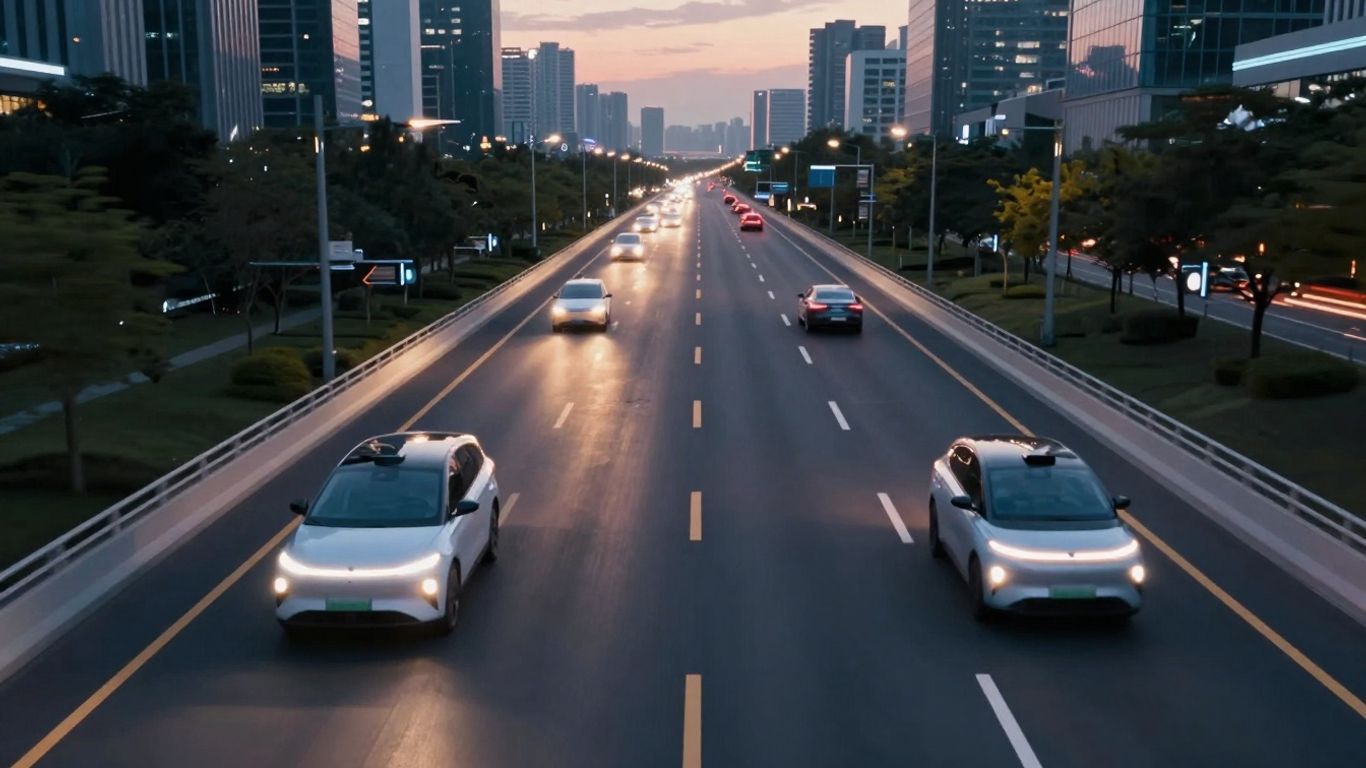
The notion of roadways offering more than just a static surface for travel is, in fact, quite seasoned, predating common perception. Its realization wasn't an overnight revelation; rather, it has been a gradual accumulation of diverse technologies and innovative concepts.
Early Innovations in Traffic Management
During the latter part of the 20th century, specifically around the 1980s, urban centers began exploring nascent technological approaches to enhance traffic control. Consider, for instance, the introduction of ramp meters on highway on-ramps—those signals instructing drivers when to merge. Their primary design was to facilitate a smoother transition of vehicles onto the main thoroughfare. Concurrently, the first electronic toll collection systems emerged, allowing motorists to pass through without the traditional stop at a booth. While rudimentary by today's standards, these early systems unequivocally demonstrated technology's potential to alleviate common driving frustrations.
The Rise of Intelligent Transportation Systems
By the 1990s, the comprehensive concept of "Intelligent Transportation Systems," or ITS, gained considerable global traction. Governments and research institutions increasingly collaborated to devise more integrated strategies for traffic management. A significant milestone occurred in 1997 in San Diego, where a groundbreaking demonstration showcased vehicles driving in a coordinated platoon, almost as if communicating on a specialized highway. It offered a compelling glimpse into a future where vehicles and road infrastructure could operate in seamless concert.
- Traffic sensors: These became more prevalent, dedicated to gathering crucial data.
- Control centers: Facilities were established for monitoring and managing traffic flow centrally.
- Variable message signs: Those digital displays along highways began informing drivers about delays or incidents in real time.
These early ITS efforts laid the groundwork for more complex systems, proving that digital tools could significantly impact how we move.
Pioneering Smart Highway Trials
Genuine advancements began to materialize in the mid-2000s. In 2006, the UK initiated a substantial trial on a segment of the M42 motorway, dubbed "active traffic management." This innovative experiment introduced concepts such as dynamic speed limits, which adjusted based on prevailing traffic conditions, and the strategic use of the hard shoulder as an additional lane during periods of peak congestion. The outcomes proved rather impressive. Researchers observed that travel times became notably more predictable, decreasing by up to 27%, and accident rates also declined. This resounding success story undeniably propelled the concept of "smart motorways" forward, not only in the UK but also across other nations.
Transformative Benefits of Smart Roads
Smart roads are more than just a showcase of advanced technology; they deliver tangible, everyday enhancements to our travel experiences. Envision less time spent in gridlock, a notable reduction in accidents, and an overall smoother journey. These sophisticated systems are meticulously engineered to make our commutes both safer and markedly more efficient—a considerable advantage when one calculates the aggregate time we commit to the road.
Enhancing Road Safety and Accident Prevention
One of the foremost promises of smart roads is their capacity to significantly elevate highway safety. By employing a dense network of sensors and cameras to meticulously observe real-time conditions, these roadways can identify perilous situations almost instantaneously. Whether it's a sudden deceleration, an unforeseen accident, or even adverse weather, the system is equipped to alert drivers—and indeed, autonomous vehicles—without delay. This immediate dissemination of information can proactively avert collisions before they even have a chance to occur.
- Instant hazard detection and alerts: Systems can identify sudden braking, debris on the road, or adverse weather conditions.
- Dynamic speed limit adjustments: Speed limits can be lowered automatically in response to changing conditions, reducing the risk of high-speed collisions.
- Improved emergency response coordination: When an incident occurs, smart road systems can help direct emergency services more quickly and efficiently.
The ability of smart roads to react in real-time to unfolding events is a game-changer for safety. It moves us from a reactive approach to a proactive one, where potential dangers are identified and mitigated before they cause harm.
Optimizing Traffic Flow and Reducing Congestion
Traffic congestion, as we all know, is a significant bane for commuters everywhere. Smart roads tackle this challenge directly by actively managing traffic flow. They possess the capability to dynamically adjust speed limits, meticulously control vehicle entry onto highways, and even activate additional lanes during periods of high demand. The ultimate objective is to maintain a continuous, smooth movement of vehicles and to prevent those exasperating stop-and-go waves that squander both time and fuel. Wondering how much time could be saved? The proactive management aims to significantly cut down on the unpredictable delays that plague modern travel.
| Feature | Impact |
|---|---|
| Variable Speed Limits | Smooths traffic flow, reduces stop-and-go waves, improves travel times |
| Adaptive Ramp Metering | Controls highway entry to prevent over-saturation and slowdowns |
| Dynamic Lane Management | Opens additional lanes during peak hours to increase capacity |
| Real-time Rerouting | Guides drivers around accidents or unexpected blockages |
Improving the Driver and Commuter Experience
Beyond the critical aspects of safety and efficiency, smart roads fundamentally aim to alleviate the inherent stresses of driving. When traffic flows with greater fluidity, individuals naturally spend less time commuting and more time engaged in pursuits of their choosing. This translates into more reliable arrival times, reduced fuel consumption, and, invariably, a more pleasant overall journey. Imagine returning home from work a little earlier, or arriving at an important appointment without the gnawing anxiety of unpredictable traffic—these are the tangible benefits smart roads promise.
- Reduced travel time variability: Commuters can rely on more consistent journey durations.
- Lower stress levels: Smoother traffic means less frustration and a more relaxed driving experience.
- Fuel savings: Less idling and smoother acceleration/deceleration contribute to better fuel economy.
Emerging Technologies in Smart Road Infrastructure
Our roadways are currently undergoing a profound technological transformation. It's no longer merely about the smoothness of the asphalt; we're talking about infrastructure capable of actively communicating with both us and our vehicles. This forthcoming wave of smart road technology is quite remarkable, with a distinct focus on evolving the road surface itself into an intelligent source of information—and even power.
Intelligent Road Surfaces and Materials
Consider the road beneath your tires not simply as a static surface, but as an active, responsive participant within the broader transportation system. Researchers and pioneering companies are vigorously developing novel materials and designs that embed intelligence directly into the pavement. This signifies that the road can transcend its traditional role of merely supporting vehicles; it gains the ability to sense, communicate, and, in some cases, even power them.
- Smart Pavement: This innovative approach involves embedding sophisticated sensors directly into the road surface. These sensors are adept at detecting crucial parameters like vehicle position, velocity, and even dynamic road conditions such as the presence of ice or developing potholes. This vital information can then be transmitted to central traffic management centers or directly to connected vehicles, significantly aiding in accident prevention and more effective traffic flow management. Some advanced systems even leverage fiber optics to facilitate high-speed data transfer.
- Dynamic Wireless Power Transfer (DWPT): For the realm of electric vehicles, this represents a monumental leap forward. Imagine traversing a roadway that continuously charges your car wirelessly as you drive. Such systems utilize electromagnetic induction, with charging coils judiciously buried beneath the road surface. This technology holds the potential to substantially diminish the necessity for bulky battery packs in EVs and could effectively eradicate the pervasive "range anxiety." Moreover, its application is being explored for charging public transport vehicles, such as buses.
- Solar Road Paint: While still in its nascent stages of development, this concept employs specialized paints capable of harvesting solar energy throughout the day. At night, this stored energy can then be utilized to illuminate road markings, thereby enhancing visibility and safety in low-light conditions without requiring external power sources. Indeed, the aim is to turn the road itself into a network of sensors and communication nodes—transforming it from a simple pathway into an active, intelligent component of the transportation ecosystem. It's about rendering the infrastructure intrinsically smarter and more responsive.
The idea is to turn the road into a network of sensors and communication nodes. This transforms it from a simple pathway into an active part of the intelligent transportation ecosystem. It's about making the infrastructure itself smarter and more responsive.
Seamless Vehicle-to-Infrastructure Integration
This is precisely where the synergy between the road and the vehicle reaches its zenith. The paramount objective is to ensure that cars and the road infrastructure can exchange information with exceptional speed and unwavering reliability. This robust connectivity paves the way for a driving experience that is far more coordinated, and fundamentally, much safer.
- Real-time Data Exchange: Connected vehicles are empowered to receive instantaneous updates from the road regarding traffic congestion, impending accidents, or rapidly changing weather conditions. This capability allows drivers—or indeed, autonomous systems—to react proactively and appropriately.
- Traffic Signal Optimization: Smart roads can dynamically communicate with traffic lights to adjust their timing based on real-time traffic flow, effectively reducing wait times and alleviating congestion.
- Hazard Warnings: Should a sensor detect an imminent hazard, such as debris on the road surface or a sudden patch of black ice, it can immediately alert approaching vehicles, thereby preventing potential incidents.
The Impact of Advanced Sensor Networks
Underpinning many of these sophisticated smart road technologies is the strategic deployment of advanced sensor networks. These are far from the rudimentary traffic counters of yesteryear; rather, they are intricate systems designed to meticulously gather a comprehensive array of data.
- High-Resolution Sensing: Modern sensors are capable of providing exceptionally detailed information concerning vehicle movements and precise road conditions.
- Environmental Monitoring: Specialized sensors can track crucial environmental parameters such as temperature, humidity, and precipitation, furnishing vital data for weather-related warnings and proactive road maintenance.
- Predictive Maintenance: By assiduously analyzing data streamed from these extensive sensor networks, road authorities can accurately predict when maintenance is required. This crucial shift from reactive repairs to proactive upkeep not only yields significant cost savings but also substantially reduces disruption for motorists.
The Future Landscape of Smart Roads
So, what lies ahead for smart roads? The vision extends beyond merely incrementally improving existing roadways; it encompasses a complete reconceptualization of our approach to transportation infrastructure. We are peering into a future where roads actively participate in our journeys, moving far beyond their traditional role as passive surfaces. What possibilities does this truly unlock?
Integrating Autonomous Vehicle Systems
Self-driving vehicles are no longer confined to the pages of science fiction; they are steadily transitioning into a tangible reality. Smart highways are poised to become their quintessential operational environment. Consider this: highways, generally less complex than bustling urban streets, offer an ideal setting for autonomous vehicles to refine their operational capabilities. We may well see dedicated lanes exclusively for self-driving cars, or perhaps platoons of commercial trucks traveling in close formation to maximize fuel efficiency. The roads themselves will likely undergo adaptations, possibly incorporating specialized markings or embedded sensors specifically designed to guide these driverless vehicles. In turn, these autonomous cars will transmit even more granular information back to the highway's control systems, thereby forging a continuous feedback loop that enhances overall system performance.
- Dedicated lanes for autonomous vehicles.
- Enhanced guidance systems for driverless cars.
- Increased road capacity through optimized vehicle spacing.
Universal Connectivity for All Road Users
Envision a world where nearly every vehicle on the road can communicate seamlessly with its surroundings. This ambition isn't exclusive to premium new vehicles; it's about establishing this level of connectivity as a universal standard. Future automobiles could well integrate built-in communication technology as a common feature, much like radios are today. This widespread integration would mean an immense volume of vehicles capable of 'dialoguing' with smart highways in real time. Traffic lights, sensors, navigation applications, and vehicles would all instantaneously share data. This constant, dynamic flow of information promises to dramatically elevate both safety and operational efficiency. For instance, if a vehicle encounters an unexpected patch of fog, it could instantly alert other proximate vehicles and the relevant highway authority, which could then activate warning signs and adjust speed limits within milliseconds. As advanced networks like 5G and subsequent generations become more ubiquitous, this ultra-fast, low-latency communication will form the indispensable backbone of future travel.
The road itself will become a kind of caretaker, managing traffic, preventing accidents, and guiding us safely to our destinations, often without us even noticing.
Sustainable and Energy-Efficient Roadways
Future smart roads will prioritize more than just data exchange and speed; they will also focus intently on their environmental footprint. This commitment includes the development of innovative road materials designed to perform beyond merely supporting traffic loads. Researchers are actively pursuing concepts such as modular concrete slabs embedded with a myriad of sensors and wireless communication technology. These 'smart pavement' sections could effectively transform the highway into a vast, distributed computer, meticulously tracking vehicles for safety purposes or even managing automated toll collection. Some forward-thinking concepts even involve roadways capable of wirelessly charging electric vehicles as they travel, significantly enhancing EV ownership convenience and fostering broader adoption. This steadfast focus on sustainability is set to render our transportation networks both more environmentally friendly and economically viable in the long term. We're already witnessing initial examples of this through smart city initiatives aimed at improving road safety.
| Feature | Description |
|---|---|
| Smart Pavement | Modular slabs with sensors and connectivity for real-time vehicle tracking. |
| Wireless Charging | Roads that can charge electric vehicles while they are in motion. |
| Energy Harvesting | Technologies to capture energy from traffic or solar panels along roads. |
| Recycled Materials | Increased use of sustainable and recycled materials in road construction. |
Navigating the Challenges of Smart Roads
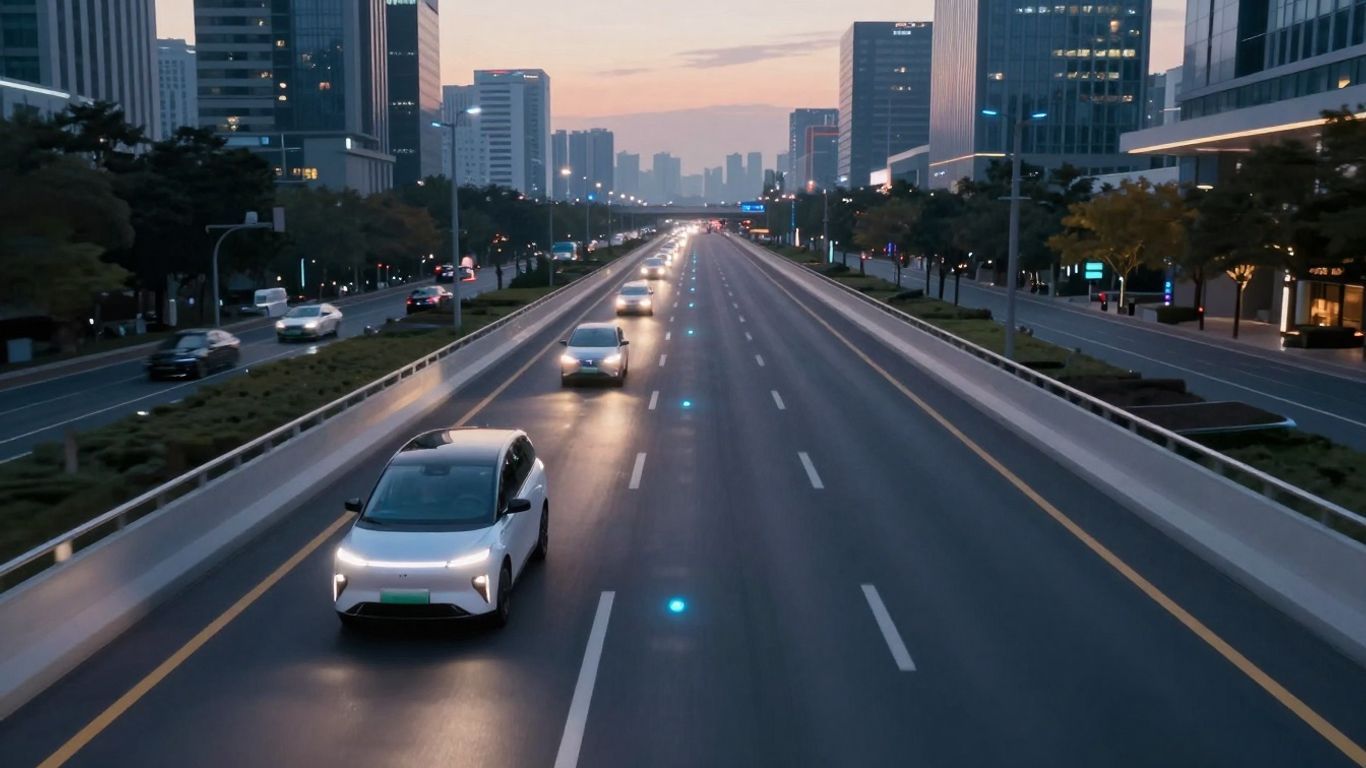
Indeed, we've explored at length the compelling prospects of smart roads—promising enhanced safety, accelerated travel, and alleviated congestion; truly, a vision of optimized transit. Yet, much like any ambitious, large-scale innovation, its widespread implementation is hardly straightforward. Several formidable obstacles must be judiciously overcome before every thoroughfare can boast the intelligence of our handheld devices.
Addressing Cybersecurity and Data Privacy
Consider the immense volume of data involved: all these intricate sensors, cameras, and communication systems are in constant operation, perpetually gathering information. This represents an enormous stream of data, and safeguarding this information is an absolutely critical concern. We're talking about everything from precise vehicle locations to their exact speeds. Should malicious actors gain unauthorized access to such data, the potential for widespread disruption is immense—ranging from tampering with crucial traffic signals to the illicit acquisition of personal travel specifics. Furthermore, public apprehension regarding privacy is entirely valid. No individual wishes to feel under constant surveillance during their commute. We therefore require rigorously defined protocols dictating data access and utilization, coupled with exceptionally robust security measures. One might liken this effort to constructing an impenetrable digital fortress around all gathered information.
Funding Models for Infrastructure Upgrades
Realistically speaking, the development of smart road infrastructure entails substantial financial investment. This isn't merely a matter of deploying a few sensors here and there; it necessitates the installation of highly complex integrated systems, their ongoing maintenance, and ensuring their seamless interoperability. Consequently, determining the financial responsibility for such extensive undertakings poses a considerable challenge. Will governments shoulder the entire cost? Or perhaps private entities? Alternatively, will motorists contribute through increased tolls or taxes? This is undeniably an intricate dilemma, and viable solutions will likely vary significantly across different regions. Some areas may adopt a blended public-private funding approach, while others might be compelled to initiate development on a more modest scale.
Here's a quick look at the cost factors:
- Initial Setup: Sensors, communication gear, control centers.
- Ongoing Maintenance: Keeping all that tech running smoothly.
- Data Management: Storing and processing all the information.
- Upgrades: Technology changes fast, so roads will need updates.
Ensuring Reliability and System Security
Even once the financial and cybersecurity concerns are adequately addressed, the paramount need remains to ensure that these sophisticated systems function flawlessly, around the clock. Imagine, for a moment, a smart traffic light system failing during peak rush hour, or a critical sensor network going offline on a major highway. Such scenarios could precipitate severe accidents and widespread gridlock. Consequently, these systems must exhibit extraordinary reliability, incorporating robust backup mechanisms for any eventuality. This imperative extends beyond protection from cyber threats; it also encompasses resilience against technical malfunctions and even natural wear and tear. The fundamental expectation is that the road infrastructure must remain dependable, irrespective of circumstances.
Building smart roads is, in many respects, akin to upgrading a busy international airport while flights are continuously landing and departing. The challenge lies in implementing improvements without interrupting the flow of traffic, all while ensuring that every component remains exceptionally safe and reliable. It's a complex balancing act, yet dedicated experts are actively developing solutions for each of these intricate issues.
Achieving the successful implementation of these smart road systems demands meticulous planning and rigorous testing. It represents an undertaking of significant magnitude, but the potential dividends in terms of enhanced safety and efficiency could be truly transformative. Our collective responsibility is to ensure that these systems are constructed judiciously, with all these inherent challenges thoughtfully considered.
The Road Ahead is Smart
So, what are the broader implications of these advancements for us? Fundamentally, the very nature of road travel is undergoing a profound evolution, and at a pace perhaps quicker than many might anticipate. Smart highways—replete with their intricate networks of sensors and interconnected technology—are transitioning from aspirational concepts into tangible realities now emerging across various regions. This shift isn't solely about expediting commutes, though that is certainly a considerable advantage. It also centers on making our roadways unequivocally safer for every user and, indeed, contributing positively to environmental sustainability. Undoubtedly, certain hurdles still demand our attention—such as guaranteeing impregnable system security and accurately calculating the substantial investment required. Nevertheless, the demonstrable progress we observe, with numerous nations piloting innovative solutions, confirms we are progressing along the correct path. To grasp its essence, perhaps envision it this way: the road itself is gaining intelligence, actively assisting us in reaching our destinations more smoothly and securely. It signifies a momentous change, and the prospect of where it will lead us next is genuinely exhilarating.
Frequently Asked Questions
What exactly are smart roads?
Smart roads are essentially conventional roadways upgraded with advanced technology. They incorporate embedded sensors, cameras, and specialized communication systems. These technologies work in concert to enhance traffic management, bolster driving safety, and provide drivers with pertinent, real-time information, almost as if the road itself is intelligently engaging with you.
How did smart roads start?
The conceptual foundation for integrating technology to improve road infrastructure emerged some decades ago. Early innovations included straightforward systems like automated traffic lights and electronic toll collection. Subsequently, throughout the 1990s and 2000s, more extensive projects began to pilot systems capable of dynamically managing traffic flow and establishing communication with vehicles, paving the way for the sophisticated smart highways currently in development.
What are the main benefits of smart roads?
Smart roads offer a multitude of benefits, primarily focusing on improving the driving experience. They can significantly enhance road safety by promptly alerting drivers to potential hazards like accidents or adverse weather. Furthermore, they facilitate more fluid traffic movement, substantially reducing frustrating congestion. This translates into less wasted time and a more enjoyable journey for all road users.
What new technologies are being used in smart roads?
Contemporary smart roads are leveraging innovative technologies such as specialized pavement embedded with sensors to track vehicle movements, and even systems capable of wirelessly charging electric vehicles as they drive. They also employ advanced sensor networks and high-resolution cameras to gather comprehensive real-time data, which is then processed by powerful computer systems to derive actionable insights.
How will smart roads work with self-driving cars?
Self-driving vehicles are poised to integrate seamlessly with smart roads. The infrastructure will be able to transmit vital information directly to autonomous cars, including alerts about traffic conditions or changes in the road ahead. This direct communication will enable self-driving cars to navigate with enhanced safety and efficiency, while also allowing them to relay data back to the road system.
What are the biggest problems with building smart roads?
Developing and deploying smart roads presents several significant challenges. A primary concern revolves around cybersecurity—ensuring the protection of all collected data from potential breaches. Another substantial hurdle is securing the necessary funding for the extensive and costly infrastructure upgrades. Moreover, guaranteeing the absolute reliability and continuous, perfect functionality of all integrated technologies is paramount for ensuring public safety and operational efficacy.


