
resources
The Future is Paved: How Smart Roads Are Revolutionizing Transportation
25 Mar 2026

It's fascinating, isn't it, how roads are evolving beyond mere stretches of asphalt and concrete? Today's roadways are becoming incredibly intelligent, fundamentally reshaping the way we navigate our world. Just imagine—infrastructure that communicates with your car, self-repairs minor damage, and even prevents icy conditions. While it might sound like something out of a futuristic novel, these advancements are already well underway. This transformative concept of smart roads is poised to make our daily commutes safer, our urban environments greener, and our overall travel experiences remarkably more efficient. Let's delve into the exciting ways this vision is taking shape.
Key Takeaways
- Innovative paving materials are enhancing road resilience and promoting environmental sustainability, exemplified by surfaces designed to manage water runoff effectively.
- Cutting-edge technology, including advanced sensors and GPS, is now being seamlessly integrated into the paving process for superior construction outcomes.
- Smart roads are significantly boosting safety through features such as dynamic lane markings and proactive anti-icing systems.
- These sophisticated roadways promise substantial reductions in repair expenditures and a notably smaller ecological footprint.
- The future envisions roads establishing intricate connections with vehicles, thereby facilitating new modes of transit, most notably autonomous driving.
The Foundation Of Smart Roads: Advanced Paving Materials

When the topic of smart roads comes up, our minds often leap straight to the high-tech sensors and the digital wizardry. However, before any of that sophisticated technology can function optimally, a robust foundation is absolutely essential. That foundation, as you might guess, is the pavement itself. We've certainly moved beyond the simple act of pouring blacktop; the materials and methodologies employed in constructing our roadways are undergoing a profound transformation.
Water-Saving Pavement For Sustainable Cities
One pressing challenge for urban centers worldwide is the efficient management of rainwater. Conventional road surfaces, by their very nature, channel water swiftly into storm drains, a process that can easily overwhelm municipal systems and lead to localized flooding. This is precisely where permeable, or porous, asphalt offers a brilliant solution. Rather than presenting a solid, impermeable barrier, this innovative material features minute gaps that allow water to seep directly through. This ingenious design accomplishes several critical objectives:
- Reduces Runoff: Significantly less water flows into storm drains, thereby mitigating the risk of flooding.
- Recharges Groundwater: The water that permeates through the pavement actively helps to replenish crucial underground water sources.
- Filters Pollutants: As water passes through the various layers of the pavement, it undergoes a natural filtration process, removing certain contaminants.
This type of pavement represents a significant stride forward for cities striving to enhance their environmental stewardship and refine water management strategies. It's a deceptively simple concept, yet its impact on how our urban landscapes contend with precipitation is truly remarkable.
Innovations In Surface Materials And Durability
There's no denying that roads endure an incredible amount of stress. Just consider the immense weight of commercial trucks, the relentless freeze-thaw cycles that many regions experience in winter, and the general wear and tear of daily traffic. To counter these formidable challenges, engineers are tirelessly developing tougher, more resilient asphalt mixes. A prime example involves the incorporation of recycled asphalt pavement (RAP)—effectively, grinding up older roads and reusing that material in new construction. This not only conserves valuable resources but also dramatically reduces waste. Furthermore, experiments with warm-mix asphalt (WMA) are yielding promising results; this material is produced and laid at lower temperatures, which inherently cuts down on energy consumption and emissions during the manufacturing process, often leading to a more consistent and exceptionally durable final product.
Ultimately, the overarching goal remains straightforward: to engineer roads that perform better, last longer, and require fewer interventions.
The Role Of Nanotechnology In Paving
Now, this is where the conversation truly gets exciting. Nanotechnology involves manipulating materials at an incredibly minuscule, molecular scale. When applied to asphalt, it unlocks the potential for some truly astounding enhancements:
- Increased Strength: Infinitesimally small particles can significantly reinforce the asphalt mix, making it far more resistant to cracking and structural failure.
- Better Water Resistance: The material can be precisely engineered to repel water with greater efficacy, improving longevity.
- Self-Healing Properties: Remarkably, some advanced mixes are capable of autonomously repairing minor cracks over time. Imagine a road that subtly mends its own superficial damage!
These aren't merely theoretical concepts anymore. Researchers are diligently developing and rigorously testing these advanced materials, continually pushing the boundaries of what we've come to expect from our road networks. It's fundamentally about constructing infrastructure that is not only inherently smarter but also intrinsically more robust and enduring from its very foundation.
Intelligent Infrastructure: Integrating Technology Into Roadways
Sensors and Automation for Precise Paving
Building roads today is far more sophisticated than simply dumping asphalt and smoothing it over. Modern road construction is undergoing a substantial technological overhaul. Picture an intricate dance of sensors, robotic systems, and smart machinery collaborating seamlessly. These advanced tools enable pavement to be laid with astounding accuracy. Sensors, for instance, can gauge everything from temperature to material density in real-time. This invaluable data then feeds into sophisticated automated systems that can adjust the paving process on the fly. This unparalleled level of precision translates directly into fewer errors and a consistently higher-quality, more uniform road surface. It's akin to having an exceptionally detailed blueprint that the machines follow to absolute perfection, every single time.
GPS-Guided Paving for Enhanced Quality
Remember a time when road crews meticulously used string lines and chalk marks to guide their work? Those methods are rapidly becoming relics of the past. Today, GPS technology is proving to be a true game-changer in paving operations. Machines equipped with state-of-the-art GPS receivers can adhere to digital designs with centimeter-level accuracy. This precision isn't just about achieving a perfectly straight road; it's crucially about guaranteeing the correct thickness and optimal slope for superior drainage. The result? Roads that endure longer and perform far more effectively.
Here's a brief overview of how GPS significantly elevates paving quality:
- Accuracy: Pinpoint positioning dramatically minimizes errors in both alignment and grade.
- Efficiency: Less reliance on time-consuming manual measurements translates into accelerated project completion.
- Consistency: Ensures uniform pavement thickness and an exceptionally smooth surface across the entire roadway.
- Data Logging: Provides comprehensive, detailed records of the work performed, which is invaluable for quality control and informing future maintenance strategies.
Thermal Imaging for Optimal Application
Achieving the precise temperature when laying asphalt is critically important. If the asphalt is too cool, it won't compact properly, inevitably leading to weak spots and premature deterioration. Conversely, if it's too hot, it can become difficult to work with and may not cure as intended. This is precisely where thermal imaging cameras become indispensable. Mounted directly onto paving equipment, these cameras generate a visual map illustrating the asphalt's temperature across the entire width of the mat. This immediate feedback allows the crew to identify hot and cold spots instantaneously and make necessary adjustments. Ultimately, it helps them attain the ideal temperature range for compaction, a fundamental factor in creating a truly durable road.
Indeed, proper temperature control during asphalt paving serves as a silent hero in ensuring road longevity. It effectively prevents premature failures such as cracking and rutting, thereby saving both considerable expense and significant headaches further down the line. It's a straightforward concept, but its perfect execution demands the right tools and meticulous attention to detail.
Enhancing Safety Through Smart Road Features
Smart roads aren't merely focused on expediting travel; they're also intensely dedicated to making the journey substantially safer for everyone navigating them. Just consider the implications: clearer, more responsive markings, superior traction in adverse weather conditions, and integrated systems capable of detecting potential hazards before they escalate. These aren't just far-fetched futuristic dreams anymore; they are rapidly becoming a tangible reality.
Dynamic Markings For Improved Visibility
Gone are the days of struggling with faded white lines that vanish under heavy rain or in dense fog. Smart roads are designed to incorporate dynamic markings that intelligently adapt to prevailing conditions. Imagine, if you will, lane lines that glow with increased intensity at night or subtly alter their color to alert drivers to impending hazards or sudden lane closures. This consistent, unmistakable guidance empowers drivers to maintain their lane discipline and react appropriately, particularly when visibility is compromised.
- Adaptive Brightness: Markings can automatically adjust their luminosity based on ambient light levels.
- Hazard Alerts: Specific road sections are capable of flashing or changing color to signal unexpected dangers or incidents.
- Real-time Updates: Markings can be remotely modified to reflect temporary changes, such as active construction zones or the aftermath of accidents.
Anti-Icing Technologies For Safer Travel
Winter driving, as we all know, can be exceptionally treacherous. Smart roads are increasingly integrating technologies that actively combat the formation of ice. This can encompass everything from embedded heating elements strategically placed in critical areas like bridges and intersections, to sophisticated systems that automatically dispense de-icing agents. The objective is unequivocally simple: to maintain a clear road surface and ensure reliable traction, irrespective of the prevailing weather conditions.
The profound ability to proactively manage road conditions, rather than simply reacting to them, signifies a monumental leap forward in the realm of public safety.
Data-Driven Insights For Hazard Mitigation
One of the most potent capabilities of smart roads lies in their capacity to meticulously collect and analyze vast amounts of data. Sensors embedded within the pavement can detect critical events such as sudden braking, instances of skidding, or even the presence of road debris. This invaluable information can then be utilized in real-time to alert other drivers, dispatch maintenance crews promptly, or even dynamically adjust traffic signal timing to prevent congestion that could unfortunately lead to accidents. It's truly like endowing the road itself with a sophisticated nervous system, capable of sensing and intelligently responding to potential dangers.
The Economic And Environmental Advantages Of Smart Roads
The pursuit of smarter roads isn't merely about incorporating cutting-edge technology; it's equally about realizing substantial financial savings and fostering a more harmonious relationship with our planet. When we discuss smart roads, we're envisioning a future where infrastructure boasts increased longevity, incurs lower maintenance expenditures, and leaves a significantly lighter ecological footprint. It's truly a win-win scenario, wouldn't you agree?
Reduced Maintenance Costs And Longer Lifespans
Take a moment to consider the roads you traverse daily. How often do you encounter a pothole or spot developing cracks? Conventional roads frequently demand perpetual patching and extensive repairs, costs that inevitably accumulate for taxpayers. Smart road technologies, conversely, are meticulously engineered for exceptional durability. By leveraging advanced paving materials and sophisticated construction techniques, these roads are built to withstand significantly more wear and tear. This translates directly into fewer emergency repairs and a considerable reduction in the financial outlay for upkeep over time. Indeed, the enhanced resilience inherent in these modern pavements directly results in substantial, long-term savings for municipalities and the communities they serve.
Here’s a concise breakdown of how improved durability leads to tangible savings:
- Less Frequent Repairs: Advanced materials inherently resist damage from both adverse weather and heavy traffic loads more effectively.
- Extended Service Life: Roads constructed using smart techniques enjoy a significantly longer operational lifespan before requiring major reconstruction.
- Reduced Disruption: Fewer repair projects mean less traffic congestion and considerably fewer headaches for daily commuters.
While the initial investment in smart road technology might appear higher, the undeniable payoff emerges through substantially reduced ongoing expenses and a remarkably more reliable infrastructure that will serve us faithfully for decades to come.
Sustainable Materials And Lower Emissions
Environmental concerns are, without question, a central component of the smart road dialogue. The methods we employ to construct our roads exert a tangible impact on both our air quality and our natural resources. Smart road construction is now heavily emphasizing sustainability. This proactive approach includes the widespread utilization of recycled materials, such as reclaimed asphalt, which not only curtails waste but also diminishes the necessity for extracting virgin resources. Furthermore, innovations like Warm Mix Asphalt (WMA) are making a measurable difference. WMA requires less energy for both production and laying compared to traditional hot mix asphalt, resulting in fewer greenhouse gas emissions during the construction phase. This represents a significant stride toward cleaner air and more ecologically responsible infrastructure development. We are witnessing a definitive shift towards materials that are not only supremely tough but also unequivocally eco-friendly, actively assisting us in achieving our crucial climate goals. For more insights into the rapid evolution of technology and its broader societal impact, you can explore additional resources here.
Stimulating Economic Growth Through Efficiency
It stands to reason that superior roads foster stronger economies. When transportation networks operate with greater efficiency, a wealth of new opportunities unfurls. Goods can be transported more swiftly, supply chains become inherently more reliable, and businesses can conduct their operations with enhanced fluidity. This improved efficiency can act as a powerful magnet, attracting new companies to an area, thereby generating employment opportunities and invigorating the local economy. Consider this: a region boasting well-maintained, intelligent roads inherently presents itself as a more appealing locale for investment and operational endeavors. Moreover, the very construction and subsequent maintenance of these advanced roads create new jobs and demand skilled labor, further bolstering economic activity. It's a virtuous cycle where infrastructure improvements directly cultivate economic prosperity, ultimately rendering communities more vibrant and competitive.
The Future Of Mobility With Smart Road Integration
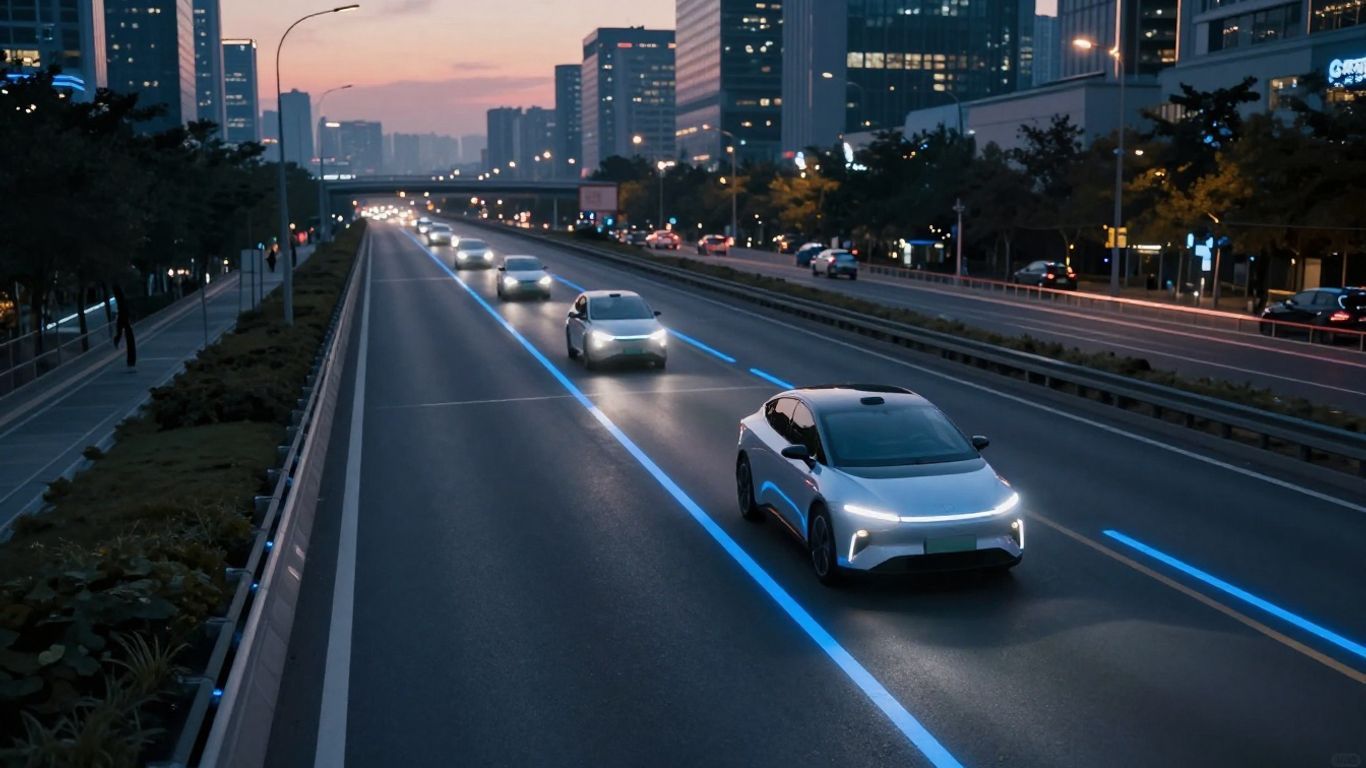
We are undoubtedly moving well beyond mere paved surfaces. The future of how we navigate our world revolves around an intricate web of interconnectedness—linking roads, vehicles, and the sophisticated systems designed to manage them. Envision it as adding an intelligent, digital layer atop the existing asphalt and concrete infrastructure we already possess. This digital stratum harnesses sensors, data analytics, and smart software to optimize our transportation networks, making them safer, more efficient, and supremely effective.
Connecting Vehicles And Infrastructure
This is precisely where our roads begin to engage in a dialogue with cars, and indeed, where vehicles initiate communication with one another. Can you picture traffic lights dynamically adjusting their timing based on real-time traffic flow, or digital signs proactively alerting you to upcoming hazards detected by vehicles just ahead? This caliber of communication is absolutely pivotal for fostering smoother traffic patterns and significantly alleviating those frustrating, time-consuming jams. It’s fundamentally about ensuring that the physical roadway and the vehicles traversing it operate in harmonious, collaborative unison. This intricate integration involves the seamless connection of diverse hardware, software, and communication systems, enabling them to fluidly share information and function as a unified, cohesive operational unit. Such integration is, in essence, what imbues smart roads with their true intelligence.
Enabling Autonomous And Connected Services
Smart roads serve as the indispensable backbone for the next generation of vehicular technology. Self-driving cars, for instance, require precise awareness of their exact location and their surrounding environment at all times. Smart road technology delivers this continuous stream of vital information, empowering autonomous vehicles to navigate both safely and reliably. Furthermore, this infrastructure robustly supports a suite of connected services, from real-time public transport updates to critical emergency vehicle prioritization.
- Enhanced Navigation: Provides hyper-accurate location data crucial for autonomous systems.
- Improved Safety: Delivers real-time hazard warnings and up-to-the-minute traffic condition updates.
- Efficient Logistics: Facilitates optimized routes for delivery and commercial vehicle fleets.
- Better Public Transit: Ensures accurate arrival times and responsive service adjustments for public transportation.
Scaling Smart Road Technologies For All Communities
Currently, many of these advanced road technologies are undergoing rigorous testing or limited deployment in specific geographic areas. The formidable challenge ahead lies in making these innovations universally accessible—not confined to just a select few metropolitan centers. We must strategically determine how to effectively scale these solutions so that every town and community, irrespective of size, can reap the benefits of safer, more efficient roadways. This imperative necessitates the development of clear, actionable plans and consistent regulatory frameworks, ensuring that disparate technologies can seamlessly interoperate across an entire nation.
Ultimately, the ambition is to evolve our transportation system from one defined simply by roads and bridges into a sophisticated network that incorporates a digital operating system. This advanced system will meticulously analyze data to cultivate safer roads, proactively address climate challenges, significantly reduce pollution, and guarantee that essential services are equitably distributed. It’s fundamentally about maximizing the potential of our existing infrastructure.
The entire future of mobility, in essence, hinges upon the development and successful implementation of this intricately interconnected digital infrastructure.
The Road Ahead
So, what does this grand vision mean for each of us? It signifies that the very roads we traverse daily are slated for a monumental upgrade. We're moving decidedly beyond merely laying down asphalt; we're actively constructing smarter, inherently more durable, and fundamentally safer pathways. From innovative roads designed to intelligently manage water runoff to those capable of seamless communication with our vehicles, the future of transportation is quite literally being built beneath our feet. It is, without doubt, an exciting era, and these remarkable advancements collectively promise a smoother, greener, and more interconnected journey for everyone.
Frequently Asked Questions
What exactly are "smart roads"?
Smart roads, in essence, are roadways that have advanced technology seamlessly embedded within their structure. Think of them as conventional roads, but augmented with an intelligent "brain"! They utilize an array of sensors and specialized materials to enhance traffic management, bolster driver safety, and even contribute positively to environmental sustainability. It's truly like providing our essential road infrastructure with a sophisticated digital upgrade.
How do smart roads make driving safer?
Smart roads are capable of significantly enhancing driving safety in several rather ingenious ways. For instance, they can feature specialized lights or dynamic signs that adapt in real-time based on traffic conditions or prevailing weather, such as proactively warning drivers about icy patches. Furthermore, these roads can transmit crucial information directly to your vehicle or to centralized traffic management centers, thereby aiding in accident prevention or expediting the resolution of issues.
Are smart roads good for the environment?
Indeed, a significant number of smart road technologies are specifically engineered with environmental friendliness in mind. Some employ specialized permeable materials that allow rainwater to naturally soak through, which is excellent for preventing urban flooding. Others leverage recycled materials or are designed to reduce the energy consumption typically required for construction and maintenance, leading to a noticeable reduction in overall pollution.
Will smart roads help save money?
In the long run, absolutely! While the initial capital investment for building smart roads might be somewhat higher, they are frequently constructed to possess significantly greater longevity and demand considerably fewer repairs. This means less money allocated to patching potholes and undertaking extensive repaving projects, ultimately translating into substantial savings for towns and cities over extended periods.
How do sensors help build better roads?
Sensors function much like the "eyes and ears" of smart paving machinery. They play a critical role in ensuring that road materials are applied at precisely the correct temperature and with the optimal thickness. This meticulous control is instrumental in creating smoother, more robust roads that exhibit greater durability and are less prone to common issues like cracks or uneven surfaces.
Can smart roads help self-driving cars?
Absolutely! Smart roads are an integral component in ensuring the safe and efficient operation of self-driving cars. These intelligent roadways can 'communicate' with autonomous vehicles, providing them with essential, real-time information about conditions ahead, such as traffic congestion or unexpected road closures. This vital connection is fundamental to making future transportation systems smoother and significantly more reliable.


