
resources-impakt, first_page, citiesabc
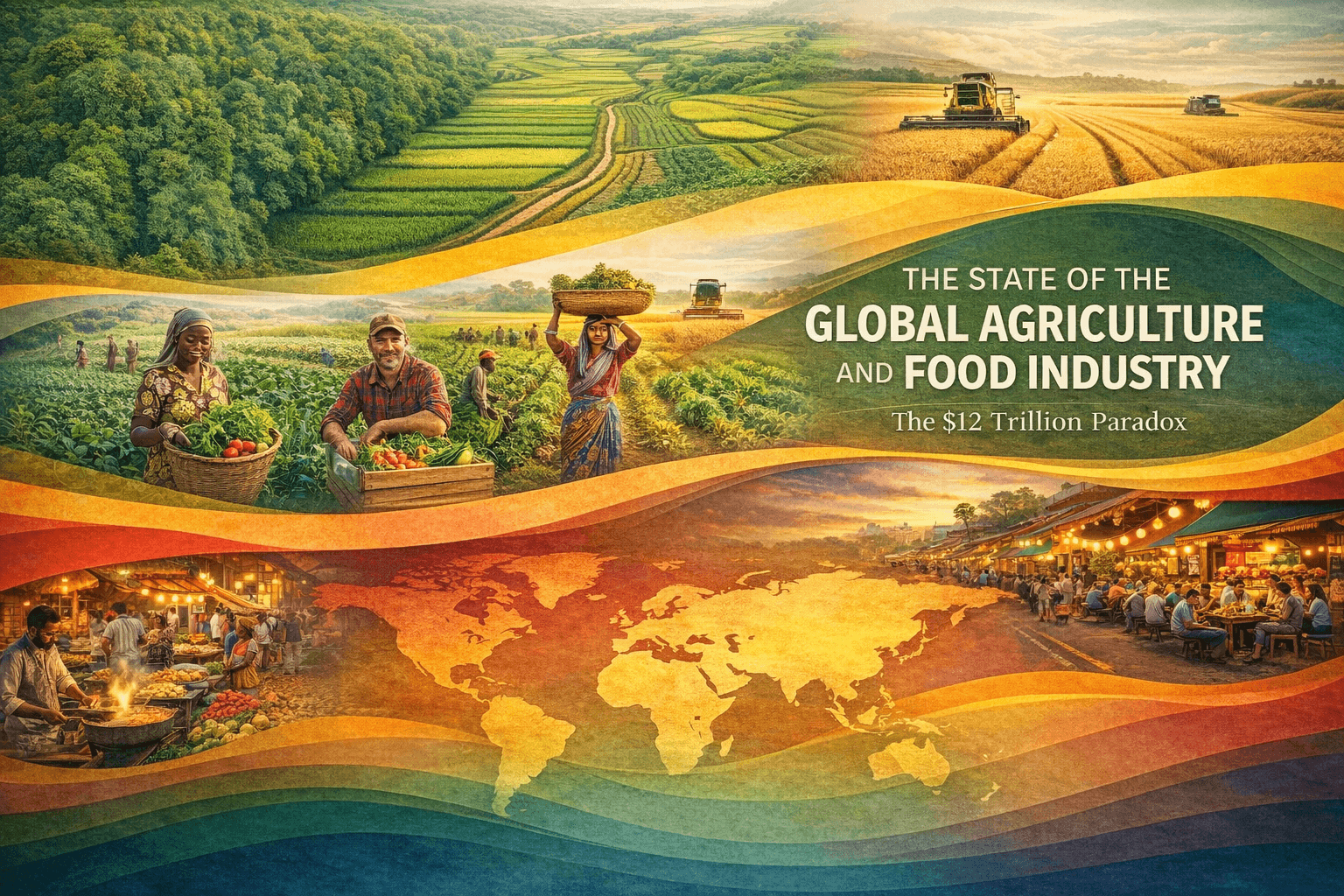
The State of the Global Agriculture & Food Industry
08 Apr 2026

Executive Summary
The global agriculture and food system, valued at $10 to $12 trillion annually, is a cornerstone of human civilisation. It not only employs around 890 million people but also supports the livelihoods of 2.6 billion individuals. Furthermore, it plays a crucial role in determining the nutritional well-being of every person on the planet. However, as we look toward 2026, we face a significant challenge: 318 million people are experiencing acute food insecurity, a situation that has unfortunately doubled since the onset of the COVID-19 pandemic.
This white paper explores the financial structures, human capital dynamics, and systemic challenges of the global food system while highlighting opportunities for transformation. Drawing on data from the Food and Agriculture Organization of the United Nations (FAO), the World Bank, the International Food.
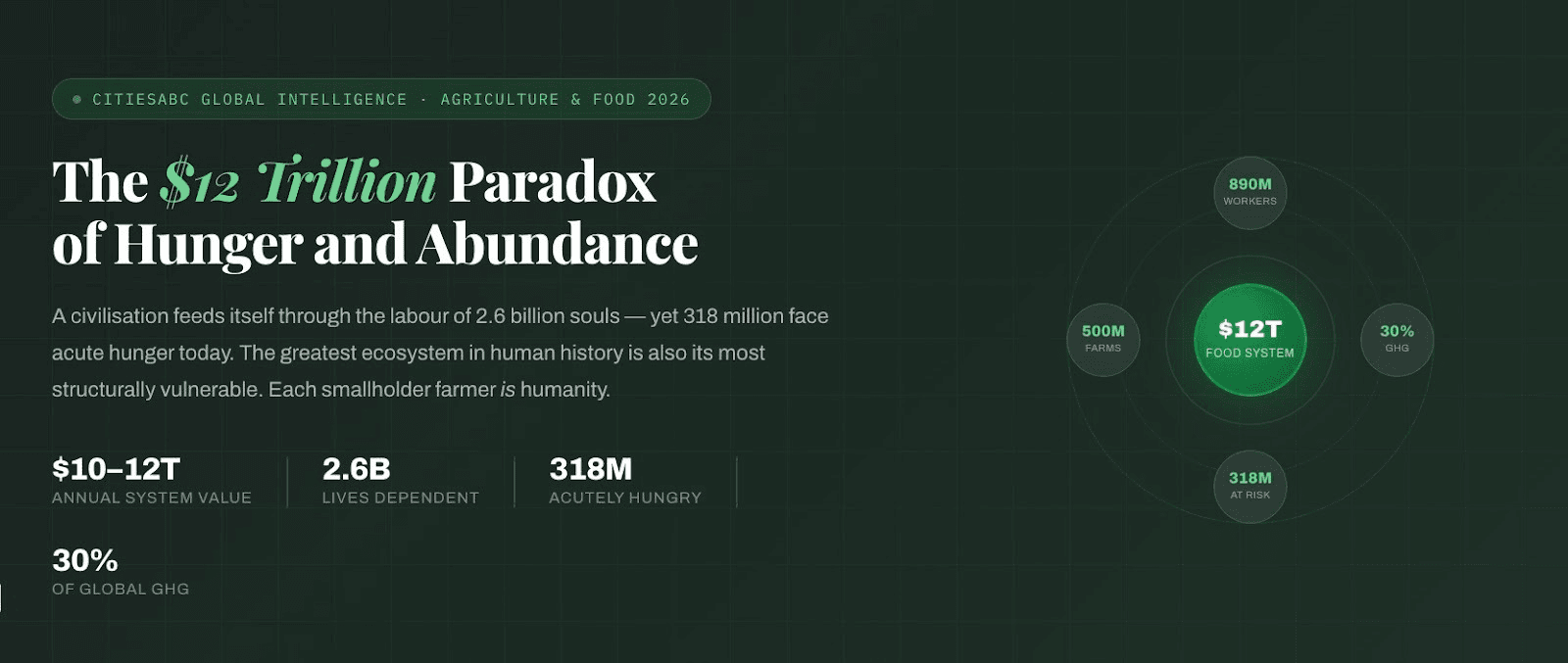
Policy Research Institute (IFPRI), and the World Food Programme (WFP), by examining these aspects, stakeholders can work together to move from the current paradox of hunger existing alongside abundance to a future where food security is equitable and resilient for all
The true measure of a civilisation lies not in the bounty of its largest farm, but in the capacity of its smallest to thrive with enough water, seed, credit, and dignity to continue into the next season.
1. The Scale of the Ecosystem: Numbers That Define Civilisation
Financial Architecture
The global food system, valued at approximately $10–12 trillion annually, comprises five interconnected segments: agricultural production, food processing, wholesale and logistics, retail and foodservice, and agricultural inputs and technology. As of 2024, the global agriculture finance market, which supports the infrastructure for production, processing, and trade, reached $183.21 billion and is projected to grow to over $257 billion by 2032, reflecting a healthy compound annual growth rate of 4.3% (Allied Market Research, 2024).
Looking ahead, the World Bank's Commodity Markets Outlook for 2026 anticipates a 2% decline in general agricultural commodity prices, with beverages such as coffee and cocoa potentially declining by up to 7% as supply increases. While this trend appears beneficial at first glance, it's important to consider that input costs such as fertilisers, energy, and agrochemicals remain consistently high. This situation contributes to what economists refer to as "agro-stagflation," posing challenges for smallholder farmers who must balance elevated production costs with fluctuating revenues. Addressing these dynamics is essential for fostering a more resilient and sustainable agricultural sector.
| Metric | 2024 Value | 2032 Projection | Source |
|---|---|---|---|
| Global Agriculture Finance Market | $183.21 billion | $257+ billion | Allied Market Research |
| Global Food System Total Value | $10–12 trillion | $13–15 trillion (est.) | FAO / World Bank |
| Smallholder Share of Agri Finance | 23% | Target: 35–50% | IFC / World Bank |
| AgriTech Investment (Global) | $6.1 billion | $22.5 billion | AgFunder, 2024 |
| Cold Chain Logistics Market | $330 billion | $550 billion (est.) | Grand View Research |
| Organic Food Market | $220 billion | $680 billion | Research & Markets, 2024 |
Sources: Allied Market Research, FAO, World Bank, IFC, AgFunder, Grand View Research, 2024–2026.
Human Capital: 2.6 Billion Lives
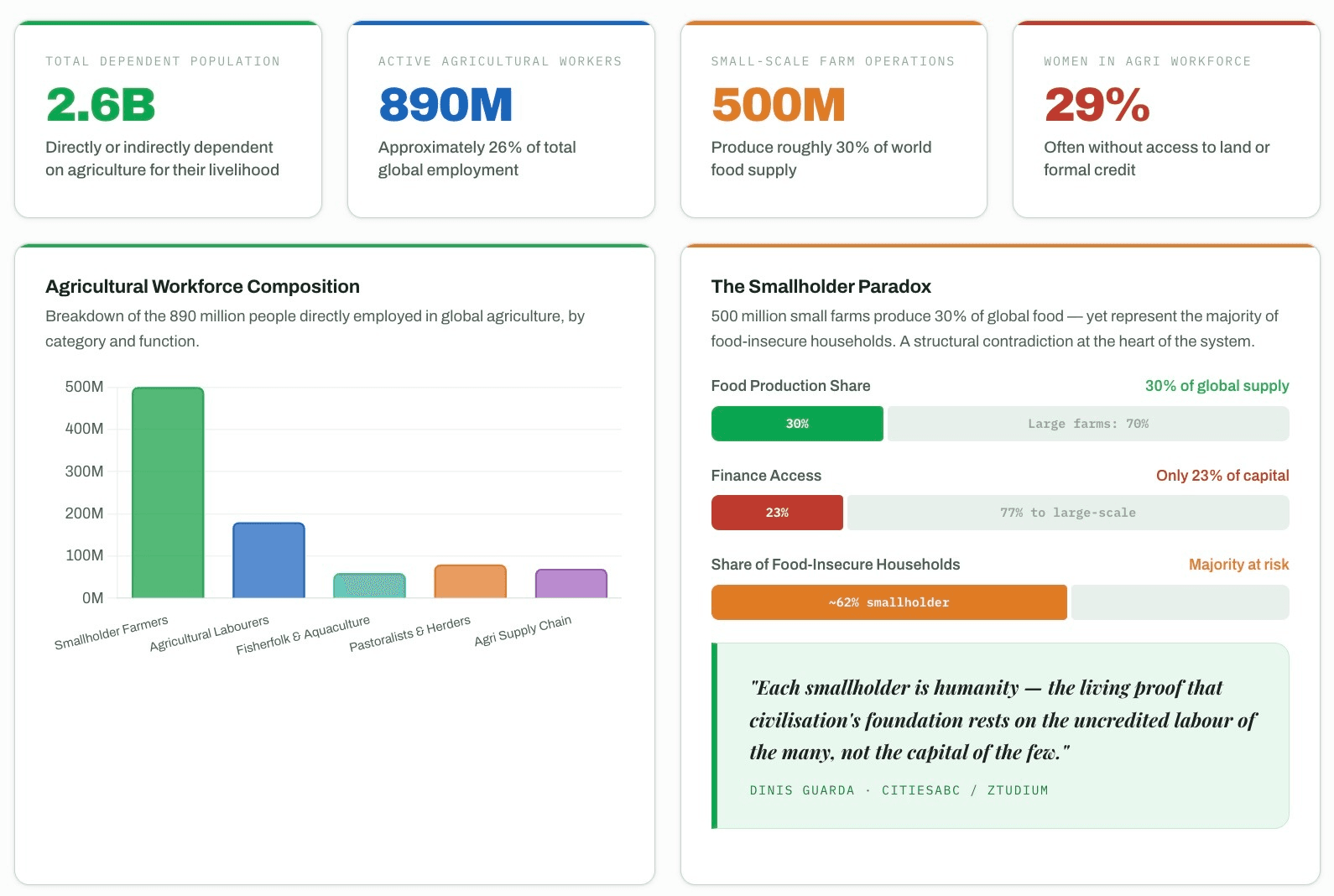
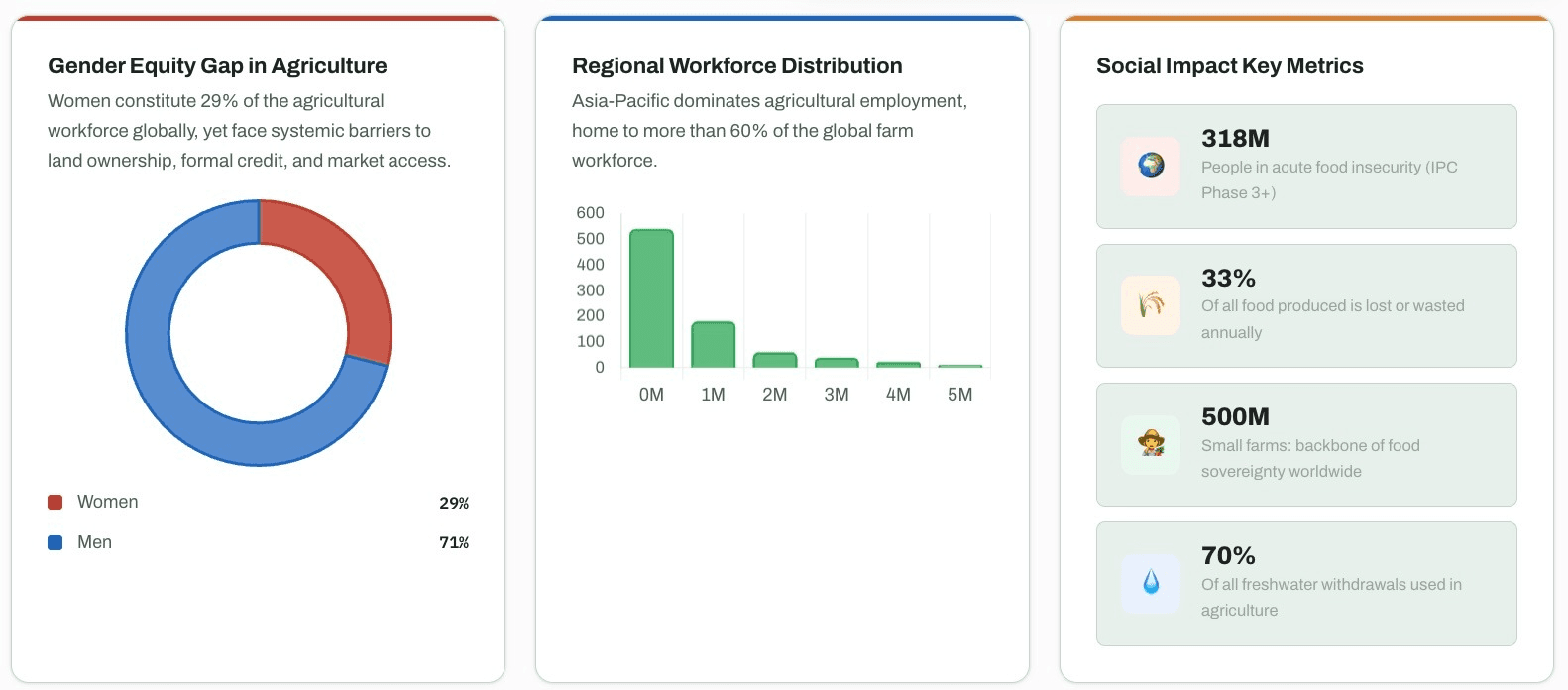
Agriculture stands as the world's largest employer, significantly influencing global economies. The International Labour Organisation (ILO) estimates that around 890 to 900 million people, approximately 26% of total global employment, are directly involved in agricultural work. When considering indirect dependents, such as rural households relying on farm income, agrifood supply chain workers, and service workers connected to the food system, this number swells to an impressive 2.6 billion, representing one in every three people on the planet.
Among these groups, the approximately 500 million small-scale farmers are particularly vital. According to the FAO State of Food and Agriculture 2023, smallholders managing less than two hectares together produce around 30% of the world's food supply. It is an extraordinary achievement, especially given that they receive only 23% of global agricultural financing. Addressing this imbalance between their substantial contributions and the financial support they receive could lead to significant improvements in the food system's efficacy.
Furthermore, the World Bank's Gender in Agriculture report highlights the essential role of women, who make up nearly 29% of the global agricultural workforce. However, many face obstacles to securing land tenure, accessing formal credit, and participating fully in markets. By closing the gender gap in agricultural productivity and resource access, the FAO estimates that agricultural output in developing countries could increase by 2.5% to 4%, potentially reducing hunger by up to 17%.
These insights signal a robust opportunity for agricultural reform that could amplify productivity, enhance food security, and support the livelihoods of billions.
2. Three Systemic Shocks: The Anatomy of Crisis in 2026
Shock One: Acute Hunger at Scale
The Integrated Food Security Phase Classification (IPC) projects that by 2026, approximately 318 million people may experience food insecurity at IPC Phase 3 or above ("Crisis" level or worse). This reflects a significant increase from the 149 million reported in 2019 before the pandemic. The ongoing challenges stem from the disruptions in supply chains due to COVID-19, the Ukraine-Russia conflict affecting Black Sea grain and fertiliser exports, and climate-related harvest failures. Addressing these issues presents an opportunity for collective action to effectively tackle the most pressing food security challenges of our time.
According to the World Food Programme (WFP), Sub-Saharan Africa is currently the region facing the greatest need, with over 240 million individuals experiencing food insecurity. The WFP anticipates a 25% funding shortfall for its operational needs in 2026, underscoring the need for increased investment in humanitarian efforts. Furthermore, the USAID Famine Early Warning Systems Network (FEWS NET) indicates that without proactive intervention, IPC Phase 4 ("Emergency") conditions could continue to affect 23 countries through 2026. By working collaboratively and investing in sustainable solutions, we aim to improve food security and create a more resilient future for vulnerable populations.
Case Study: Ethiopia's Productive Safety Net Programme (PSNP)
Government initiative delivering anticipatory cash transfers to 8 million food-insecure households
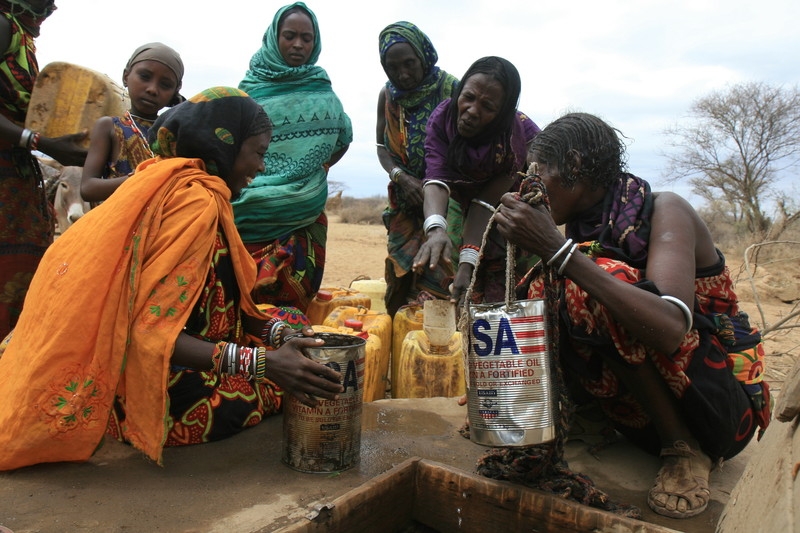
The PSNP, supported by the World Bank and USAID with over $1.5 billion committed since 2005, empowers Ethiopia's most vulnerable agricultural households through predictable, multi-year transfers. A 2023 impact evaluation revealed that beneficiary households increased crop diversity by an impressive 34% and significantly reduced their dependency on emergency food assistance by 52%. This program's innovative "anticipatory action" mechanism, which releases funds before the impact of drought, stands as a shining example of the remarkable 7:1 return on investment cited by the UN Office for the Coordination of Humanitarian Affairs (OCHA).
Shock Two: The Climate-Food Feedback Loop
Food systems present both significant challenges and opportunities in the context of climate change. According to the IPCC Sixth Assessment Report (AR6), food systems account for about 21–37% of global greenhouse gas emissions, including land-use change, supply chains, and consumption patterns. Notably, agricultural expansion accounts for nearly 90% of global deforestation, according to the FAO and the World Resources Institute (WRI).
However, these challenges also highlight the need for innovation and adaptation within our food systems. For instance, while climate change is impacting crop yields, declining by an estimated 2 to 6% per decade for staple crops such as wheat, maize, and rice in particularly vulnerable regions like South Asia and Sub-Saharan Africa, this creates an urgent call for resilient agricultural practices as per research CGIAR Research Program on Climate Change, Agriculture and Food Security (CCAFS). Additionally, as agriculture consumes around 70% of global freshwater resources (UNESCO World Water Development Report 2023), there is a critical need to enhance irrigation efficiencies, especially in areas that rely heavily on this resource.
Addressing these issues not only supports sustainability but also enhances food security and community resilience, paving the way for healthier ecosystems and a more sustainable future.
Food systems account for about 30% of global greenhouse gas emissions and 90% of deforestation, highlighting agriculture as both a vital resource and a pressing environmental issue.
Shock Three: Agro-Stagflation and Geopolitical Trade Fragility
The concept of "agro-stagflation," which emerged in agricultural economics after the 2022 global food crisis, highlights the challenges posed by high input costs alongside fluctuating, often declining, commodity prices. For instance, fertiliser prices rose by 300% due to sanctions on Belarusian and Russian potash, but have since remained significantly elevated, around 60–80% above pre-2020 levels, even as some moderation has occurred. Additionally, energy costs, crucial throughout the food supply chain from irrigation to cold storage and refrigerated transport, have remained high despite declines in other sectors.
The OECD-FAO Agricultural Outlook 2025–2034 presents a proactive approach to understanding these challenges. It notes that recent trade policy volatility, including export restrictions enacted by 37 countries from 2022 to 2024 and emerging tariff regimes driven by geopolitical dynamics, has increased price variability for countries reliant on imports. This situation particularly affects the MENA region, where nations typically import about 85% of their cereal needs. Addressing these issues will be essential to enhancing food security and stability amid ongoing uncertainty.
3. Innovation, Capital, and the Architecture of Transformation
The AgriTech Revolution: From Precision to Regeneration
The agricultural technology sector is witnessing a remarkable surge in investment, showcasing innovations in precision farming, AI-driven crop monitoring, satellite remote sensing, blockchain-based supply chain transparency, and gene-edited seed varieties. According to AgFunder's Global AgriFood Tech Investment Report 2024, a significant $6.1 billion has been invested globally in agri-food technology this year. This investment highlights the growing importance of AI-enabled precision agriculture and alternative proteins, which are driving growth in the industry.
Case Study: “Hello Tractor”, Africa's Agricultural IoT Pioneer
Nigeria-based agritech startup deploying shared tractor infrastructure via mobile booking
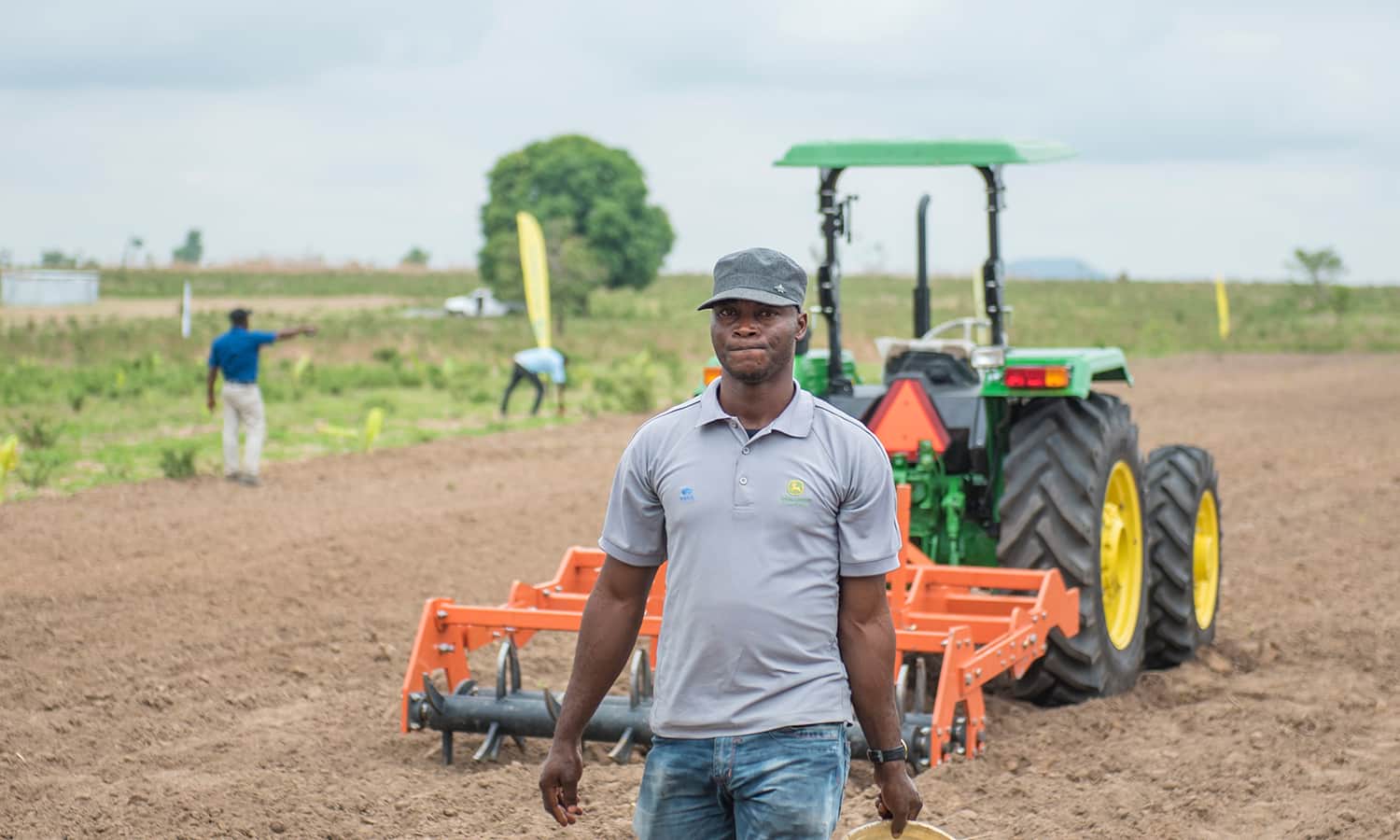
Hello Tractor's innovative platform empowers smallholder farmers in Nigeria, Kenya, Ethiopia, and Tanzania by connecting them with tractor operators through a mobile booking system. This visionary approach dramatically lowers mechanisation costs for sub-acre plots, fostering a brighter future for farming. With over 500,000 tractor bookings facilitated across 10 African countries, Hello Tractor embodies the transformative potential of shared-asset models, making mechanisation accessible to smallholders at a fraction of traditional costs. Supported by the African Development Bank and USAID, its commitment to open data also enhances regional yield modelling, paving the way for sustainable agricultural growth.
Case Study: “Indigo Agriculture”, Microbiome-Driven Yield Enhancement
US-based startup applying microbial seed treatments and carbon market integration

Indigo Agriculture, based in Boston, MA, is at the forefront of developing innovative plant microbiome technologies to increase crop yields while minimising synthetic input use. One of its standout initiatives, the Indigo Carbon program, launched in 2019, has successfully enrolled over 3 million acres of U.S. farmland in contracts focused on soil carbon sequestration. This program rewards farmers for verified carbon drawdown and, by 2025, has delivered more than $40 million in carbon payments to participating farmers. This model showcases the potential for agricultural climate action to create direct income opportunities for producers, demonstrating a sustainable path forward for both the environment and the agricultural community.
Reforming Agricultural Finance: From Extraction to Empowerment
The International Finance Corporation (IFC) highlights a significant opportunity in addressing the annual smallholder credit deficit, currently estimated at $240 billion. This gap represents the difference between what small-scale farmers require to invest in essential inputs, equipment, and market access, and what formal financial institutions can currently provide. Bridging this gap presents an opportunity to transform the agricultural lending landscape.
Three innovative financial instruments are emerging as particularly effective in this endeavour. First, Sustainability-Linked Bonds (SLBs) offer a compelling approach by linking coupon rates to verified sustainability performance indicators, such as reductions in greenhouse gas emissions, improvements in water efficiency, and enhancements in smallholder income. Notably, the IFC-World Bank Sustainable Finance team has made strides by issuing $17.2 billion in green and sustainable bonds for the food and agriculture sector between 2022 and 2025.
Second, digital credit platforms are revolutionising access to financing. These mobile-first fintech lenders leverage alternative data, including airtime usage, satellite yield data, and weather indices, to provide smallholder loans at scale. For instance, Kenya's M-Shwari and India's Jai Kisan have collectively disbursed over $850 million in micro-agri loans, demonstrating the potential of technology in this space.
Lastly, anticipatory finance represents a proactive investment strategy. Research from the OCHA Centre for Humanitarian Data and the Start Network reveals that every $1 invested in pre-disaster anticipatory actions can prevent approximately $7 in post-disaster recovery costs. This impressive 7:1 return makes anticipatory finance a highly effective tool in agricultural development.
By exploring and expanding these financial avenues, we can empower small-scale farmers and help build a more sustainable, resilient agricultural future.
Government Initiatives and Multilateral Frameworks
The UN Food Systems Summit (UNFSS) 2021 successfully launched 148 national food systems pathways, with 83 countries taking significant steps by committing to measurable targets to enhance smallholder inclusion, increase agri-R&D expenditure, and reduce food loss by 2030. This initiative promises to strengthen food systems worldwide.
Additionally, the Comprehensive Africa Agriculture Development Programme (CAADP), implemented by the African Union, encourages member states to dedicate 10% of their national budgets to agriculture. Although this target is often challenging to meet, it has positively influenced public agri-R&D spending, with 14 countries experiencing growth since 2020.
In Europe, the European Union's Farm to Fork Strategy establishes ambitious, binding targets to transform the agricultural landscape. These include: placing 25% of EU farmland under organic farming by 2030; achieving a 50% reduction in pesticide use; and implementing mandatory measures to reduce food waste by 30%. Furthermore, the EU's Global Gateway is investing €10 billion in agrifood infrastructure in Africa, Central Asia, and Latin America by 2027, which should help foster sustainable agricultural development in these regions.
| Initiative / Fund | Geography | Scale | Focus Area | URL |
|---|---|---|---|---|
| World Bank Food and Agriculture GEF Portfolio | Global | $4.1B active | Climate-resilient agriculture | worldbank.org |
| CGIAR Research Centers | Global (15 centers) | $900M/yr | Crop science, food systems R&D | cgiar.org |
| EU Farm to Fork Strategy | Europe | €387B CAP | Sustainable food systems | ec.europa.eu |
| African Dev Bank ENABLE Youth | Africa | $1B | Agri-youth entrepreneurship | afdb.org |
| Gates Foundation Agricultural Dev. | Africa / Asia | $5B committed | Smallholder productivity | gatesfoundation.org |
| FAO Hand-in-Hand Initiative | Global (51 countries) | $40B mobilised | Hunger, poverty eradication | fao.org |
| IFAD Rural Development Fund | Developing world | $3.5B/triennium | Rural finance, land rights | ifad.org |
Sources: World Bank, African Development Bank, Gates Foundation, FAO, IFAD, EU Commission, 2025.
4. The Agroecology Imperative: Regenerating the Foundation
The dominant model of industrial agriculture, which relies on monoculture, synthetic inputs, and large-scale mechanisation, has achieved impressive yield increases over the past sixty years. However, the IPES-Food 2023 report, "Who's Tipping the Scales?," highlights several important challenges associated with this approach. Specifically, it reveals that 40% of the world's agricultural soils have been degraded, that 70% of freshwater withdrawals are used, and that the ecological costs may outweigh the financial returns when all externalities are taken into account.
In response to these challenges, agroecology is emerging as a promising alternative that integrates ecological principles into the design of farming systems. This approach aims to reduce external inputs while improving biodiversity, soil health, and water retention. The Rodale Institute's 30-Year Farming Systems Trial, which is one of the longest-running comparisons of organic and conventional systems, provides encouraging findings. It shows that regenerative organic systems can achieve yields comparable to those of conventional farming after a 3-year transition period. Additionally, these systems offer 40% lower energy costs, 45% higher soil organic matter, and can sequester between 1.5 and 2.0 tonnes of CO₂ equivalent per hectare per year. This evidence supports the potential of agroecology to build a more sustainable and resilient agricultural future.
Case Study: Commonland's 4 Returns Framework, Restoration at Landscape Scale
Netherlands-based foundation mobilising blended finance for landscape restoration
Commonland (Amsterdam) has pioneered the transformative 4 Returns Framework, which simultaneously measures returns to Inspiration, Natural Capital, Social Capital, and Financial Capital. This innovative approach has been implemented across 12 landscape restoration programmes in Europe, Africa, and Australia, encompassing over 12 million hectares. The vision has successfully attracted €150 million in blended public-private finance. In South Africa, the Baviaanskloof programme has revitalised 45,000 hectares of degraded farmland into thriving agroforestry, elevating household incomes by an inspiring 67% within five years.
5. Roadmap to 2032: From Paradox to Purpose
The Transformation Threshold
Research by the International Food Policy Research Institute (IFPRI) establishes that increasing public agricultural research and development (R&D) expenditure to at least 1% of agricultural GDP is the minimum threshold below which meaningful systemic transformation does not occur. As of 2024, only 21 of 109 developing countries meet this threshold. The financing gap for agricultural R&D in low-income countries alone is estimated at $14 billion annually.
Four Phases of Systemic Change
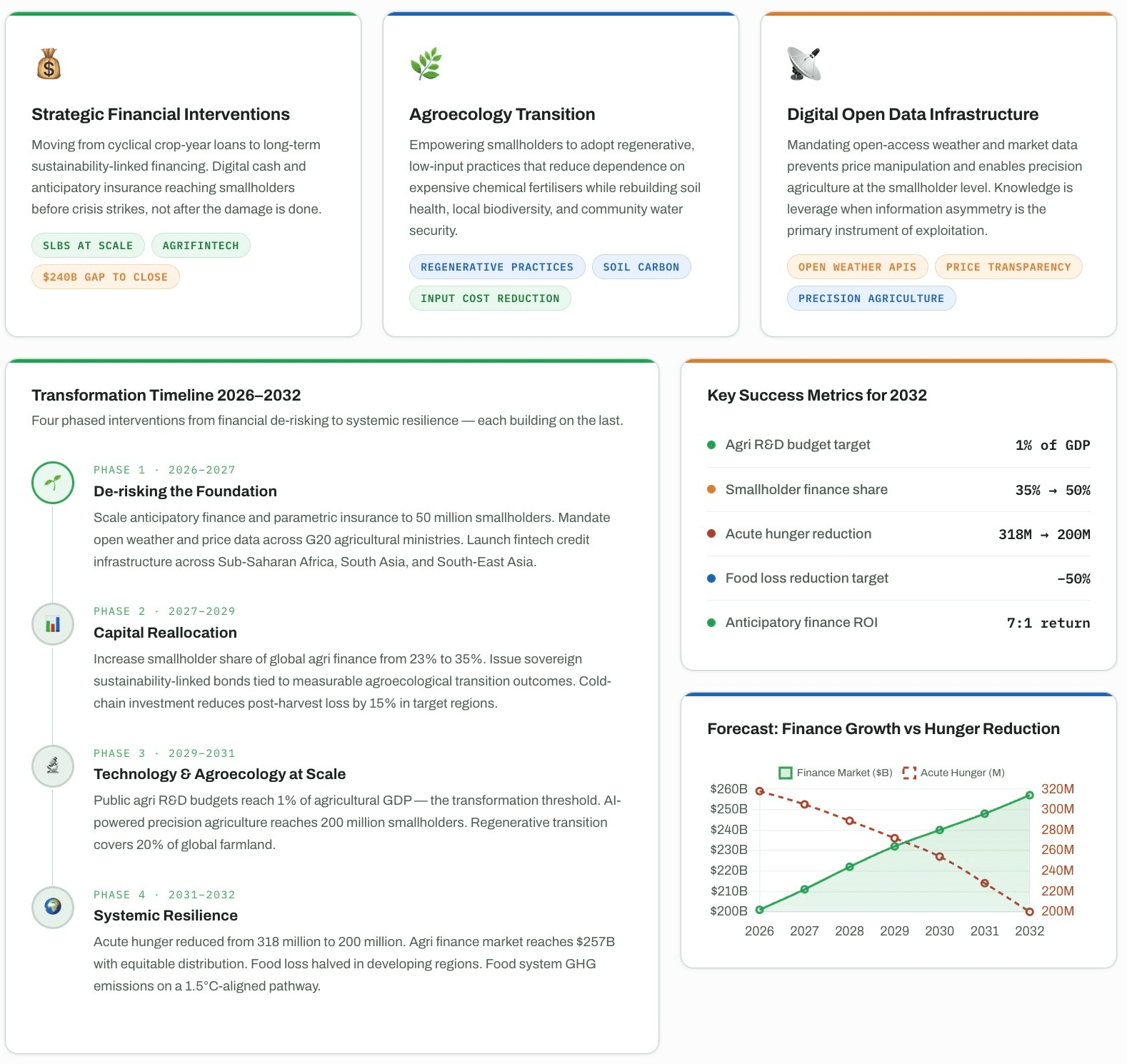
- Phase 1 (2026–2027): De-risking the Foundation. Scale anticipatory finance and parametric insurance to 50 million smallholders. Mandate open-access weather and price data standards across G20 agricultural ministries. Deploy fintech credit rails across Sub-Saharan Africa, South Asia, and South-East Asia.
- Phase 2 (2027–2029): Capital Reallocation. Increase smallholder share of global agri finance from 23% to 35%. Sovereign sustainability-linked bonds tied to agroecological transition outcomes. Cold-chain infrastructure investment targeting a 15% reduction in post-harvest losses in low- and middle-income countries.
- Phase 3 (2029–2031): Technology and Agroecology at Scale. Public agri R&D budgets reach 1% of agricultural GDP. AI-enabled precision agriculture reaches 200 million smallholders. Regenerative farming practices cover 20% of global farmland.
- Phase 4 (2031–2032): Systemic Resilience. Acute hunger reduced from 318 million to 200 million. Finance market reaches $257B with equitable distribution. Food loss halved in developing regions. Food system GHG emissions aligned to a 1.5°C pathway.
| Target Metric | Baseline 2026 | Target 2032 | Responsible Actor |
|---|---|---|---|
| Acute hunger (IPC Phase 3+) | 318 million people | < 200 million | WFP, national governments |
| Smallholder fice share | 23% of agri capital | 35–50% | IFC, fintech platforms, DFIs |
| Post-harvest food loss | 33% of production | < 17% | Private sector, World Bank |
| Public agri R&D / agri GDP | < 0.5% (most LMICs) | > 1.0% | National governments, CGIAR |
| Agri GHG emissions trajectory | 30% of global GHG | 1.5°C pathway | UNFCCC, national NDCs |
| Women's access to land / credit | 29% participation | Gender parity | UN Women, World Bank |
Sources: WFP, IFC, World Bank, IFPRI, UNFCCC, UN Women.
Conclusion: Each Farmer Smallholder is Humanity
The $12 trillion paradox is not an economic curiosity. It is a moral reckoning. The global food system has the productive capacity to feed every human being alive — and several generations more. Its failure to do so is not a failure of nature, but of architecture: of finance that flows to scale rather than need; of data that enriches platforms rather than producers; of policy that protects the concentrated rather than empowering the distributed.
The thesis that animates Citiesabc's global intelligence mission — that each human being is humanity — finds its most concrete application in agriculture. The 500 million smallholder farmers who tend less than two hectares each are not a marginal demographic to be assisted. They are the living evidence that civilisation's nutritional foundation is built on the labour of the many, not the capital of the few. Their empowerment is not charity: it is the most productive investment available to humanity in the twenty-first century.
The data, case studies, and strategic frameworks assembled in this white paper are provided as working intelligence for decision-makers in government, finance, agriculture, and civil society. They are also the foundation of Citiesabc's ongoing commitment — through the Impakt platform, the Global Agriculture Dashboard, and this Intelligence Series — to transform data into dignity, and knowledge into sovereignty, for the 2.6 billion people at the heart of the world's most important ecosystem.
"Food systems are not simply economic systems — they are the metabolic expression of the values a civilisation holds about who deserves to eat, who deserves to prosper, and what kind of planet we choose to sustain." Dinis Guarda — Citiesabc - Global Agriculture Intelligence Report 2026 |
References and Key Sources
Multilateral Institutions & Data
- Food and Agriculture Organization (FAO). State of Food and Agriculture 2023. Rome: FAO. https://www.fao.org/publications/sofa
- World Bank. Commodity Markets Outlook 2026. Washington DC: World Bank. https://www.worldbank.org/en/research/commodity-markets
- International Food Policy Research Institute (IFPRI). Global Food Policy Report 2024. Washington: IFPRI.
- World Food Programme (WFP). Hunger Hotspots 2026. Rome: WFP.
- IPC — Integrated Food Security Phase Classification. IPC Global Report on Food Crises 2025. IPC. https://www.ipcinfo.org
- IPCC Sixth Assessment Report (AR6). Food, Fibre and Other Ecosystem Products. Geneva: IPCC, 2022.
- UNESCO. World Water Development Report 2023: Partnerships and Cooperation for Water. Paris: UNESCO.
- International Labour Organization (ILO). World Employment and Social Outlook 2024. Geneva: ILO.
- IFAD. Rural Development Report 2024. Rome: IFAD. https://www.ifad.org
- OECD-FAO. Agricultural Outlook 2025–2034. Paris: OECD/FAO.
Academic & Research Sources
- CGIAR Research Program on Climate Change, Agriculture and Food Security (CCAFS). 2024 Annual Report. Wageningen: CGIAR.
- IPES-Food. Who's Tipping the Scales? The Power of Corporations in Agri-Food Systems. 2023. Brussels: IPES-Food.
- Rodale Institute. Farming Systems Trial: 30-Year Report. Kutztown, PA: Rodale Institute.
- World Resources Institute (WRI). Creating a Sustainable Food Future. 2023. Washington DC: WRI.
- Herrero, M. et al. (2020). Innovation can accelerate the transition towards a sustainable food system. Nature Food, 1(5), 266–272. doi:10.1038/s43016-020-0074-1
- Springmann, M. et al. (2020). The healthiness and sustainability of national and global food based dietary guidelines. BMJ, 370, m2322. doi:10.1136/bmj.m2322
Industry & Market Data
- AgFunder. Global AgriFood Tech Investment Report 2024. San Francisco: AgFunder.
- Allied Market Research. Agriculture Finance Market — Global Opportunity Analysis and Industry Forecast 2024–2032. Portland: AMR.
- IFC. Agribusiness Finance. International Finance Corporation. Washington DC.
Innovation & Case Studies
- Hello Tractor. Platform Overview. Lagos: Hello Tractor Inc., 2024.
- Indigo Agriculture. Indigo Carbon Programme. Boston: Indigo Ag, 2025.
- Commonland. The 4 Returns Framework. Amsterdam: Commonland, 2024.
- World Bank. Ethiopia Productive Safety Net Programme (PSNP). Washington DC: World Bank, 2025.
- CitiesABC Impakt. Agricultural AI Platform. London: Ztudium Ltd / CitiesABC, 2026.


