


resources
Bill Gates' Smart City AZ: A Glimpse into Belmont's Futuristic Vision
05 Feb 2026

A monumental vision is unfolding in the Arizona desert, courtesy of Bill Gates: an entirely new urban center, Belmont. This isn't merely another planned community; rather, it's conceived from its very foundations as a pivotal hub for pioneering technological advancement. Indeed, one might envision it as a living laboratory where the future of urban living is actively taking shape—a place where super-fast internet, self-driving cars, and clean energy will all work in concert from day one. It's quite an audacious endeavor, attempting to construct a city for tomorrow right there in the desert landscape. Ultimately, we're discussing a locale that could fundamentally alter our perceptions of urban habitation.
Key Takeaways
- Bill Gates is planning a smart city in Arizona called Belmont, focusing on advanced technology.
- The city will use high-speed networks, autonomous vehicles, and renewable energy.
- Arizona's environment and tech-friendly policies make it a good location for this project.
- Belmont aims to be a model for future urban development, addressing modern city challenges.
- The project involves significant investment and a phased development approach.
Bill Gates' Smart City AZ: The Vision of Belmont
A monumental vision is unfolding in the Arizona desert, courtesy of Bill Gates: an entirely new urban center, Belmont. This isn't merely another planned community; rather, it's conceived from its very foundations as a pivotal hub for pioneering technological advancement. Indeed, one might envision it as a living laboratory where the future of urban living is actively taking shape right now.
A Technological Hub in the Arizona Desert
At Belmont, technology isn't merely an afterthought or a supplementary feature; it's the very bedrock upon which the entire city is being constructed. Picture ubiquitous, super-fast internet connectivity, state-of-the-art data centers, and an urban environment meticulously designed to seamlessly integrate autonomous vehicles and intelligent logistics from its inception. In essence, it promises to be a vast, real-world testbed for groundbreaking urban concepts.
Foundations of a Futuristic Community
Far from being a mere pipe dream, this endeavor is already making tangible progress. An entity associated with Bill Gates has, in fact, already committed substantial capital, acquiring thousands of acres of land for this purpose. The overarching strategy involves constructing a community capable of organic growth and fluid adaptation as technological paradigms evolve. Ultimately, it's about engineering a locale that is inherently resilient and prepared for future innovations—whatever they may entail.
- Significant Land Acquisition: Thousands of acres have been secured for development.
- Phased Development: The city will be built in stages, allowing for flexibility.
- Innovation Focus: Technology and sustainability are central to the design.
The fundamental objective, it seems, is to forge a city that is not only technologically advanced but also a truly exceptional place to reside, work, and foster new ideas.
Redefining Urban Living Through Innovation
Belmont endeavors to proactively address several pervasive challenges confronting contemporary urban centers. Through the judicious application of smart technology and meticulous urban planning, the vision is to enhance efficiency and, perhaps, even elevate the quality of life for its prospective inhabitants. This represents a distinct opportunity for a fresh start, constructing an urban landscape with both current complexities and future potentialities firmly in view.
Investment and Strategic Development
Significant Land Acquisition and Financial Backing
The undertaking of constructing an entirely new city from its foundations—particularly one as ambitious and technologically advanced as Belmont—necessitates a profound financial commitment. Indeed, Bill Gates' investment firm has already executed a significant maneuver, securing an extensive tract of land in Arizona, thereby signaling a resolute intent to materialize this vision. This foundational land acquisition, representing a substantial monetary outlay, forms the very bedrock upon which the entirety of this ambitious project is poised. One might argue it's less about the simple purchase of acreage and more about strategically safeguarding the essential spatial canvas for a painstakingly planned urban ecosystem. Such substantial financial endorsement is unequivocally pivotal to advancing the ambitious blueprints laid out for Belmont.
Phased Development for Adaptable Growth
The realization of Belmont is strategically slated for execution in distinct, sequential stages. This methodological approach confers considerable flexibility and facilitates adaptation as novel technologies inevitably emerge and the community's requisites organically evolve. Early phases, for instance, will prioritize the establishment of core infrastructure – think robust digital networks and indispensable utilities. Once these foundational elements are firmly in place, succeeding stages will progressively unveil more sophisticated features, including integrated transportation networks and intelligent residential structures. Such a methodical, step-by-step progression ensures the city's capacity for dynamic growth and evolution, effectively mitigating the risk of obsolescence.
- Phase 1: Establish core infrastructure (digital networks, utilities).
- Phase 2: Introduce foundational residential and commercial areas.
- Phase 3: Integrate advanced technologies like autonomous systems and smart grids.
- Phase 4: Expand community amenities and public services.
This meticulously phased development strategy is engineered to empower Belmont to learn from its own evolution and adapt dynamically, thereby cultivating a truly responsive urban environment.
Arizona's Role in Technological Advancement
Arizona presents a singular environment, remarkably conducive to an undertaking of Belmont's magnitude. The state, it must be noted, has consistently demonstrated an eagerness to embrace burgeoning technologies, particularly within domains such as autonomous vehicles—a distinct and potent advantage for this project. Moreover, Arizona's generous solar endowment offers a readily available natural resource for renewable energy solutions, an absolutely critical component for any truly modern smart city. The state's progressive regulatory framework and its extant infrastructural backbone also contribute significantly, solidifying its appeal as an optimal locale for large-scale technological development. Indeed, Belmont endeavors to strategically leverage these inherent strengths, ultimately aspiring to become a preeminent paradigm for future urban planning initiatives.
Core Technologies Powering Belmont
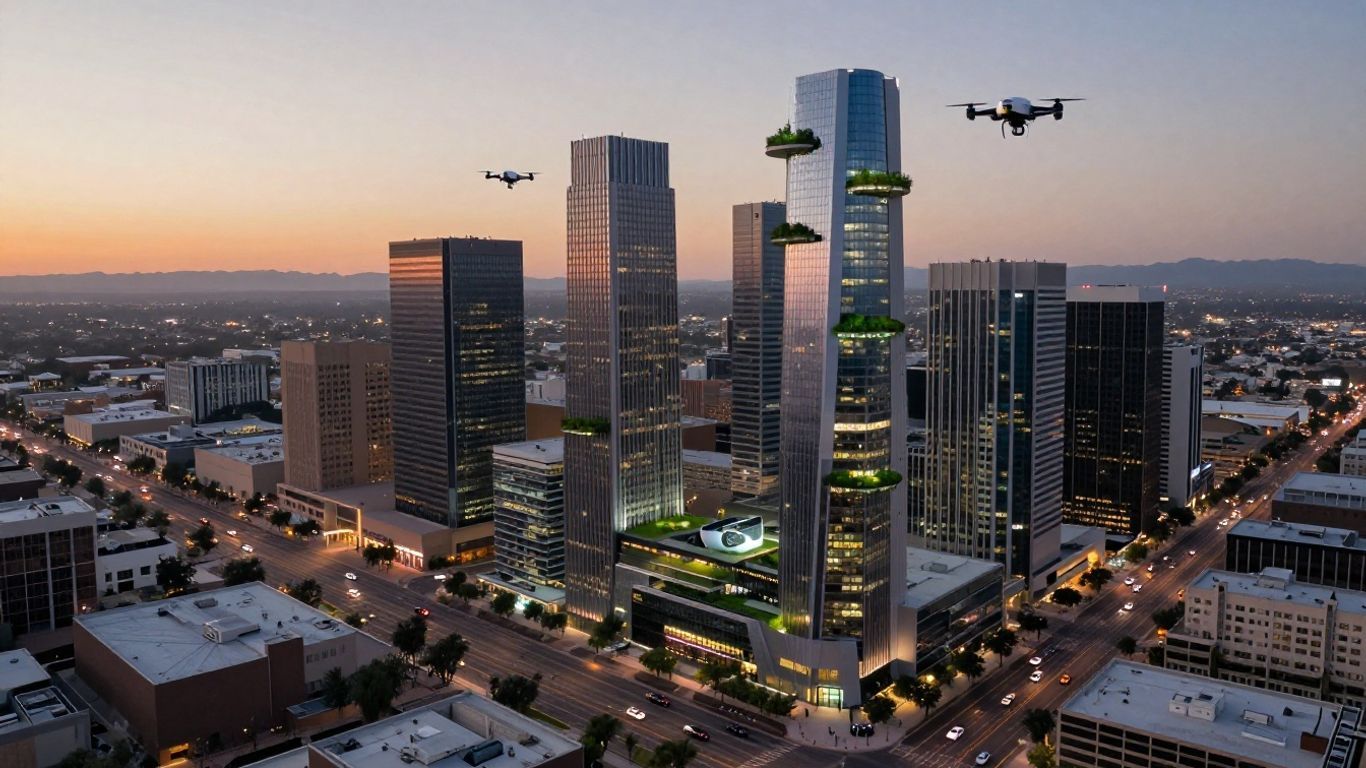
Belmont is meticulously engineered with a singular focus on advanced technology, all aimed at enhancing the functional efficacy of urban life. Consider it, if you will, a seamlessly interconnected ecosystem where disparate systems communicate and collaborate effortlessly.
High-Speed Digital Networks and Data Centers
At the veritable core of Belmont's intricate design lies a robust and resilient digital backbone. This translates into the utmost prioritization of hyper-fast internet connectivity and advanced communication channels. Such networks are destined to underpin everything from the quotidian communications of residents to the intricate data demands of burgeoning businesses and essential city services alike. To effectively manage this torrent of information, Belmont is slated to host cutting-edge data centers. These specialized facilities are instrumental for processing and archiving the prodigious volumes of data inevitably generated by a smart city, thereby ensuring the seamless and efficient operation of its myriad components.
Integration of Autonomous Vehicles and Logistics
Facilitating efficient mobility for both people and goods constitutes a significant dimension of any thriving urban center. Belmont, consequently, intends to deploy autonomous vehicles as a primary mechanism to achieve this. The underlying premise is that autonomous cars and commercial trucks could not only augment travel safety but also substantially mitigate urban congestion. Complementing this, the city will incorporate dedicated zones for logistics operations. These hubs will undoubtedly leverage intelligent systems and automation to meticulously orchestrate the movement of goods, thereby optimizing both delivery processes and broader supply chains. Ultimately, the ambition is to render urban transportation inherently smarter and more systematically organized.
Renewable Energy and Smart Grid Implementation
Sustainability stands as a paramount objective for Belmont. The urban center will predominantly draw upon clean energy sources, notably solar and wind power. However, merely possessing renewable energy capacity is, by itself, insufficient. Crucially, Belmont will implement a sophisticated "smart grid" system. This intelligent grid possesses the capability to dynamically adjust energy distribution in real-time, precisely aligning with fluctuating power demands. Its function is to proactively prevent energy wastage and to ensure an unwavering, dependable power supply. This comprehensive approach is designed to position Belmont as a vanguard in the domain of urban energy utilization.
The technological framework underpinning Belmont transcends mere gadgetry; rather, it is fundamentally geared towards forging a city that is inherently more efficient, demonstrably sustainable, and ultimately more congenial for its inhabitants. By intricately connecting these diverse technological components, the city aspires to proactively address and resolve prevalent urban challenges.
Here's a quick look at the tech focus:
- Digital Infrastructure: High-speed networks and data centers for connectivity.
- Automated Transport: Autonomous vehicles for people and goods.
- Clean Energy Systems: Renewable power sources managed by a smart grid.
Belmont's Design and Future Potential
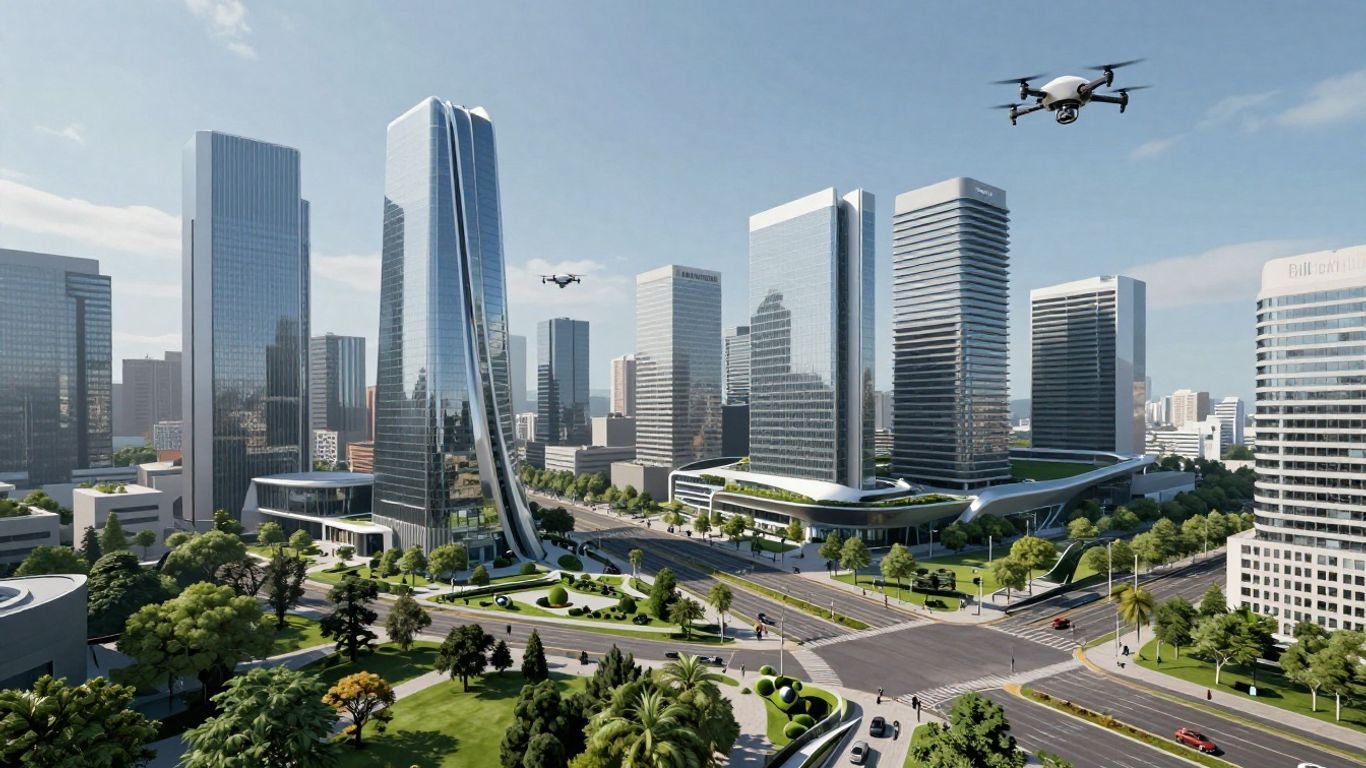
A Living Laboratory for Urban Innovation
Belmont isn't simply being constructed as a static, finished product; rather, it's meticulously designed to function as an active proving ground where novel urban concepts can be rigorously tested and iteratively refined. One might, therefore, conceive of it as an expansive, real-world sandbox dedicated to urban technology. The city's underlying infrastructure is being engineered with modularity in mind, allowing for the seamless integration and experimental deployment of emerging technologies as they become available. This forward-thinking approach suggests Belmont could very well become a pioneering locale for innovations such as advanced urban farming systems or sophisticated real-time city resource management methodologies. Ultimately, it's about ensuring the city's inherent capacity to adapt to evolving circumstances and maintain its functional utility over an extended temporal horizon.
Addressing Urbanization Challenges
The ambitious undertaking of constructing a city from its inception in an arid desert environment inherently presents its own unique constellation of challenges, particularly when aspiring to a high-tech future. Foremost among these hurdles is the critical issue of water. Given Arizona's inherently arid climate, devising sustainable water provision strategies constitutes a cornerstone of the overall urban plan. An additional, considerable challenge involves ensuring the harmonious and seamless interoperability of its myriad technological components. Indeed, merely implementing autonomous vehicles is distinct from successfully integrating their operations with the city's broader traffic management systems and its power grid. The overarching objective, however, is to unequivocally demonstrate that such complex issues are amenable to resolution through intelligent planning and advanced technological solutions.
Blueprint for Future Smart City Developments
The pioneering initiatives unfolding within Belmont could very well culminate in serving as an invaluable blueprint for other urban centers globally. The innovative methodologies employed for energy utilization, data governance, and the transit of both populace and commodities could potentially be replicated or intelligently adapted in diverse contexts. One might, in fact, perceive this as the active authorship of the definitive instruction manual for constructing the cities of tomorrow. By proactively endeavoring to resolve pressing issues such as energy consumption and transportation efficiency today, Belmont aims to establish a benchmark that other locales can emulate, thereby fostering enhanced and more efficient urban living experiences worldwide.
In essence, the entirety of this ambitious project functions as a grand-scale experiment, meticulously designed to unequivocally demonstrate that a technologically advanced, demonstrably sustainable, and truly livable urban environment can indeed be brought to fruition even within a challenging ecological context.
Here's a look at some key aspects of the city's planned structure:
- Housing: Plans include around 80,000 homes, offering a range of living options.
- Commercial Space: Approximately 3,800 acres are set aside for offices, shops, and retail.
- Education: A significant 470 acres are designated for public schools.
- Public Services: Areas are planned for police and fire stations, as well as healthcare facilities.
- Recreation: Parks and cultural centers are intended to be a big part of community life.
Key Features of the Smart City Design
Seamless Connectivity and Advanced Services
Belmont's foundational design is intrinsically conceived with digital integration at its core. Imagine, if you will, the constant omnipresence of hyper-speed internet connectivity across its entire expanse. This extends far beyond mere entertainment streaming; rather, it constitutes the very nervous system animating the entire urban fabric. Such ubiquitous connectivity facilitates capabilities ranging from instantaneous communication and seamless remote work and learning, to ensuring the unfettered interoperability of all critical city systems. State-of-the-art data centers serve as the cerebral core of this infrastructure, diligently processing all requisite information to maintain flawless operational efficiency. This meticulously engineered setup is designed to robustly support every constituent, from individuals engaging in remote work to enterprises demanding unwavering, dependable network connections.
Sustainable Energy and Resource Management
This burgeoning city is unequivocally committed to ecological stewardship. The strategic blueprint outlines a primary reliance on clean energy sources, predominantly derived from solar and wind power. Yet, the commitment extends beyond merely sourcing clean power; it profoundly encompasses the intelligent management of its consumption. In this context, smart grids are absolutely pivotal. They function akin to an sophisticated traffic controller for electricity, meticulously ensuring that power is deployed precisely when and where it is most critically required. This dynamic allocation effectively curtails waste and significantly augments the overall system's efficiency. Furthermore, water management commands considerable attention, with systems meticulously engineered to judiciously steward this invaluable desert resource.
- Renewable energy sources like solar and wind are primary power providers.
- Smart grids dynamically manage energy distribution and consumption.
- Water conservation technologies are integrated throughout the city.
- Energy-efficient buildings are standard, reducing overall demand.
The overarching aspiration is to cultivate an urban center that exists in profound harmony with its natural environment, diligently minimizing its ecological footprint while simultaneously maximizing the holistic well-being of its citizenry.
Community Amenities and Residential Planning
Belmont, notably, is not solely defined by its technological prowess; it is equally dedicated to forging an environment where individuals genuinely aspire to reside. The city's design incorporates meticulous planning for residential units, verdant parks, and vibrant public spaces. The underlying concept is to seamlessly interweave the conveniences of modern living with a palpable sense of community belonging. Consider, for instance, the strategic spatial arrangement of neighborhoods, the inherent ease of non-vehicular transit, and the equitable accessibility of essential services for all. Ultimately, the city endeavors to be a locale that fundamentally supports an elevated quality of life, replete with features designed to render daily existence both more convenient and profoundly more enjoyable for all who call it home.
Challenges and Opportunities for Belmont
The monumental undertaking of constructing an entire city from its nascent stages—particularly one as ambitious as Belmont—is inherently accompanied by a distinct array of formidable challenges and promising opportunities. This endeavor transcends the mere laying of thoroughfares and the provisioning of Wi-Fi; it fundamentally revolves around cultivating a vibrant, adaptive community capable of enduring the passage of time and gracefully accommodating evolving needs.
Navigating Water Scarcity in Arizona
One of the most profound and perennial questions confronting any nascent development in Arizona invariably pertains to water resources. The state, as is widely recognized, already contends with finite water availability, and current projections suggest this scarcity could intensify significantly in the foreseeable future. Consequently, Belmont will be compelled to assume a vanguard role in sophisticated water conservation practices. This imperative dictates the implementation of intelligent technologies for real-time, granular water usage monitoring, rapid detection and remediation of leakages, and potentially, the exploration of innovative water recycling methodologies. Indeed, the enduring success of Belmont fundamentally hinges upon its demonstrated capacity to steward this vital resource with profound responsibility.
Attracting Residents and Fostering Economic Growth
The twin challenges of attracting a new populace to a nascent urban center and persuading enterprises to establish operations there represent a considerable undertaking. Belmont, therefore, must offer more than mere technological novelty; it must cultivate an environment where individuals genuinely desire to reside and contribute professionally. This necessitates the generation of robust employment opportunities, ensuring accessible and affordable housing, and constructing a vibrant community complete with green spaces, educational institutions, and communal gathering points. The city's master plan, encompassing a substantial allocation for both residential and commercial development, represents a commendable initial step. The optimistic anticipation is that the employment opportunities generated during the construction phase and within the burgeoning tech sector will serve as powerful attractants for prospective residents.
Here's a look at the planned residential and commercial spaces:
| Type of Space | Area (Acres) |
|---|---|
| Homes | 80,000 units |
| Office/Retail | 3,800 |
| Schools | 470 |
Setting a Global Example for Urban Planning
Belmont holds a distinct opportunity to present the global community with a tangible demonstration of how advanced smart cities can be brought to fruition. It functions, in essence, as a living, real-world laboratory for pioneering concepts in urban habitation. Should its implementation prove successful, its methodologies could readily serve as a model for replication by other metropolitan centers. Conversely, should it encounter significant impediments, it could foster a degree of apprehension among others contemplating analogous projects. The imperative lies in striking a delicate equilibrium between innovative technology and pragmatic necessities, ensuring it evolves into an inclusive environment that genuinely serves the needs of all its constituents. Given the considerable scrutiny this project is attracting, its successful realization could profoundly reshape our collective understanding of future urban development.
The strategic development of Belmont is meticulously planned in sequential stages. This phased approach affords the city the capacity to initially establish foundational infrastructure—such as high-speed internet and robust power grids—before progressively integrating more sophisticated features, including autonomous vehicle systems. This deliberate, step-by-step methodology ensures the city's inherent adaptability as emerging technologies materialize and as the evolving needs of its inhabitants shift. It is, unequivocally, a conscious design decision to embed flexibility directly into the very fabric of the city from its inception.
Looking Ahead: Belmont's Lasting Impact
So, what, then, are the broader implications for the future? Bill Gates' ambitious Belmont project in Arizona transcends mere assemblages of advanced technology; it represents a tangible, earnest endeavor to fundamentally rethink how we might enhance urban living as cities globally continue their trajectory of expansion and increasing density. While it remains in its formative stages, and notwithstanding very real challenges—such as securing adequate water resources in an arid environment—the core tenets underpinning Belmont—namely, harnessing technology to cultivate more efficient, sustainable, and genuinely more pleasant urban environments—are undeniably igniting crucial dialogues. Regardless of whether Belmont ultimately achieves the status of an idealized urban paradigm, it most certainly offers us an illuminating glimpse into the potential landscape of future urban living, compelling us all to critically reassess our approaches to community construction and management in the decades ahead.
Frequently Asked Questions
What is Belmont?
Belmont is a planned smart city in Arizona, actively supported by an entity connected to Bill Gates. It is meticulously designed as a highly technological urban center, where various systems, such as autonomous vehicles and high-speed internet, are intended to operate in seamless integration.
Why is it being built in Arizona?
Arizona was selected due to its expansive open spaces, its abundant sunshine—ideal for solar energy generation—and the state's receptive stance towards innovative concepts like autonomous vehicles. Its proximity to Phoenix, a burgeoning technological hub, also contributes to its appeal.
What kind of technology will be in Belmont?
Belmont is slated to feature ubiquitous high-speed internet, infrastructure designed for autonomous vehicle operations, and a significant reliance on clean energy sources, particularly solar power. Furthermore, intelligent systems will be implemented to manage energy distribution and other city functions, ensuring maximal efficiency.
What is the main goal of building Belmont?
The primary objective behind the development of Belmont is to establish an environmentally conscious city that leverages technology to elevate the quality of life for its residents. It is also intended to serve as an experimental ground for novel urban strategies that could potentially be adopted by other cities worldwide.
What are some difficulties Belmont might face?
A significant challenge lies in navigating water scarcity, given Arizona's arid climate; the city will require innovative solutions for water conservation and usage. Additionally, attracting a diverse populace and fostering robust economic growth by drawing businesses will be crucial for its sustained vitality.
Could Belmont change how cities are built in the future?
Indeed, if Belmont proves successful, its integrated approach to technology and sustainable urban planning could offer a compelling model for future city developments. It has the potential to influence how new cities are conceived and constructed globally, setting new standards for livability and efficiency.


