
resources
Smart LA 2028: Unveiling the Future of Los Angeles with Cutting-Edge Technology
11 Mar 2026

Los Angeles is currently embarking on a significant technological transformation, a journey culminating in the pivotal year of 2028. Imagine a metropolis redefined by smarter traffic flow, expansive greener spaces, and an overall enhanced quality of urban living. While the upcoming Olympic Games certainly serve as a powerful catalyst – indeed, they're a significant component – this comprehensive 'Smart LA 2028 City' initiative truly aims to optimize the city's functionality for every resident, every day. Officials are discussing the strategic deployment of cutting-edge technologies to address an array of daily challenges, ranging from urban mobility to the efficient administration of essential city services. It's an ambitious blueprint, and here, we'll delve into its multifaceted implications.
Key Takeaways
- Los Angeles is poised to leverage innovative technologies to streamline urban mobility, notably by enhancing public transit systems—buses and trains—and optimizing traffic management, forming a core pillar of the 2028 Smart LA vision.
- A central objective involves cultivating a more sustainable urban environment through the planned development of additional green spaces and the integration of advanced energy-saving technologies, thereby significantly improving overall livability.
- Municipal services are slated for a substantial technological upgrade; for instance, artificial intelligence will play a crucial role in managing traffic and utilities with greater precision, ultimately simplifying daily urban life.
- A fundamental principle underpinning this transformation is ensuring universal accessibility and equitable benefit from these technological advancements, with a clear focus on fairness for all residents.
- The 2028 Olympic Games offer an unparalleled global platform to exhibit these groundbreaking smart city concepts, positioning Los Angeles as a leading model for urban innovation worldwide.
Transforming Urban Mobility For A Smarter LA
Los Angeles is embarking on a comprehensive overhaul of its urban transportation network. This isn't merely about adding more infrastructure, like new roads or expanded bus fleets, though those components certainly play their part. The overarching vision is to cultivate a city where movement is smoother, more efficient, and undeniably more environmentally friendly. Can you imagine spending less time ensnared in traffic and more moments dedicated to personal pursuits? That's precisely the aspiration.
Enhancing Public Transit Accessibility
A fundamental objective involves significantly increasing public ridership on buses and trains. To achieve this, the city is committed to making the transit system both simpler to navigate and more widely accessible. We're exploring initiatives such as expanding existing routes, boosting the operational frequency of both buses and trains, and ensuring that all stations are convenient and user-friendly for every individual. Ultimately, the goal is to position public transit as a genuinely appealing primary choice, rather than just a fallback option.
- Expanding light rail lines to connect a greater number of neighborhoods across the urban landscape.
- Increasing the frequency of Bus Rapid Transit (BRT) services to enhance efficiency and reduce wait times.
- Improving station accessibility specifically for individuals with disabilities, ensuring inclusivity.
- Integrating disparate fare systems for seamless and hassle-free transfers between various transit modes.
Integrating Intelligent Traffic Management
Traffic congestion remains a persistent source of frustration for Angelenos, and intelligent technology offers a promising solution. We're discussing advanced systems capable of dynamically interacting with traffic signals, adjusting their timing in real-time based on current road conditions. This innovation promises not only a smoother flow of vehicles but also a significant reduction in exasperating stop-and-go moments. It's truly about harnessing the power of data to optimize our street networks for everyone's benefit.
The city is deploying AI-powered systems to dynamically manage traffic signals, aiming to reduce congestion and shorten commute times significantly.
Developing Sustainable Commuting Options
Beyond traditional public transit, Los Angeles is actively championing more environmentally conscious travel alternatives. This encompasses dedicated efforts to create safer and more inviting environments for walking and cycling. Envision interconnected pathways that gracefully link green spaces and residential areas, subtly encouraging residents to forgo their vehicles for shorter excursions. Furthermore, the city is exploring various strategies to incentivize carpooling and promote the widespread adoption of electric vehicles – all part of a broader commitment to sustainable urban living.
| Commuting Option | Current Status | Future Goal |
|---|---|---|
| Public Transit | Moderate Usage | High Usage |
| Cycling | Growing | Preferred |
| Walking | Common | Encouraged |
| Carpooling | Niche | Increased |
Fostering Economic Growth Through Innovation
The endeavor to build a smarter Los Angeles extends far beyond merely implementing new technologies; it represents a strategic imperative to invigorate our local economy. The Smart LA 2028 plan is meticulously designed to attract diverse businesses, generate substantial employment opportunities, and establish the city as an even more compelling destination for investment. Essentially, the core principle is to forge a direct, symbiotic link between technological advancement and robust economic prosperity.
Establishing Innovation Hubs And Incubators
To genuinely catalyze the emergence of novel ideas and burgeoning enterprises, the city intends to establish specialized facilities known as innovation hubs and incubators. Consider these as dynamic launchpads for aspiring entrepreneurs, furnishing them with the essential support and resources required for significant growth. These hubs will strategically concentrate on critical sectors, including green technology, advanced urban mobility solutions, and intelligent data utilization. The overarching goal is to cultivate a vibrant ecosystem where new companies can not only launch but truly flourish, thereby attracting a diverse pool of talented individuals from various fields. This initiative bears a resemblance to how the NBA Launchpad identifies and nurtures promising new ventures within sports technology [ddb5].
Cultivating Public-Private Partnerships
Undertaking large-scale smart city projects inherently demands considerable financial backing. This is precisely where collaborative efforts with private sector entities become indispensable. Public-private partnerships, often referred to as PPPs, enable the city and businesses to judiciously share both the costs and the responsibilities involved in developing groundbreaking new infrastructure. Such collaborations introduce invaluable external expertise and vital capital. It's a quintessential win-win scenario: the city successfully executes much-needed projects, while participating companies realize a tangible return on their investment. Indeed, this synergistic teamwork is absolutely crucial for transforming ambitious plans, like those outlined in Smart LA 2028, into concrete realities.
Attracting Investment And Generating Employment
Smart city initiatives intrinsically act as powerful magnets for investment. By proactively cultivating a tech-friendly environment and unequivocally demonstrating a profound commitment to innovation, Los Angeles aims to draw in both significant local and international capital. This resultant influx of investment directly translates into widespread job creation across a multitude of sectors – spanning from cutting-edge tech development and intricate data analysis to essential infrastructure maintenance and responsive customer service. Moreover, the city's strategic emphasis on crucial areas such as sustainable energy and advanced mobility concurrently unlocks entirely new employment avenues within rapidly emerging industries.
Investing in a smart city is about creating a future where technology and economic success go hand-in-hand, benefiting everyone in the community.
The efficacy of these economic strategies will be rigorously assessed through the consistent tracking of key performance indicators. For instance, the city will diligently monitor:
- The precise number of new businesses successfully established within the designated innovation hubs.
- The aggregate volume of private investment attracted specifically to smart city projects.
- The total count of new jobs generated, both directly and indirectly, by these transformative initiatives.
- The observed growth trajectories within specific tech-related sectors embedded within the city's broader economy.
This data-driven methodology will prove instrumental in refining strategies and ensuring that the resultant economic growth is both robustly sustainable and comprehensively inclusive.
Leveraging Technology For Efficient City Management
Los Angeles is approaching technology not merely as a means to achieve a superficial "smart" designation, but rather as an eminently practical instrument to streamline core city operations and significantly enhance overall municipal governance. At its heart, this initiative is about deploying intelligent systems to simplify the city's daily administrative tasks, thereby undeniably improving the quality of life for every resident.
AI And Data-Driven Urban Operations
Artificial intelligence, commonly known as AI, is rapidly emerging as a transformative force in the operational landscape of Los Angeles. Picture it as a remarkably intelligent assistant, capable of processing vast quantities of disparate information – everything from current traffic patterns and real-time energy consumption to public transit ridership figures. By discerning subtle patterns and accurately forecasting potential future scenarios, AI empowers city managers to make more informed decisions, and crucially, to act with greater speed. This translates into tangible benefits, such as dynamically adjusting traffic lights to proactively alleviate congestion or dispatching repair crews to address minor infrastructure issues before they escalate into significant problems.
- Predicting the onset of traffic jams to facilitate their mitigation before they become severe.
- Identifying inherent weak spots within critical city infrastructure to preempt major service disruptions.
- Adjusting public transit schedules adaptively based on dynamic, real-time operational conditions.
The main idea is to use data smarts to make the city work like a well-oiled machine, ready to handle needs before they even become problems.
Optimizing Essential City Services
Smart sensors are progressively being deployed across the urban expanse, effectively serving as an extended network of eyes and ears for the city. These sophisticated devices possess the capability to detect shifts in air quality, pinpoint potential fire hazards, or even gauge the precise pedestrian density on a given street. In high-traffic zones, they can strategically assist in managing traffic signals for smoother flow and enhanced pedestrian safety. For our dedicated emergency crews, these sensors offer the critical advantage of swiftly identifying areas where assistance is most urgently required – a capability that can prove pivotal when every second truly counts.
| Service Area | Technology Application | Benefit |
|---|---|---|
| Waste Management | Smart bins with fill sensors | Optimized collection routes, reduced costs |
| Energy Grid | Real-time monitoring | Improved efficiency, faster outage response |
| Water Management | Leak detection sensors | Reduced water loss, cost savings |
| Public Transit | GPS tracking, passenger counts | Better scheduling, improved rider experience |
Enhancing Public Safety Through Smart Systems
When the paramount concern is safeguarding our citizenry, technology assumes an undeniably crucial role. Smart systems are poised to significantly enhance the responsiveness of emergency services by furnishing real-time, incident-specific information. Consider, for instance, how interconnected cameras and an array of sensors can proactively alert authorities to anomalous activity or potential hazards, thereby facilitating a more anticipatory approach to public safety. This isn't merely about reactive emergency response; it's fundamentally about architecting a city that is inherently safer by design, leveraging technological foresight to anticipate and mitigate risks long before they can adversely affect residents.
- Achieving notably faster emergency response times through the rapid dissemination of real-time data.
- Cultivating improved situational awareness for both law enforcement personnel and first responders.
- Facilitating the proactive identification of potential safety hazards within public spaces.
Building A Sustainable And Greener Urban Landscape
Los Angeles is strategically moving beyond a sole preoccupation with technological gadgets, instead focusing intently on cultivating a healthier, more naturally integrated urban environment. This crucial facet of the smart city plan is fundamentally about enabling nature to thrive harmoniously alongside our built infrastructure of buildings and roadways. It represents more than simply planting a few trees; rather, it signifies a profound re-evaluation of our construction methodologies, resource utilization, and daily living practices – all aimed at fostering a greater reverence for the planet.
Integrating Green Spaces And Energy Efficiency
Indeed, consider parks and gardens as the vital "lungs" of our bustling metropolis. The smart city plan meticulously aims to intricately weave parks, vibrant community gardens, and even innovative green walls into the very fabric of the city's design. These elements are far from mere aesthetic enhancements; they actively contribute to purifying the air, naturally mitigating urban heat islands during warmer months, and providing essential tranquil spaces for residents to relax and rejuvenate. Planners are diligently strategizing the optimal placement of these green havens, both large and small, to maximize their ecological and social benefits. A paramount objective is ensuring equitable access to these natural areas for everyone, particularly in historically underserved neighborhoods. This holistic approach not only makes the city a more pleasant place to reside but also significantly bolsters its resilience against environmental changes.
Smart construction intrinsically translates to reduced energy consumption. This imperative is precisely why Los Angeles is vigorously championing initiatives for buildings – encompassing everything from private homes to expansive office complexes – to achieve heightened energy efficiency. This involves the judicious selection of superior building materials, the thoughtful design of spaces to harness more natural light and ventilation, and a substantial increase in solar power integration. The city is exploring a multifaceted array of approaches to meet these ambitious targets:
- Building Upgrades: Undertaking essential retrofits of older buildings to align them with contemporary environmental standards.
- New Construction: Mandating that all newly erected buildings incorporate energy-efficient designs from their foundational stages.
- Renewable Energy: Substantially increasing the deployment of solar panels and other clean energy technologies on municipal structures.
- Smart Grids: Developing an advanced power system that is inherently more responsive and optimizes energy distribution and usage.
These concerted efforts are integral to a broader, comprehensive strategy designed to exemplify how major urban centers can successfully adapt and prosper through unwavering commitment to sustainability. It's fundamentally about ensuring the city functions optimally for both its inhabitants and the planet, extending benefits into the distant future.
Implementing Smart Waste Management Solutions
Effectively managing municipal waste presents a formidable challenge for any urban center. Fortunately, intelligent solutions offer the potential for genuinely transformative improvements. This entails deploying technology to meticulously track waste streams, optimize collection logistics, and significantly bolster both recycling and composting rates. For instance, sensors embedded within waste bins can autonomously notify collection services when they reach capacity, thereby eliminating unnecessary truck routes. This not only conserves fuel but also alleviates urban traffic congestion. Furthermore, the city is actively researching superior methods for sorting recyclables and compostable materials, making participation simpler for residents and streamlining processing for the municipality. The ultimate objective is to drastically reduce the volume of waste destined for landfills, instead converting more discarded materials into valuable resources.
Promoting Cleaner Energy Sources
Beyond the widespread adoption of solar power for individual buildings, Los Angeles is making substantial investments in larger-scale clean energy projects. This exploration encompasses burgeoning opportunities in wind energy and even sophisticated geothermal power. A critical component of this initiative involves modernizing the existing power grid to seamlessly integrate and efficiently manage a greater diversity of clean energy inputs. Simultaneously, the city is dedicated to fostering smarter water usage, implementing measures such as repairing pervasive leaky pipes and utilizing advanced meters that precisely monitor water consumption. This meticulous, resource-conscious approach is instrumental in significantly lowering the city's overall carbon footprint and forging a more resilient, stable energy future. It's about consciously cultivating an environment that serves the well-being of both its people and the global ecosystem.
Ensuring An Equitable And Accessible Smart City
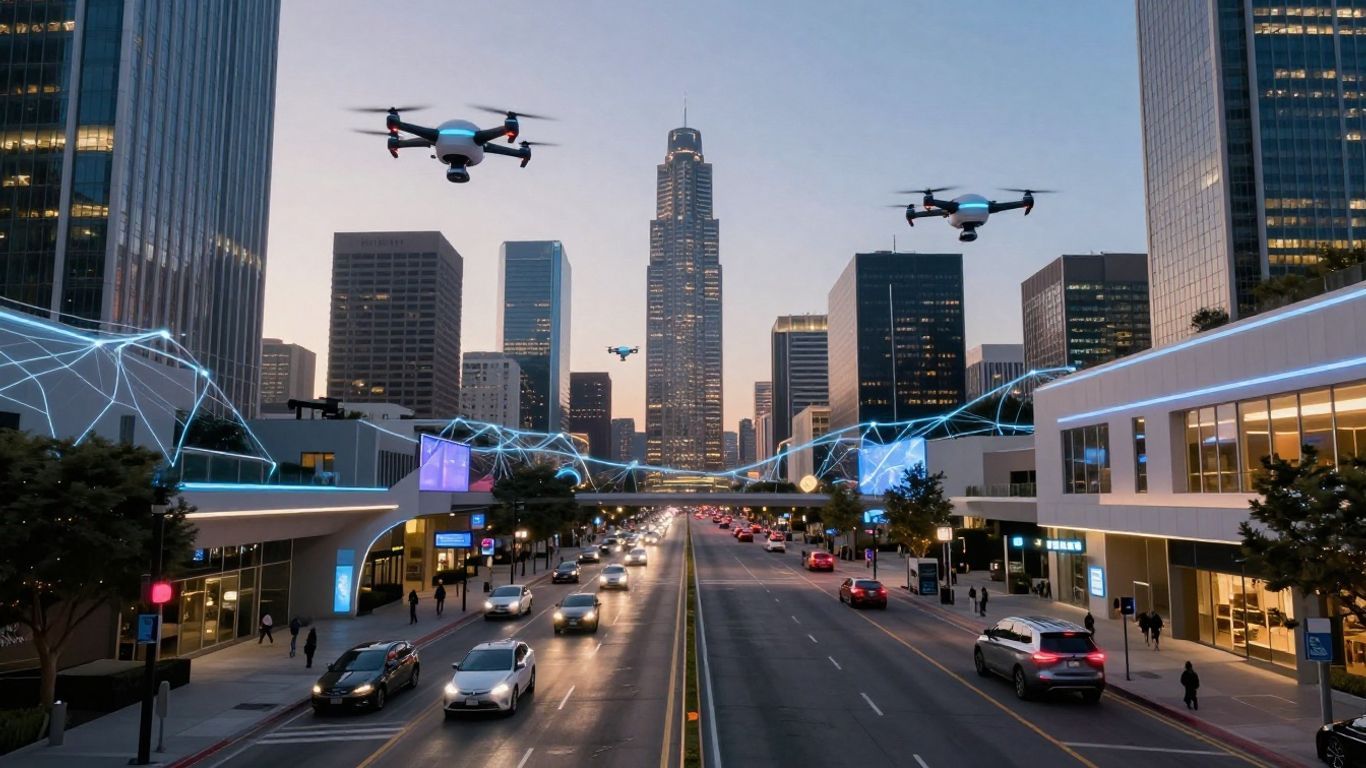
The ambitious undertaking of building a smart city for Los Angeles by 2028 carries with it a profound imperative: ensuring that every individual, irrespective of their background or physical abilities, can genuinely benefit from these groundbreaking new technologies. This vision transcends the mere proliferation of the latest gadgets; it is fundamentally about meticulously crafting an urban environment that functions more effectively for *all* its residents. The overarching objective is to dismantle existing barriers, rather than inadvertently creating new ones, thereby enabling every Angeleno to fully participate in and wholeheartedly enjoy the comprehensive offerings of their city.
Prioritizing Universal Access To Technology
As Los Angeles progressively integrates more sophisticated smart systems, a paramount focus is placed on guaranteeing that these advancements do not inadvertently exclude anyone. This translates into an active, dedicated commitment to bridging the persistent digital divide. We are diligently exploring strategies to extend reliable, high-speed internet access to a broader array of neighborhoods and to empower residents with the requisite skills to effectively utilize these emergent tools. Indeed, it's about much more than simply possessing the technology; it's about ensuring it remains both affordable and readily comprehensible for everyone.
- Expanding public Wi-Fi hotspots, particularly within traditionally underserved areas.
- Offering comprehensive, free, or low-cost digital literacy training programs across communities.
- Ensuring that all newly introduced city services are designed with accessible interfaces for individuals with disabilities.
Genuine progress in smart city initiatives comes from listening to the people who live in the city. It's about building trust and making sure that technology serves the community's actual needs, not just abstract ideas.
Enhancing Community Engagement In Planning
It stands to reason that smart city development cannot, and indeed should not, proceed without the direct involvement of the very people it is designed to serve. We are committed to actively soliciting input from residents regarding their needs, aspirations, and any pertinent concerns they may harbor. This commitment necessitates establishing transparent, open channels for feedback and ensuring the robust inclusion of diverse community groups throughout the critical decision-making processes. When residents are afforded a meaningful voice in how technology is deployed within their neighborhoods, the resultant solutions are invariably more likely to be both highly effective and warmly embraced.
Safeguarding Resident Data And Privacy
With an increasing deployment of sensors and interconnected devices continuously collecting information, the imperative of protecting personal data has rightly ascended to a top priority. Los Angeles is steadfastly committed to maintaining unequivocal transparency concerning precisely what data is gathered, how it is subsequently utilized, and which entities bear responsibility for its stewardship. Stringent rules and robust security protocols are being meticulously implemented to both cultivate and sustain public trust. Residents absolutely need to be assured that their valuable information is handled with the utmost responsibility and ethical integrity.
| Data Type Collected | Purpose of Use | Accountability | Security Measures |
|---|---|---|---|
| Traffic Flow Data | Optimizing transit | City DOT | Anonymization |
| Energy Usage | Grid management | LADWP | Encryption |
| Public Wi-Fi Usage | Service improvement | City IT Dept. | Access Controls |
Showcasing LA As A Global Smart City Model
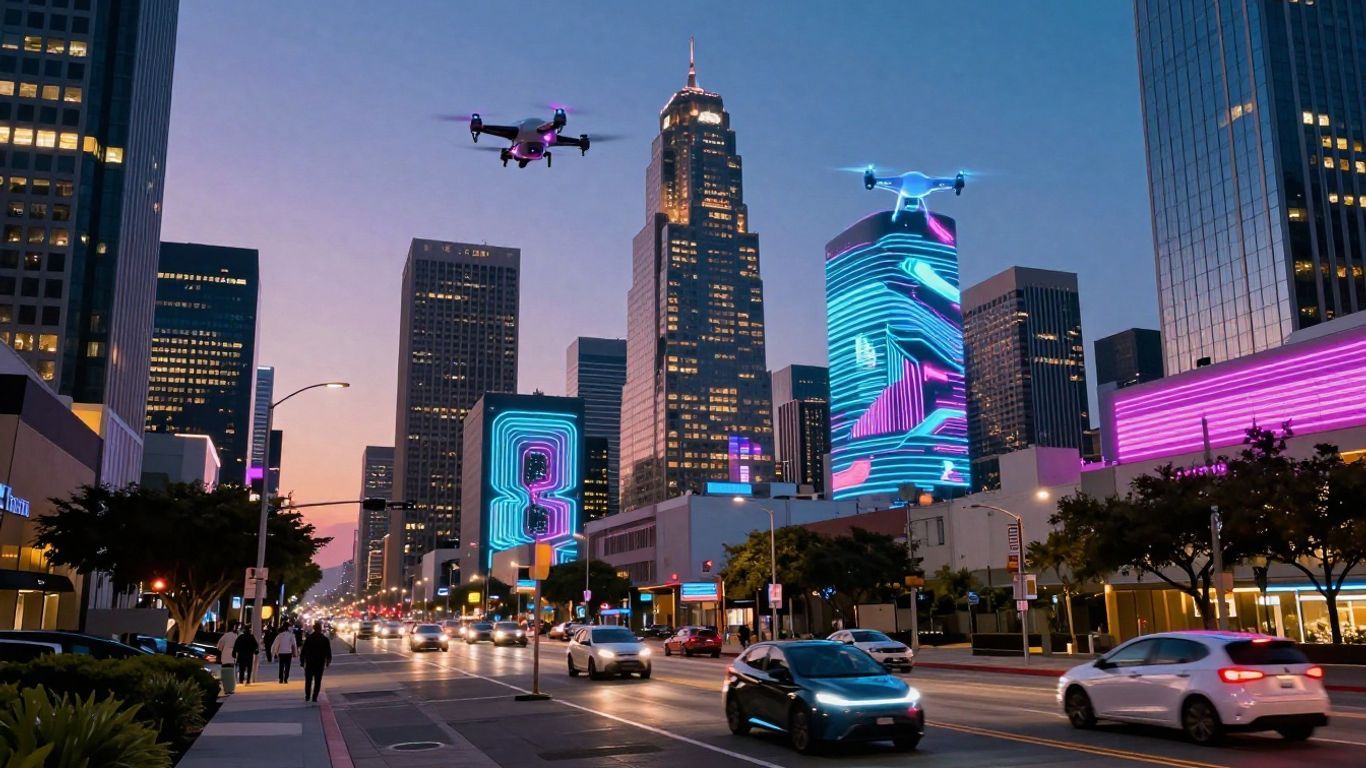
The eagerly anticipated 2028 Olympic Games present an unparalleled opportunity for Los Angeles to truly exhibit the fruits of its meticulous planning and development. Indeed, one might view it as a monumental, real-world crucible for all the visionary smart city concepts we've been diligently discussing. The ambition extends beyond merely ensuring the seamless operation of the Games themselves; it's about unequivocally demonstrating to a global audience how cutting-edge technology can fundamentally enhance the functionality of a major metropolis for every single individual, every single day. This unprecedented global spotlight is unequivocally our chance to affirm LA's position as a preeminent leader in urban innovation.
Utilizing The 2028 Olympics As A Catalyst
The Olympic Games transcend the definition of a mere sporting spectacle; they serve as both a crucial deadline and an expansive global stage. This unique dual role compels us to accelerate the implementation and meticulous refinement of smart city solutions that might otherwise require years to fully deploy. We're referring to sophisticated systems capable of adeptly managing colossal crowds, orchestrating complex traffic flows when millions converge simultaneously, and ensuring the paramount safety of individuals within a bustling environment. It truly represents an invaluable occasion to subject our advanced traffic management, cutting-edge public safety technology, and highly efficient city operations to the ultimate real-world test. The overarching objective is to ensure the resounding success of the Games, while concurrently leaving behind a city that is inherently more connected and responsive for its residents.
Creating Seamless Visitor Experiences
Millions of visitors will soon descend upon Los Angeles, and our fervent aspiration is for each to enjoy an exceptional experience. This entails meticulously simplifying their ability to navigate the city, locate essential amenities, and feel genuinely welcomed. We are committed to leveraging technology to assist with crucial aspects such as:
- Real-time public transit information, empowering visitors with precise details on when and where to access buses or trains.
- Clear, universally understandable multilingual digital signage to facilitate directions and provide comprehensive event information.
- Fully integrated systems for ticketing and access control, significantly streamlining entry and reducing potential friction.
- Pervasive city-wide Wi-Fi access, ensuring everyone remains connected throughout their visit.
The paramount focus is on assiduously eliminating any potential friction points and ensuring the city feels inherently accessible and effortless to navigate, particularly for those unfamiliar with its layout. It's about meticulously crafting a positive first impression that resonates and endures.
Demonstrating Real-World Smart City Applications
Beyond the enhanced visitor experience, the Olympic Games will serve as a dynamic, living showcase of LA's comprehensive smart city capabilities. Spectators and residents alike will witness intelligent systems actively at work, meticulously managing everything from energy consumption to efficient waste collection. For instance, picture traffic signals that autonomously adjust based on real-time conditions, or waste receptacles that intuitively signal when they require emptying, thereby optimizing collection routes. These are not merely theoretical constructs; they are practical, tangible applications explicitly designed to bolster efficiency and foster sustainability. This monumental event provides an invaluable opportunity to gather crucial data and solicit feedback on the performance of these systems, thereby deepening our understanding of their impact and informing future enhancements. It is, undeniably, a chance to illustrate how smart city technology can yield discernible benefits, such as reduced commute times and more judicious resource management, aligning with IntelligentHQ insights on urban tech trends. The data meticulously collected will be absolutely pivotal in quantitatively measuring success:
| Area of Improvement | Key Metrics |
|---|---|
| Traffic Flow | Reduction in average commute times, fewer traffic jams |
| Energy Consumption | Decreased energy use in public buildings and infrastructure |
| Public Transit | Increase in bus and train ridership |
| New Business Formation | Rate of new technology and green economy enterprise establishment |
This rigorous, data-driven approach is absolutely vital for unequivocally demonstrating that our smart city investments are yielding significant returns and for sagaciously guiding all future developmental endeavors.
Looking Ahead: LA's Smart City Journey
So, what does this ambitious roadmap truly signify for Los Angeles as we cast our gaze towards 2028 and the decades that follow? The city is unequivocally striving to remain at the forefront of urban innovation, strategically leveraging nascent technologies to foster smoother operations and significantly enhance overall sustainability. It's not solely about the upcoming Olympic Games, although that globally televised event certainly provides a powerful impetus. Rather, it's fundamentally about meticulously constructing a city that functions more effectively and inclusively for everyone—whether you're a long-term resident deeply embedded in its rhythms or merely a visitor passing through its vibrant landscape. From intelligent traffic lights that genuinely contribute to easing urban congestion, to ensuring public spaces are rendered more universally accessible, the overarching goal is a more interconnected, responsive, and eminently livable Los Angeles. It's undoubtedly a monumental undertaking, and transforming these ambitious blueprints into tangible, everyday realities will indeed represent the ultimate litmus test. Nevertheless, the strategic direction is crystal clear: LA is resolute in its determination to emerge as a global paradigm for future urban living.
Frequently Asked Questions
What's the big idea behind making Los Angeles a "smart city" by 2028?
The overarching vision is to transform Los Angeles into a more modern, efficient, and user-friendly metropolis for all its inhabitants, particularly in anticipation of the 2028 Olympic Games. Essentially, it revolves around strategically deploying innovative technologies to significantly enhance urban mobility, foster environmental sustainability, and ensure equitable benefits for every resident.
How will this plan help people move around the city more easily?
This comprehensive plan aims to markedly improve urban navigation by making public transit—buses and trains—more accessible and convenient. Additionally, it involves implementing intelligent traffic lights that dynamically adjust based on real-time conditions and exploring advanced mobility solutions like autonomous vehicles, all designed to alleviate congestion and facilitate smoother journeys.
What is Los Angeles doing to be kinder to the environment?
A significant component of the plan focuses on cultivating a greener urban landscape through the creation of more parks and dedicated walking and biking paths. It also involves integrating energy-saving technologies into buildings and city systems, contributing to a cleaner, more sustainable Los Angeles.
How will technology change everyday life for people in LA?
Residents can anticipate the pervasive presence of smart sensors, which will actively contribute to public safety and monitor environmental factors like air quality. The "Internet of Things" will interconnect various urban elements to optimize functionality—imagine streetlights that conserve power or waste receptacles that autonomously signal when they require emptying.
Will these smart city changes be fair for everyone in LA?
Absolutely, ensuring equity is a core tenet of this initiative. A major emphasis is placed on guaranteeing that all residents, regardless of age or physical ability, can readily access and benefit from the new technologies and urban improvements. The city is unwavering in its commitment to inclusivity, striving to leave no one behind.
How is the city planning to create new jobs with this smart city initiative?
By establishing specialized innovation hubs and fostering robust public-private partnerships, Los Angeles intends to actively encourage the launch and growth of new technology-driven businesses. This strategic approach is designed to stimulate job creation and attract further investment into the city, thereby positioning it as a vibrant nexus for novel ideas and burgeoning opportunities.


