


resources
Test Your Knowledge: The Ultimate 50 States and Capitals Quiz
09 Feb 2026

Ever considered testing your knowledge of the 50 states and their capitals? It certainly sounds straightforward, doesn't it? Yet, with such a multitude of states and their corresponding cities, the challenge can escalate quite rapidly. Whether you're diligently preparing for an examination, meticulously planning an extensive road trip, or simply aiming to refresh your understanding of U.S. geography, this comprehensive 50 states and capitals quiz offers an enjoyable—and effective—means to assess your proficiency. We'll strategically segment the country into distinct regions to enhance manageability, while also providing practical advice designed to help you achieve your highest possible score. Ready to see what you know?
Key Takeaways
- This 50 states and capitals quiz encompasses all U.S. states and their respective capital cities.
- Strategically dividing the nation into geographical regions—such as the East Coast, the South, the Midwest, and the West—can significantly streamline the study process.
- A notable challenge in this quiz often arises from states whose capitals are not their largest or most populous cities.
- Both Alaska and Hawaii introduce distinctive geographical complexities for those attempting the quiz.
- Leveraging a combination of both online practice resources and traditional offline study methodologies is often instrumental in elevating one's performance on the 50 states and capitals quiz.
Mastering The 50 States and Capitals Quiz
Understanding The Scope Of The Quiz
So, are you prepared to truly master the 50 states and capitals quiz? The core concept is quite direct: successfully pair each state with its precise capital city. Seems simple enough, doesn't it? However, with all 50 states each boasting its own capital, a substantial volume of information warrants careful retention. It extends beyond merely identifying prominent examples such as California and Sacramento; you'll also need to commit the less frequently encountered pairings to memory. Fundamentally, this quiz evaluates your ability to recall both the names of the states and their respective capital cities. It spans the entirety of the United States, from the historically rich East Coast to the sweeping vistas of the West, encompassing those geographically distinct territories like Alaska and Hawaii.
Strategies For Success In The Quiz
Achieving a commendable score on this quiz hinges significantly on your preparation strategy. One simply cannot 'wing it' and anticipate flawless recall. To that end, here are several highly effective approaches to bolster your readiness:
- Divide and Conquer: Avoid attempting to learn all 50 states simultaneously. Instead, segment them by geographical region—for instance, New England, the South, the Midwest, and the West. This approach renders the vast amount of information considerably more digestible.
- Employ Flashcards: Perhaps a traditional method, yes, but undeniably effective. Inscribe the state's name on one side and its capital on the reverse. Review them diligently until you can effortlessly recall each pairing.
- Engage in Practice Quizzes: The digital landscape abounds with online quizzes tailored for this very purpose. Many even incorporate timed challenges, an excellent way to acclimate yourself to the pressure of the genuine assessment.
- Leverage Mnemonics and Narrative Aids: For particularly challenging pairings, consider devising humorous sentences or imaginative stories to forge a memorable link between the state and its capital. Often, the more unconventional the mnemonic, the more indelible it becomes.
It's worth noting that, on occasion, the designated capital city might not be the most widely recognized or even the most populous urban center within a state. This frequently serves as a subtle 'trick question' in quizzes, so it's always prudent to verify your understanding, extending beyond merely identifying famous landmarks.
Ultimately, the crux of the matter lies in discovering which learning methodology resonates most effectively with you. While some individuals, for instance, are visual learners who excel with geographical maps, others may find rote memorization to be their preferred strategy. We encourage you to experiment discerningly to ascertain what truly 'sticks' for optimal retention.
Navigating The Eastern Seaboard
Now, let's turn our attention to the Eastern Seaboard. This storied portion of the nation boasts a rich historical tapestry and, as you might surmise, a considerable number of states and their corresponding capitals to commit to memory—a task made simpler by our regional breakdown. We'll segment this region into two primary classifications: New England and the Mid-Atlantic. While this might initially appear to be a formidable undertaking, you'll find the task significantly more manageable once these distinctions are clearly delineated.
New England States And Their Capitals
Situated in the nation's venerable northeast corner, this region possesses a truly distinctive character. Envision rugged coastlines, resplendent fall foliage, and some of the most ancient urban centers across the United States. Comprising six states, each proudly maintains its unique capital city.
- Maine: Augusta
- Vermont: Montpelier
- New Hampshire: Concord
- Massachusetts: Boston
- Rhode Island: Providence
- Connecticut: Hartford
One might readily conflate certain pairings here, particularly given the widespread recognition of cities like Boston. However, it's crucial to recall that the capital city does not invariably equate to the largest urban center. Consider Rhode Island as an illustrative example: Providence serves as both its capital and its most populous city, yet this dynamic is by no means universal across all states.
Do remain vigilant for those states where the capital city is neither the most renowned nor the most expansive. This scenario, quite often, presents a frequently employed 'trick' in geographical quizzes!
Mid-Atlantic States And Their Capitals
Journeying southward from the charming precincts of New England, we encounter the Mid-Atlantic region. This particular expanse offers a heightened degree of diversity, characterized by bustling metropolises and pivotal historical landmarks. Consequently, we have several additional states to explore within this segment.
- New York: Albany
- Pennsylvania: Harrisburg
- New Jersey: Trenton
- Delaware: Dover
- Maryland: Annapolis
- West Virginia: Charleston
- Virginia: Richmond
This collective encompasses an array of truly significant locales. For instance, New York's capital is Albany, emphatically not New York City—a distinction that frequently confounds many. Similarly, Pennsylvania's capital resides in Harrisburg, rather than Philadelphia. Furthermore, let us not overlook the smaller, yet equally important, states such as Delaware and Maryland, with their respective capitals, Dover and Annapolis. Mastering these precise distinctions is absolutely paramount for excelling in the Eastern Seaboard portion of the quiz.
Exploring The Southern States
The Southern United States, a region steeped in history and characterized by its remarkably diverse geography, truly offers a captivating study. Regarding state capitals, this area introduces a compelling array of intriguing challenges and distinctive facts—all certainly valuable for your quiz preparation. We shall delineate this expansive territory into two primary components: the Appalachian Region and the Coastal South.
Appalachian Region Capitals
This distinct geographical expanse, defined by the majestic Appalachian Mountains, incorporates states such as West Virginia, Virginia, Kentucky, Tennessee, North Carolina, South Carolina, Georgia, alongside segments of Alabama and Mississippi. Intriguingly, the names of these capitals frequently bear connections to historical luminaries or prominent topographical elements.
- Charleston, West Virginia: Strategically situated on the Kanawha River, this city represents a pivotal nexus in the state's historical narrative.
- Richmond, Virginia: A metropolis deeply entrenched in historical roots, particularly significant during the tumultuous Civil War era.
- Frankfort, Kentucky: Nestled along the meandering Kentucky River, it notably ranks among the nation's more modest state capitals.
- Nashville, Tennessee: Affectionately dubbed 'Music City,' it stands as a preeminent cultural nexus.
- Raleigh, North Carolina: Integral to the esteemed Research Triangle, it serves as a dynamic nucleus for advancements in technology and education.
- Columbia, South Carolina: Bearing the name of Christopher Columbus, this city strategically lies at the confluence of two significant rivers.
- Atlanta, Georgia: A truly bustling metropolis, it dramatically emerged from the devastation of war to ascend as a pivotal economic powerhouse.
Indeed, the capitals nestled within the Appalachian region frequently embody a harmonious amalgamation of breathtaking natural beauty and profound historical significance, thus rendering them particularly memorable for those undertaking the quiz.
Coastal Southern Capitals
Shifting our focus towards the Atlantic and Gulf coasts, we encounter states such as Florida, Alabama, Mississippi, Louisiana, along with portions of Georgia and South Carolina. The capitals in this sub-region are often distinguished by their strategic proximity to the sea or by their truly distinctive cultural imprints.
Here's a quick look at some of them:
| State | Capital City |
|---|---|
| Florida | Tallahassee |
| Alabama | Montgomery |
| Mississippi | Jackson |
| Louisiana | Baton Rouge |
It is paramount to recognize that several of these coastal capitals do not, in fact, represent the largest urban centers within their respective states. For example, Jacksonville significantly surpasses Tallahassee in size within Florida, while New Orleans dramatically dwarfs Baton Rouge in Louisiana. Retaining these nuanced distinctions is absolutely critical for excelling in the quiz. These particular cities frequently assumed pivotal roles in the region's progression, commercial exchanges, and, on occasion, periods of conflict, thereby elevating their capital status to one of profound historical importance, rather than merely reflecting demographic scale.
Conquering The Midwest
Now, let us delve into the veritable heartland of America—the Midwest. This expansive region is replete with states that boast some truly fascinating capitals, which can indeed prove somewhat challenging to consistently distinguish. Our focus will encompass both the states bordering the majestic Great Lakes and those extending across the vast, open plains. Comprehending these particular pairings is unequivocally vital for excelling in the quiz.
Great Lakes States and Capitals
The Great Lakes undeniably form an indelible component of the Midwest's identity, and the states encircling them host several quite memorable capitals. Consider, for instance, Illinois, Michigan, Ohio, Indiana, and Wisconsin—each possessing a direct affiliation with these immense freshwater seas.
Here's a quick look at some of them:
- Illinois: Springfield
- Michigan: Lansing
- Ohio: Columbus
- Indiana: Indianapolis
- Wisconsin: Madison
One might easily conflate certain capitals, particularly when considering the more prominent urban centers within these states. For instance, Chicago vastly overshadows Springfield in size, yet Springfield unequivocally serves as Illinois's capital. A similar dynamic applies to Detroit versus Lansing, or Cleveland versus Columbus. Maintaining a clear awareness of this critical distinction is paramount!
Plains States Capitals
Progressing westward from the Great Lakes, one encounters the expansive Plains States. These particular states are renowned for their sweeping, wide-open vistas and their vital agricultural industries. Kansas, Nebraska, South Dakota, and North Dakota all fall within this classification. While their capitals may not possess the same broad recognition as some of the larger urban hubs, their identification remains crucial for successful quiz completion.
Let's check a few:
- Kansas: Topeka
- Nebraska: Lincoln
- South Dakota: Pierre
- North Dakota: Bismarck
It's important to bear in mind that the capital cities of the Plains States are frequently modest in scale when juxtaposed with other principal urban centers in the region. Their comparatively smaller size should not, however, lead to misidentification; these cities represent the crucial seats of governmental authority and, as such, necessitate diligent memorization.
Indeed, a synchronized approach to studying these regions can prove highly advantageous. One effective strategy involves grouping them by distinct geographical characteristics—for instance, the Great Lakes cluster and the Plains cluster. This systematic organization significantly simplifies the visualization of their locations and their interrelationships. We wish you the very best in conquering the Midwest!
Venturing Into The West
The western United States stands as an immensely vast and remarkably diverse region, serving as home to some of the nation's most iconic and breathtaking landscapes. When addressing state capitals, this particular expanse introduces its own distinct array of challenges and intriguing facets. Our exploration will now delineate the capitals pertaining to the Rocky Mountain states and those situated along the majestic Pacific Coast.
Rocky Mountain Capitals
This geographical area is renowned for its dramatic mountain ranges and expansive, unencumbered spaces. Consequently, the capitals situated within this region frequently echo the rich histories of mining, ranching, and the profound narrative of westward expansion.
- Denver, Colorado: Colloquially known as the "Mile High City," it is precisely positioned at an elevation of one mile above sea level.
- Salt Lake City, Utah: Established by industrious Mormon pioneers, it serves as a principal center for the Church of Jesus Christ of Latter-day Saints.
- Boise, Idaho: Strategically located in the southwestern quadrant of the state, it functions as a vibrant hub for both agriculture and cutting-edge technology.
- Helena, Montana: Once a burgeoning gold rush settlement, its capitol building is particularly recognized for its striking and impressive dome.
- Cheyenne, Wyoming: Positioned in the southeastern extremity, it operates as a pivotal nexus for the state's substantial railroad and extensive ranching industries.
It's worth noting that the capitals across the Rocky Mountain region are quite dispersed, and a considerable number do not represent the largest urban centers within their individual states. This characteristic can, at times, render their recall somewhat challenging if one relies solely on population metrics.
Pacific Coast Capitals
Extending from the Canadian border all the way to Mexico, the states nestled along the Pacific Coast feature capitals that frequently serve as significant cultural and economic epicenters, albeit not consistently ranking as the most populous.
- Sacramento, California: Though Los Angeles and San Francisco undoubtedly command greater renown, Sacramento holds the esteemed position of state capital, performing an indispensable role in California's governance.
- Olympia, Washington: Situated strategically on Puget Sound, it presents as a more modest urban center compared to bustling Seattle, yet possesses profound governmental significance.
- Salem, Oregon: Nestled within the fertile Willamette Valley, it functions as a vital agricultural and industrial hub.
Consequently, successful recall of these western capitals necessitates close attention to their distinctive histories and precise geographical placements, rather than merely presuming the most populous city to be the capital. This approach provides an excellent gauge of your detailed understanding of the United States.
Unique Challenges In The 50 States and Capitals Quiz
Alaska and Hawaii: Distinctive Locations
Upon contemplating the 50 states, Alaska and Hawaii invariably emerge as particularly distinctive. Their status as non-contiguous territories can indeed render their placement on a map somewhat perplexing. Alaska, notably the largest state by landmass, lies far to the north, geographically separated from the contiguous United States by the vast expanse of Canada. Hawaii, conversely, comprises an exquisite archipelago situated in the Pacific Ocean. Committing their respective capitals—Juneau for Alaska and Honolulu for Hawaii—to memory demands a concentrated effort due to their inherent geographical isolation from the mainland states.
Capital Cities That Are Not The Largest City
Herein lies a particularly intriguing aspect of the quiz. A common—yet often erroneous—assumption is that a state's capital city is also its most populous urban center. While this holds true in numerous instances, it is by no means universal! Take Illinois, for example: Springfield serves as its capital, while Chicago stands as the vastly larger and more renowned metropolis. Similarly, consider Texas, where Austin functions as the capital, despite Houston and Dallas boasting considerably greater populations. This frequent disparity between the designated capital and the state's largest city consistently proves to be a significant stumbling block for many quiz-takers.
Here are a few examples:
- California: Sacramento (Capital) vs. Los Angeles (Largest City)
- New York: Albany (Capital) vs. New York City (Largest City)
- Florida: Tallahassee (Capital) vs. Jacksonville (Largest City)
- Michigan: Lansing (Capital) vs. Detroit (Largest City)
It's quite understandable to be momentarily misled by the allure of more famous, larger cities and erroneously designate them as the capital. Consequently, one must diligently commit to memory the precise capital for each individual state, irrespective of the comparative size of other urban areas within that state.
Retaining these specific intricacies—such as capitals that aren't the largest cities—requires transcending mere recognition of state geographical outlines. It fundamentally entails committing to memory distinct factual points that do not consistently adhere to the most intuitive patterns. Consider this endeavor akin to deciphering a unique code for each state: the capital serves as the vital key that unlocks the accurate response, even when it isn't the state's most celebrated landmark.
Enhancing Your 50 States and Capitals Quiz Performance
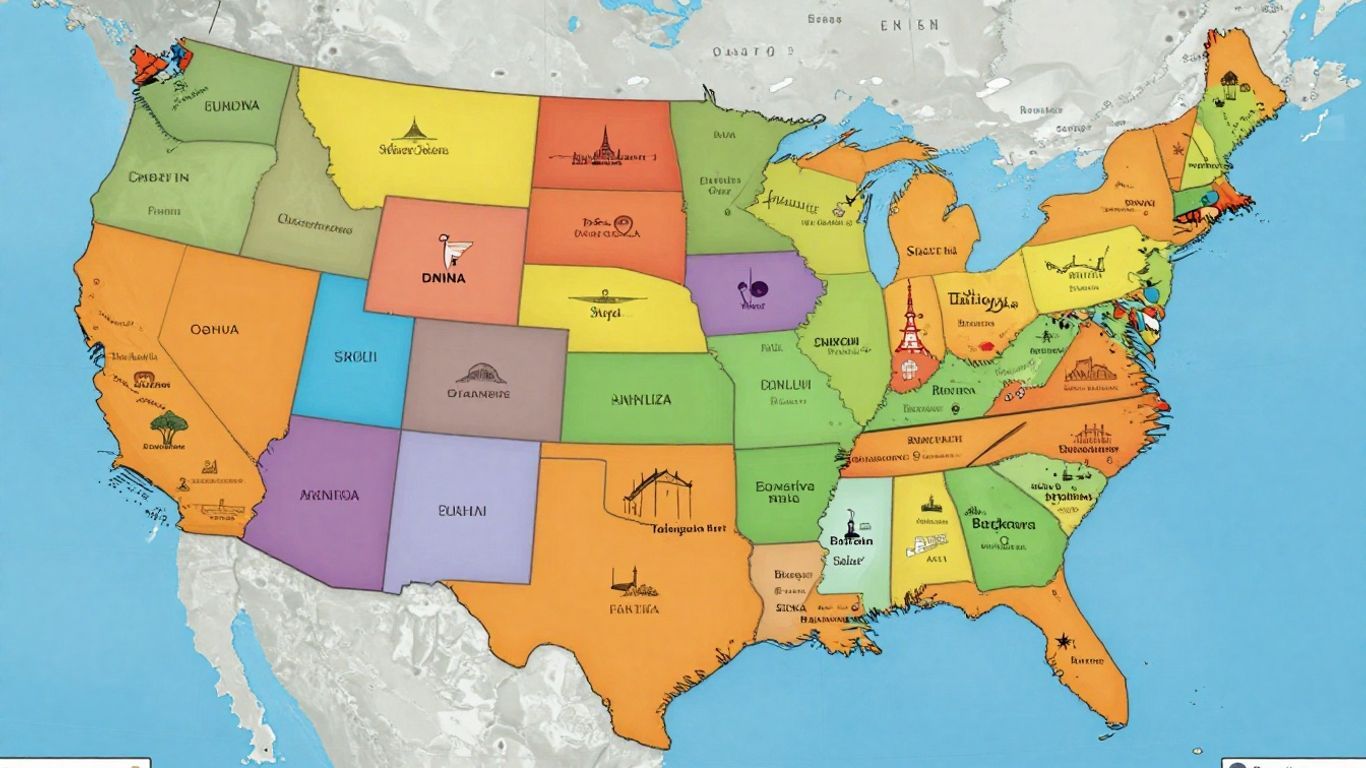
Having diligently reviewed the states and their respective capitals, the present moment calls for a definitive consolidation of your acquired knowledge. This endeavor extends beyond mere rote memorization of lists; rather, it focuses on ensuring that the information is truly retained. Fortunately, a wealth of diverse methods exists to refine your skills and enhance your performance on this quiz. Indeed, the cornerstone of success lies in consistent, varied practice.
Utilizing Online Resources For Practice
In the contemporary era, the internet stands as an invaluable repository—a veritable goldmine—for quiz-oriented practice. One can readily discover an extensive array of websites and applications meticulously engineered for the sole purpose of mastering state capitals. A significant number of these platforms incorporate timed challenges, which prove exceptionally beneficial for accurately replicating the pressure of an authentic assessment. Furthermore, some even permit users to concentrate on particular geographical regions, such as the Northeast or the Western states, should specific areas present a greater degree of difficulty.
- Interactive Maps: Engage with dynamic maps that allow you to click on a state to disclose its capital, or undertake the reverse process.
- Flashcard-Style Quizzes: Digital flashcards offer an expedited means to test your immediate recall capabilities.
- Fill-in-the-Blank Exercises: These necessitate active text entry for the answer, thereby engaging a distinct modality of memory assessment.
- Timed Challenges: Endeavor to ascertain how many correct responses you can achieve within a predetermined duration, for instance, a two-minute interval.
It's worth noting that a considerable number of online utilities are specifically designed to be both enjoyable and highly engaging. They frequently integrate game-like components to sustain your motivation throughout the learning process. Therefore, resist the temptation to confine yourself to a singular mode of practice; instead, diversify your approach to maintain optimal cognitive acuity.
Offline Study Tools For The Quiz
While the convenience of online resources is undeniable, it would be imprudent to overlook the efficacy of time-honored, traditional offline methodologies. Occasionally, the tangible act of physically writing or intently studying a geographical map can yield substantial improvements in retention. Moreover, these methods offer the distinct advantage of requiring no internet connectivity!
- Printable Maps: Numerous maps are available online for printing. We recommend actively labeling the capitals yourself, or utilizing them as a valuable reference point during self-assessment sessions.
- Physical Flashcards: Construct your personalized set of flashcards, inscribing the state's name on one side and its capital on the reverse. Keep them readily accessible for impromptu self-quizzing whenever a moment of leisure presents itself.
- Collaborative Study Groups: Convene with peers or family members. Engaging in mutual quizzing can render the study process more social and enjoyable, while also facilitating learning from others' misconceptions or unique perspectives.
- Notebook Practice: The simple, repetitive act of transcribing the states and their corresponding capitals can profoundly solidify this information in your long-term memory. Consider varying the colors of your ink or structuring the data into concise charts for enhanced recall.
How Did You Do?
Indeed, that constituted quite an extensive journey across the United States, didn't it? Regardless of whether you flawlessly answered every query or found yourself momentarily perplexed, our objective was to provide a robust opportunity to evaluate your comprehension of our nation's states and their respective capitals. It's perfectly natural for such specifics to fade from memory amidst the vast ocean of available information. Perhaps you assimilated a new capital or two, or perhaps you merely reinforced existing knowledge. In any event, we encourage you to continue your exploration and deepen your understanding of the intricate geography that defines the USA. There's invariably something novel to uncover, and who can predict—perhaps your next grand road trip will be directly inspired by a capital city you've just learned!
Frequently Asked Questions
What's the main goal of this quiz?
Essentially, this quiz is designed to comprehensively assess your knowledge of the 50 United States and their associated capital cities. It offers an engaging and informative approach to gauge your proficiency in American geography, while simultaneously fostering a deeper understanding of the nation.
How can I get better at the quiz?
Improvement is certainly attainable through various methods! We highly recommend utilizing interactive online games and dedicated practice quizzes for self-assessment. Additionally, consider leveraging printable maps for effective offline study. Consistent practice, undoubtedly, will significantly enhance your retention of states and their corresponding capitals.
Are there any tricky parts to this quiz?
Indeed, certain elements can prove challenging! For instance, Alaska and Hawaii are geographically non-contiguous with the mainland U.S., which may occasionally complicate their placement or recall. Furthermore, it's worth noting that some capital cities are not the most populous urban centers within their respective states, a distinction that can often be a source of confusion.
What if I want to practice specific regions?
Certainly, our quiz is frequently structured by distinct geographical regions, such as the Eastern Seaboard, the South, the Midwest, and the West. Concentrating your efforts on one region at a time can significantly alleviate any potential overwhelm, making the process of learning states and capitals far more manageable.
Can I save my quiz scores?
Indeed, certain iterations of the quiz provide the functionality to log in and preserve your high scores. This feature serves as an excellent mechanism for monitoring your progress and observing your sustained improvement over an extended period.
Is there a time limit for the quiz?
It's true that particular quiz formats may incorporate a specified time constraint—for example, attempting to identify as many capitals as possible within a mere two-minute window. Such a limit introduces an additional layer of challenge, effectively evaluating your speed and accuracy in recalling geographical data.


