


resources
Austin Smart City: Innovations Shaping Tomorrow's Urban Landscape
07 Apr 2026

Austin is experiencing rapid growth—a transformation that necessitates a fresh perspective on urban development and living. This isn't merely about erecting more buildings; it's fundamentally about cultivating an enhanced environment for all residents, both now and in the foreseeable future. We are thoughtfully examining how intelligent planning and innovative concepts can adeptly manage this expansion, ensuring Austin remains an exceptional place to call home.
Key Takeaways
- Austin is proactively pursuing a 'smart city' model to address its swift expansion and elevate the quality of urban life.
- New developments strategically blend residential, commercial, and retail spaces, fostering more interconnected and less car-dependent neighborhoods.
- Sustainability is a paramount consideration, with comprehensive plans for greener architecture, optimized water resource management, and expanded green infrastructure.
- Advanced technologies, such as sophisticated mapping tools and digital modeling, are being employed to enhance the accuracy and efficiency of project planning.
- Community engagement is crucial, with deliberate efforts to involve residents in the critical planning decisions affecting their neighborhoods.
Austin's Smart City Vision
Embracing Innovation for Urban Growth
Austin, ever forward-thinking, consistently looks to the horizon. As it grows, the city is diligently exploring how best to leverage novel ideas to enhance the urban experience for everyone. The focus extends beyond simply building more; it’s about building smarter—a commitment to employing technology and fresh perspectives to skillfully manage the city's expansion and improve residents' daily lives.
Addressing Rapid Expansion Challenges
Austin's swift growth naturally presents a unique set of challenges. Issues such as traffic congestion, housing accessibility, and ensuring equitable access to essential services can become complex as more individuals choose to relocate here. The city's smart city vision is fundamentally centered on discovering creative, sustainable solutions to these intricate problems. Ultimately, it’s about utilizing intelligent planning to preserve Austin's cherished quality of life, even as its footprint expands.
The Necessity of Forward-Thinking Development
Thinking ahead is paramount for any burgeoning urban center. It's about ensuring that the decisions made today do not inadvertently create larger, more intractable issues tomorrow. Austin's deliberate approach involves comprehensive future planning, meticulously considering how new developments will integrate with existing structures and their broader impact on both the environment and its inhabitants.
This forward-thinking strategy encompasses considerations such as:
- Utilizing robust data analytics to discern the city's evolving needs.
- Developing comprehensive plans for diversified transportation networks.
- Ensuring that all new constructions meet stringent energy-efficiency standards.
- Cultivating vibrant, mixed-use spaces where residents can conveniently live, work, and recreate close to home.
While undoubtedly a substantial undertaking, Austin is resolutely committed to constructing a city that is not only prepared for, but poised to thrive amidst, future challenges.
Pioneering Smart Growth and Mixed-Use Developments
Austin’s progressive approach to growth transcends merely building for the present—it’s about consciously shaping a city that serves its populace optimally, both now and for decades to come. Smart growth principles, particularly through mixed-use developments, are fundamentally reshaping how Austin envisions its neighborhoods, seamlessly integrating residential, commercial, and communal spaces. This isn’t simply a passing trend; it signifies a definitive departure from conventional practices toward creating areas that are more dynamic, engaging, and pedestrian-friendly.
Rethinking Traditional Zoning
Conventionally, zoning regulations in most cities meticulously segregated commercial, office, and residential districts. This often resulted in protracted commutes and fewer spontaneous social interactions—a phenomenon that made the urban fabric feel distinctly fragmented. In Austin, however, this paradigm is undergoing a notable transformation:
- Mixed-use zoning permits a cohesive integration of retail establishments, dining venues, and residences within the same blocks.
- Residents are consequently empowered to commute via walking, cycling, or public transit, diminishing their reliance on private automobiles.
- Urban planners now prioritize localized needs, ensuring that neighborhoods cultivate a stronger sense of connection and vitality.
To illustrate, observe how mixed-use zoning distinctively contrasts with its traditional counterpart:
| Feature | Traditional Zoning | Mixed-Use Zoning |
|---|---|---|
| Housing + Workplaces | Separated | Blended |
| Commute Times | Longer | Shorter |
| Local Businesses | Fewer walkable options | More opportunities |
| Social Interactions | Less frequent | More regular |
Benefits of Integrated Living and Working Spaces
When residential areas are strategically integrated with workplaces and retail environments, a host of positive outcomes invariably emerge. Consider, for instance, the palpable reduction in traffic gridlock during peak hours. Furthermore, local businesses—think charming cafes and boutique shops—benefit from a consistent influx of customers from nearby residents. There's also a natural cultivation of community spirit, as daily routines more easily facilitate encounters between neighbors and colleagues.
Mixed-use developments also offer a compelling advantage by lowering infrastructure costs, given that essential utilities and road networks can efficiently serve multiple functions within a condensed footprint. This approach allows residents to realize savings on transportation, while local business owners benefit from increased foot traffic and sustained patronage.
In Austin, these transformative shifts are not merely theoretical concepts—they are actively reshaping streetscapes, fostering inviting public gathering spots, and making routine errands feel considerably less arduous.
Fostering Vibrant, Multi-Use Neighborhoods
An urban environment where people live, work, and socialize within close proximity often radiates a more palpable sense of energy. It’s quite common to observe families, young professionals, and retirees alike enjoying the same parks, markets, and public squares. Austin’s planners are dedicated to ensuring neighborhoods remain lively by promoting initiatives such as:
- Organized community events held regularly in shared public venues.
- A diverse array of housing choices, from modern apartments to charming townhomes, designed to accommodate varied demographics and income levels.
- City-wide experiences like team building in Austin through CityHUNT, where groups explore neighborhoods together on foot rather than gathering in a single venue.
- Innovative utilization of ground-floor spaces for dynamic purposes, perhaps hosting pop-up shops or artisan studios.
These forward-thinking ideas infuse neighborhoods with a palpable dynamism and welcoming atmosphere, attracting people from all walks of life—a synergy that helps Austin expand in a manner that feels genuinely personal, vibrant, and enduring.
Integrating Sustainable Design and Green Infrastructure
Sustainable design and robust green infrastructure lie at the very core of Austin’s strategic plans for cultivating a healthier, more resilient urban center. By steadfastly adhering to these principles, the city aims not only to satisfy contemporary demands but also to meticulously ensure that future generations inherit access to secure, dependable resources. Indeed, astute choices made today promise cleaner air, cooler neighborhoods, and communities significantly better equipped to adapt to a changing climate.
Eco-Friendly Building Practices
Eco-friendly construction in Austin transcends the mere incorporation of solar panels or the use of recycled materials. It's about designing and erecting entire structures that judiciously consume fewer resources throughout their entire lifecycle. Here's how conscientious developers are operationalizing this philosophy:
- Passive building techniques are expertly employed to maintain comfortable interior temperatures with reduced reliance on air conditioning—consider intelligently shaded glass, verdant rooftop gardens, and meticulously insulated walls.
- Utilizing recycled and locally sourced materials significantly curtails transportation costs and associated carbon emissions.
- Highly efficient HVAC and advanced water management systems collectively reduce utility expenses and overall energy consumption.
| Building Feature | Traditional Build | Sustainable Build |
|---|---|---|
| Average Energy Use | High | Low |
| Material Sourcing | Global | Local/Recycled |
| Lifetime Cost | Higher | Lower |
When one steps inside a thoughtfully designed green building, the experience is often notably distinct—quieter, frequently cooler, and generally more comfortable. Over time, these deliberate choices accumulate into substantial financial savings and a significantly diminished carbon footprint.
Enhancing Urban Ecosystems with Green Spaces
Austin is actively integrating new parklands and undertaking improvements to natural waterways as integral components of its broader strategy for maintaining urban health. These verdant areas confer a myriad of advantages, including:
- Providing essential shade and contributing to cooler ambient temperatures on scorching days.
- Serving as inviting venues for social engagements, physical activity, and recreational pursuits.
- Establishing vital habitats for diverse local wildlife, ranging from avian species to crucial pollinators.
An expansion of green spaces empowers Austin to more effectively manage significant rainfall events by facilitating greater water absorption and thus mitigating citywide flooding. The city even champions community involvement, actively encouraging residents to assist in planting and nurturing new trees along its streets and boulevards.
Advanced Water and Energy Management
Few resources are more fundamental than water and electricity. Austin’s innovative strategies are rendering both these critical systems not only more intelligent but also considerably more efficient:
- Implementing rainwater harvesting systems across both residential and commercial edifices.
- Deploying smart meters and advanced leak detection technologies to meticulously monitor and curtail water waste.
- Developing community-scale solar projects capable of supplying clean power to local homes and schools.
Residents are encouraged to access incentives designed to facilitate the retrofitting of older properties with more efficient fixtures and systems. The cumulative effect? Lower utility bills for households and businesses, alongside a reduced strain on precious natural resources.
The journey toward a truly smarter city entails discovering practical, incremental methods to ease daily living for both its inhabitants and the planet. From permeable pavement to thriving rooftop gardens, Austin is meticulously weaving sustainability into the very fabric of its urban landscape.
Leveraging Technology for an Efficient Austin
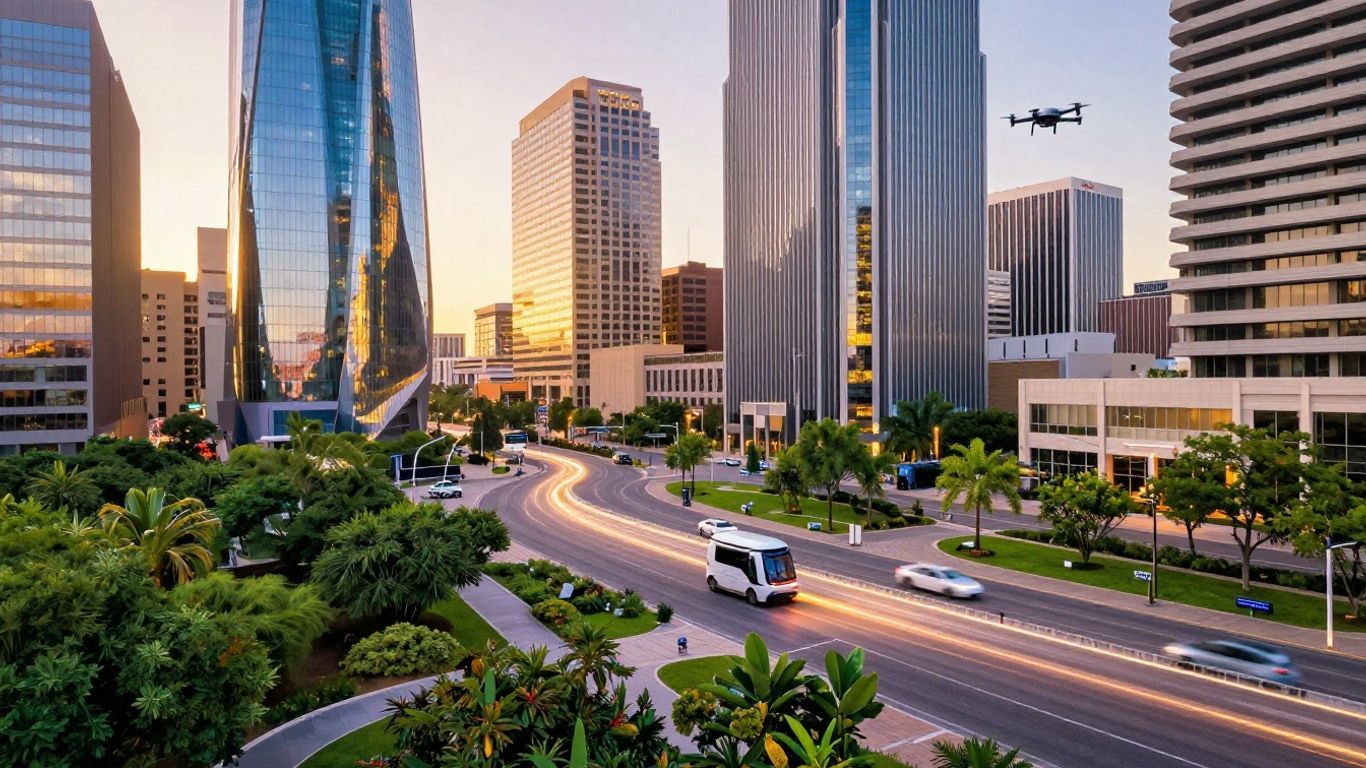
Austin's ambitious pursuit of becoming a smarter city critically involves examining how technology can streamline urban operations. This endeavor isn't merely about incorporating ostentatious gadgets; rather, it’s about employing sophisticated digital tools to enhance planning, optimize construction, and manage our expanding city with greater efficacy. Consider it, if you will, as furnishing our urban planners and developers with an exceptionally powerful toolkit.
Geographic Information Systems for Land Use
Geographic Information Systems, universally known as GIS, function much like a meticulously layered digital map. They provide an intricate understanding of our city by allowing us to visualize various datasets—such as population distribution, road networks, park locations, and even subterranean utility lines—all meticulously overlaid. This capability profoundly simplifies the process of identifying optimal sites for new housing, commercial ventures, or public amenities, helping us avoid development in sensitive areas like flood zones or already congested localities.
- Analyzing population density to plan new schools.
- Mapping utility lines to prevent construction conflicts.
- Identifying suitable locations for green spaces based on current land cover.
Building Information Modeling for Precision
Building Information Modeling, or BIM, represents a transformative advancement for architects and construction teams. Moving beyond conventional two-dimensional blueprints, BIM generates detailed three-dimensional models of buildings even before physical construction commences. This ensures that all stakeholders possess an exact visual of the planned structure, enabling them to identify potential issues early in the design phase and verify seamless integration of all components. Such foresight significantly minimizes errors, curtails costs, and renders the entire construction process considerably more predictable.
BIM facilitates a virtual walkthrough of a project, adeptly identifying clashes between disparate systems—like plumbing and electrical—well before any physical work begins. This proactive methodology substantially minimizes costly rework on-site.
Drone Technology in Urban Planning
Drones are rapidly becoming indispensable instruments in the realm of urban planning. They possess the capacity to swiftly survey expansive land areas, providing up-to-the-minute aerial perspectives that would otherwise be challenging to acquire. This utility proves exceptionally valuable for assessing prospective development sites, meticulously monitoring construction progress, and even observing subtle environmental shifts. The detailed data they yield empowers us to make more informed and strategic decisions regarding our city's ongoing growth.
- Rapid site assessment for new infrastructure projects.
- Monitoring construction sites for safety and progress.
- Mapping existing conditions for renovation or redevelopment plans.
Community-Centered Planning in Austin
Gathering Resident Input Through Forums
Austin's progressive approach to smart city development isn't solely about deploying cutting-edge technology or constructing impressive new buildings; it's profoundly about the very people who call this city home. A cornerstone of this philosophy involves ensuring every resident has a meaningful voice in how Austin evolves. Public forums and interactive workshops are integral to this process. These aren't merely perfunctory meetings; they are specifically designed as inclusive spaces where residents can engage directly with urban planners and city officials, articulate their ideas, and express any concerns regarding forthcoming projects. It’s fundamentally about cultivating a shared sense of ownership from the earliest stages.
Digital Engagement for Broader Participation
Beyond traditional in-person gatherings, Austin is strategically leveraging digital tools to extend its reach to an even wider demographic. Online surveys and dedicated digital platforms empower individuals to share their perspectives at their convenience, offering considerable flexibility. This digital outreach proves instrumental in gathering input from a more diverse cross-section of residents, including those whose schedules might preclude attendance at conventional meetings. Ultimately, it’s a crucial mechanism for ensuring a rich tapestry of voices is heard and considered.
Collaborative Design for Relevant Developments
Ultimately, the overarching objective is to conceive and realize developments that genuinely resonate with the community's needs and aspirations. This entails transcending mere opinion-gathering to actively involving residents in the design process itself. When community members collaborate directly alongside planners and developers, the resulting projects are far more likely to address specific local requirements and authentically mirror the unique character of Austin's distinct neighborhoods. This collaborative ethos is precisely what makes a smart city truly intelligent – it’s built by, and for, its people.
The city explicitly acknowledges that innovative urban development achieves its fullest potential when undertaken as a collective endeavor. By proactively soliciting and integrating resident feedback, Austin is committed to forging a future that genuinely embraces everyone.
The Role of Policy in Austin's Smart City Initiatives
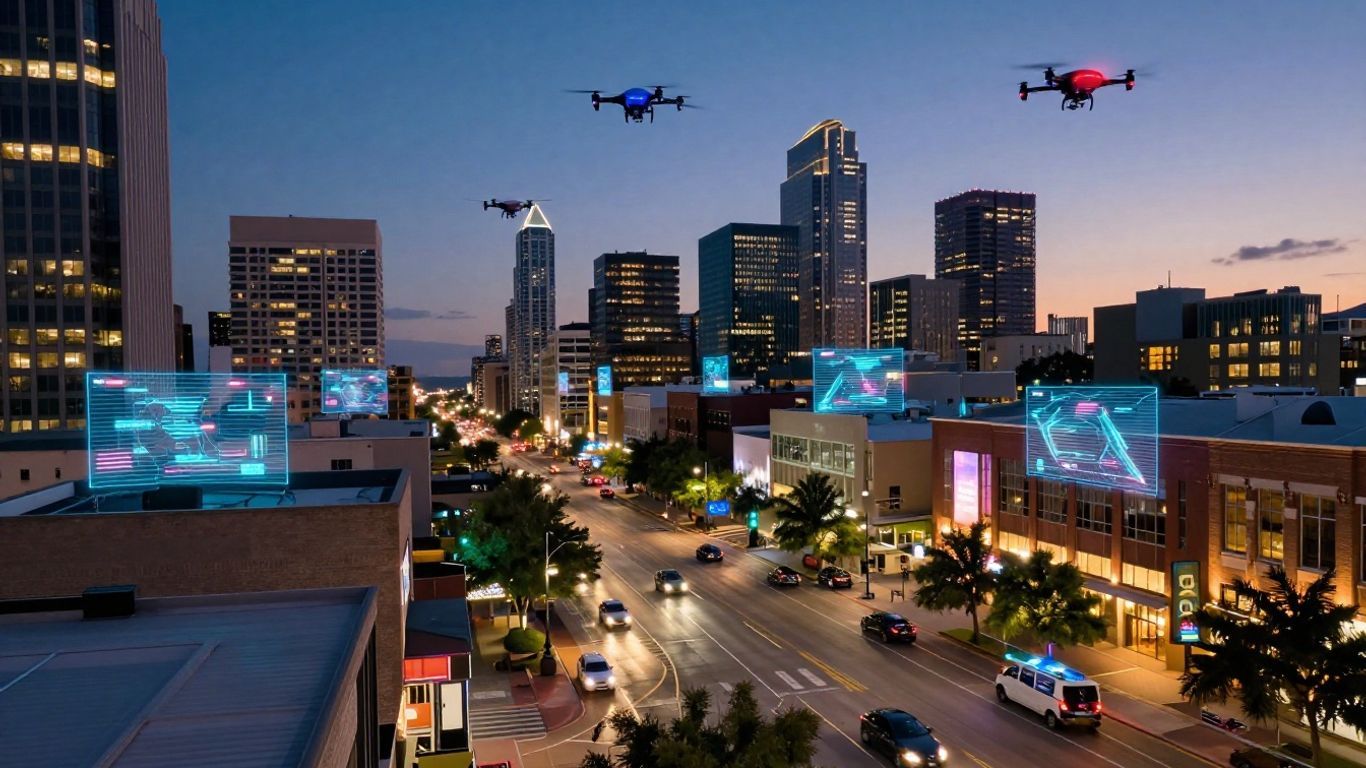
Streamlining Permitting Processes
Facilitating a more efficient and expedited process for obtaining building permits is a critical component for advancing smart city projects. When the city's regulatory framework and administrative procedures are clear and streamlined, it actively encourages developers to bring innovative concepts to fruition. This translates directly into reduced waiting periods and a greater volume of actual construction. Consider this: if a compelling plan for a new, technologically advanced building faces a permit process spanning months or even years, developer interest might wane. Austin is proactively exploring methods to simplify this, perhaps through digital submission and tracking systems for applications, or by establishing specialized teams adept at navigating these novel project types. Indeed, clearer, faster permits are instrumental in transforming innovative concepts into tangible, beneficial urban improvements.
Incentivizing Innovative Development
It's often the case that pioneering ideas entail higher initial costs. To genuinely galvanize developers toward smarter construction, the city can offer targeted incentives. These might range from tax abatements for employing green building materials to grants for projects that seamlessly integrate advanced technologies. Such incentives serve as a potent impetus, rendering the financially ambitious—yet potentially highly rewarding—path of innovation considerably more appealing. It's about cultivating a symbiotic relationship where developers can realize cutting-edge projects, and the city benefits immensely from the ensuing enhancements in sustainability, efficiency, and overall quality of life.
Modernizing Zoning for Dynamic Landscapes
Many conventional zoning regulations were formulated for an era fundamentally different from our own, a time when cities often lacked our current technological capabilities or faced dissimilar needs. To genuinely support a smart city paradigm, Austin requires zoning laws that are inherently flexible. This could involve permitting a greater number of mixed-use developments—where residents can live, work, and engage in leisure activities within the same vicinity—or simplifying the process of adapting existing structures for novel purposes. The objective is to forge a regulatory environment that doesn't impede progress, but rather judiciously guides it. The ultimate aim is to possess policies capable of keeping pace with the swift rhythm of urban change and technological advancement, thereby enabling Austin to consistently adapt and flourish.
Economic Advantages of Smart Urban Development
Driving Job Creation and Investment
Smart city initiatives and forward-thinking urban development projects serve as potent engines for robust economic growth. When municipalities strategically invest in new infrastructure, cutting-edge technology, and sustainable building practices, a palpable ripple effect is generated. Construction alone creates a multitude of employment opportunities, ranging from highly skilled tradespeople to proficient project managers. Yet, the benefits extend further. The implementation of smart technologies necessitates the expertise of IT professionals, data analysts, and dedicated maintenance crews. Furthermore, these contemporary, appealing urban environments intrinsically attract new businesses and industries seeking optimal locations, thereby injecting even more employment opportunities and vital investment capital into the city.
Boosting Local Economies Through Mixed-Use
Mixed-use developments represent a transformative force for local economies. By artfully converging residential, commercial, and recreational spaces, these districts evolve into vibrant hubs where people naturally live, work, and engage in leisure. This concentrated activity inherently nurtures local businesses. Consider this: if you reside above a retail establishment or a restaurant, aren't you significantly more inclined to frequent it? This configuration diminishes residents' need to travel extensive distances for goods and services, effectively circulating spending within the community. Moreover, it fosters a more dynamic environment that attracts visitors, further bolstering sales for local shops, cafes, and service providers.
Enhancing Property Values with Smart Planning
There exists a discernible correlation between intelligent urban planning and an appreciation in property values. When a city is thoughtfully managed—characterized by efficient infrastructure, ample green spaces, and modern amenities—it naturally becomes a more coveted place to reside. This inherent desirability directly translates into heightened demand for both residential and commercial properties. Consequently, properties situated within meticulously planned, amenity-rich neighborhoods frequently experience a significant appreciation in value over time. This outcome benefits homeowners, landlords, and even local government through increased property tax revenue, which, in turn, can be judiciously reinvested into further citywide enhancements.
Smart development isn't merely about constructing new edifices; it’s about crafting superior, more efficient, and undeniably more attractive places to live and work. This unwavering focus on quality and functionality naturally precipitates economic gains, fostering a more prosperous urban environment for all stakeholders.
Here's an overview of some key economic impacts:
- Job Creation: Direct employment generated within construction, technology sectors, and ongoing city services.
- Investment Attraction: Modern, sustainable developments inherently appeal to both businesses and institutional investors.
- Local Business Support: Mixed-use areas significantly increase foot traffic and sales for neighborhood retail and dining establishments.
- Increased Tax Revenue: Elevated property values and heightened economic activity contribute to greater municipal income for essential city services.
- Reduced Infrastructure Costs: Efficient design and integrated technology can substantially lower long-term maintenance and operational expenditures.
Future Trends in Austin's Urban Landscape
Austin consistently maintains a forward-looking perspective, and consequently, the very fabric of how we construct and inhabit our city is undergoing swift evolution. The impetus extends beyond merely erecting new structures; it's about adopting a smarter, long-term vision. We are currently observing several notable transformations that promise to shape Austin’s aesthetic and experiential qualities for many years to come.
Modular Construction for Rapid Solutions
Have you considered how building things faster and with significantly less waste could revolutionize urban development? This is precisely where modular construction becomes indispensable. Rather than constructing everything on-site, substantial building components are prefabricated in a controlled factory environment. These meticulously crafted modules are then transported to Austin and efficiently assembled. This approach proves especially critical given the city's rapid expansion, as it enables the much quicker deployment of new housing and essential facilities.
- Speeds up building timelines significantly.
- Reduces on-site disruption and waste.
- Can offer cost savings through factory efficiencies.
Autonomous and Smart City Technologies
This is where urban planning truly ventures into the realm of the futuristic. We're discussing technologies designed to optimize our city's operational efficiency. Imagine, for instance, self-driving shuttles seamlessly transporting residents, or intelligent sensors orchestrating traffic lights to ensure smooth, uninterrupted flow. Austin is actively investigating how best to integrate these sophisticated smart technologies to enhance daily convenience and elevate overall urban efficiency. The overarching objective is to forge a highly connected environment where technology proactively supports residents and consistently improves municipal services.
Adaptive Reuse of Existing Structures
Instead of an unceasing pursuit of new construction, we are increasingly adept at leveraging existing assets. Adaptive reuse involves thoughtfully repurposing older buildings—perhaps a venerable warehouse or a disused office block—and imbuing them with a fresh purpose. Such structures could be transformed into contemporary apartments, vibrant retail spaces, or even dynamic community centers. This strategy is immensely beneficial as it conserves valuable resources, preserves the distinctive character of our neighborhoods, and proves significantly more sustainable than embarking on entirely new construction projects.
Looking Ahead: Austin's Smart City Journey
Austin's dedicated pursuit of becoming a smart city isn't merely about sophisticated technology; it is fundamentally about enhancing the quality of life for every individual who resides here. By prioritizing intelligent growth, championing sustainable practices, and employing innovative tools to interconnect people and essential services, the city is meticulously laying a robust foundation for the future. While this is undoubtedly a substantial endeavor, replete with its own set of challenges, the tangible progress we are witnessing underscores a profound commitment to cultivating an urban environment that is not only innovative but also an undeniably wonderful place to call home. As these smart city initiatives continue to evolve and mature, Austin is setting a compelling precedent for how metropolitan areas can effectively adapt and thrive in the decades to come.
Frequently Asked Questions
What is a smart city?
A smart city utilizes technology and innovative concepts to enhance urban living for everyone. It's akin to equipping a city with advanced intelligence to facilitate smooth operations, conserve energy, and simplify daily life for its inhabitants.
Why is Austin building a smart city?
Austin is experiencing rapid expansion! A smart city framework helps manage this growth by deploying novel ideas and technology to ensure the city remains an excellent place to live, work, and recreate, even with an increasing population.
What are mixed-use developments?
Mixed-use developments are urban areas designed to integrate residential, commercial, and retail functions within the same vicinity. Imagine your residence, a popular café, and your workplace all being conveniently located within a short walk of each other. This approach fosters more dynamic neighborhoods and reduces the necessity for extensive driving.
How does technology help in planning Austin's future?
Computer-based tools and specialized systems like Geographic Information Systems (GIS) for mapping and Building Information Modeling (BIM) for 3D designs enable planners to understand urban landscapes more comprehensively and design buildings and neighborhoods with greater efficiency. Drones can even assist in rapidly surveying expansive areas.
Is community input important for smart city projects?
Yes, it is exceptionally important! Smart cities are ultimately constructed for the people who reside within them. Austin actively solicits resident feedback through public meetings and online platforms to ensure that new projects genuinely address the community's needs and preferences.
What are the benefits of making Austin a smart city?
Transforming Austin into a smart city entails significant advantages, including the creation of more jobs, a boost to local businesses, and the enhancement of neighborhood appeal. It also contributes to the city's environmental sustainability and ensures it remains a superior place to live for many years into the future.


